

Hi friends, There’s this cliché that every photographer secretly wants to be a filmmaker, and every filmmaker secretly wants to be a photographer. Like most clichés, it’s funny because it’s true. As far back as I can remember, I always wanted to make films.¹ Back in the 2010s, when I was still living in New York, I wrote and directed a few music videos. They were scrappy and fun and I learned a ton doing them, but life moved in other directions and for years the filmmaking itch went mostly unscratched. I kept shooting stills. I built Process. I curated exhibitions at ICP. That entire time, somewhere in the back of my head was a voice going: Someday, and that day may never come, you are going to make films.²
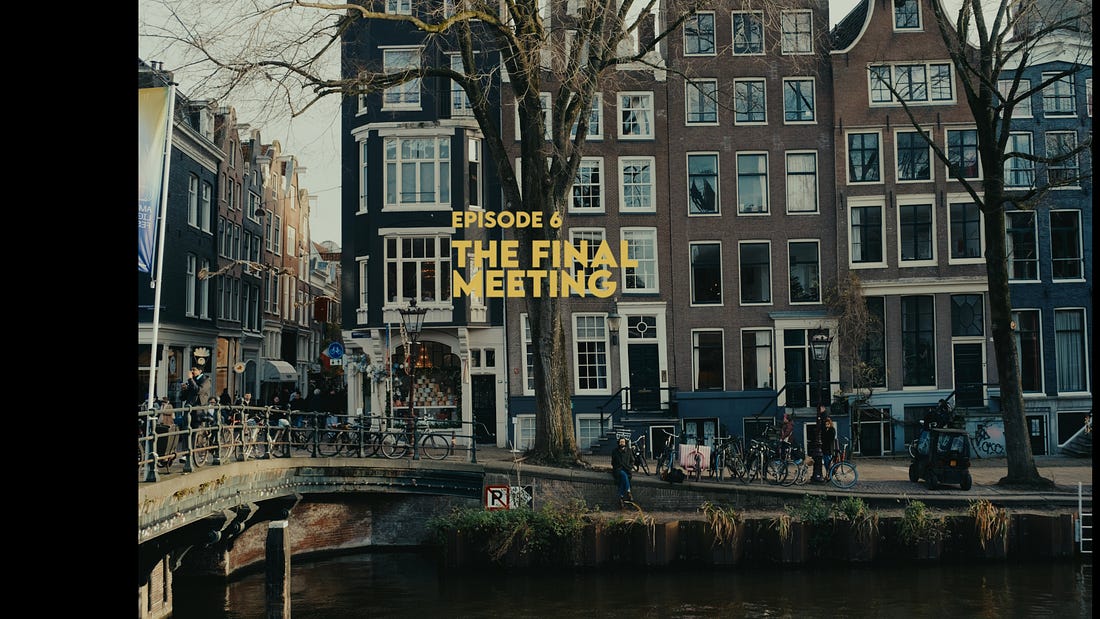
Over the past couple of years, that voice got louder. And instead of ignoring it, I started listening and I started feeling more ready. Taking Steps Towards FilmmakingIt started with documentary-style videos about cameras and photography. Some of you might have seen the one I made with my friend Luc Satter about the Pentax 17. 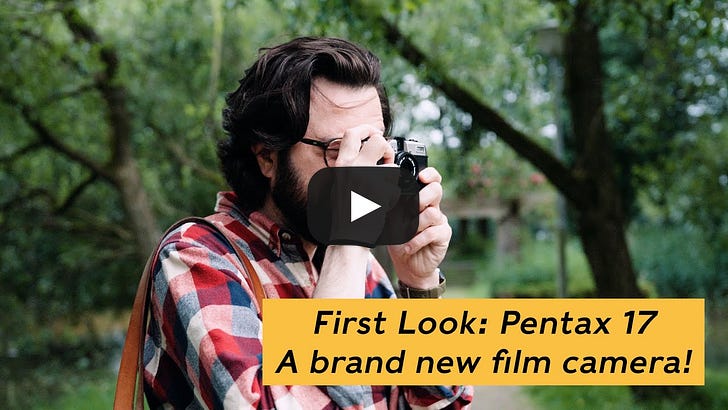 Or the one about the Kodak Tri-X Disposable camera when it first came out, shot by my buddy Ribsy and edited by Tycjan. 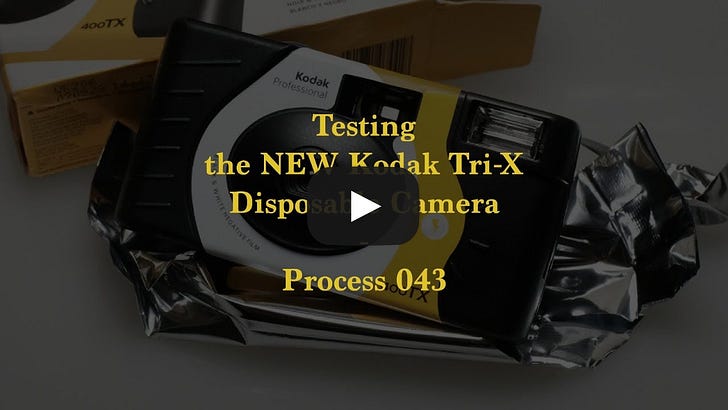 Those felt like a natural extension of what I was already doing with Process. It was me telling stories about photography, just in a different medium. The camera and the film stock were still the subject. I was still the photographer talking about photography. Then something shifted when my passion for improv comedy and my position in that community started escalating. I joined an improv group here in Amsterdam called Gang of Parrots and was a cast member on the house team of the main improv theater for a few seasons. Through that I ended up surrounded by some seriously talented performers, writers, and comedians. When you spend enough time on stage making stuff up with people who are fearless about looking stupid, it changes how you think about storytelling. You learn to commit to an idea before you know where it's going. To say yes and build on it. To trust the people you're working with. You're making it up as you go.³ All of which, it turns out, are exactly the skills you need when you're directing actors in a short film or being an actor yourself. So the videos started to change. I moved from documentary to mockumentary. Then from mockumentary to narrative fiction. I started writing scripts, actual scripts with characters and dialogue and story arcs. And instead of me standing in front of the camera talking about a piece of gear, I was on camera with other people in scenes I’d written. You can see this in the 6-episode first season of my series The Chain, which I recently completed. (See below)  Photography vs FilmmakingThe biggest difference between photography and filmmaking, for me, isn’t the technical stuff. It’s that in photography you can do most things by yourself. You grab a camera, you walk out the door, and whatever happens between you and the world is yours to capture. There’s a beautiful simplicity to that. But filmmaking doesn’t work that way. You need people. You need someone who knows how to light a scene, someone who can operate a camera in ways you can’t, someone who can take your raw footage and shape it into something better than what you imagined. You need actors who are willing to trust your vision even when you’re still figuring it out yourself. I’ve been incredibly lucky in that department. For the commercial and branded video work, I’ve been collaborating with my friend Alain Galje, who brings a speed and precision to our projects that help my strange surrealist scripts work, like the recent Excire ad below:  For the narrative and comedy stuff, the weird, personal, slightly unhinged videos I’ve been working with my friend Harry Orange as videographer and editor. The Camera We UseHarry is the one who introduced me to the Panasonic Lumix S5IIX. He’s been using it as his go-to video camera for a while now, and when I first saw the footage he was getting out of it, I was genuinely surprised. Not because the specs are bad, but because nobody really talks about this camera. In the online chatter, everyone’s debating the latest Sony or Canon releases, and the S5IIX is just quietly sitting there being one of the best hybrid photo/video cameras you can buy for the price. What I noticed first was how the footage looked. Clean, with great color and a lot of flexibility in the edit. Harry shoots in V-Log, which gives him over 14 stops of dynamic range to work with in post, and the internal ProRes recording means the files hold up beautifully when you start pushing them around in color grading. For our narrative stuff, where we’ve only been shooting with available light in locations we don’t fully control, that flexibility matters a lot.
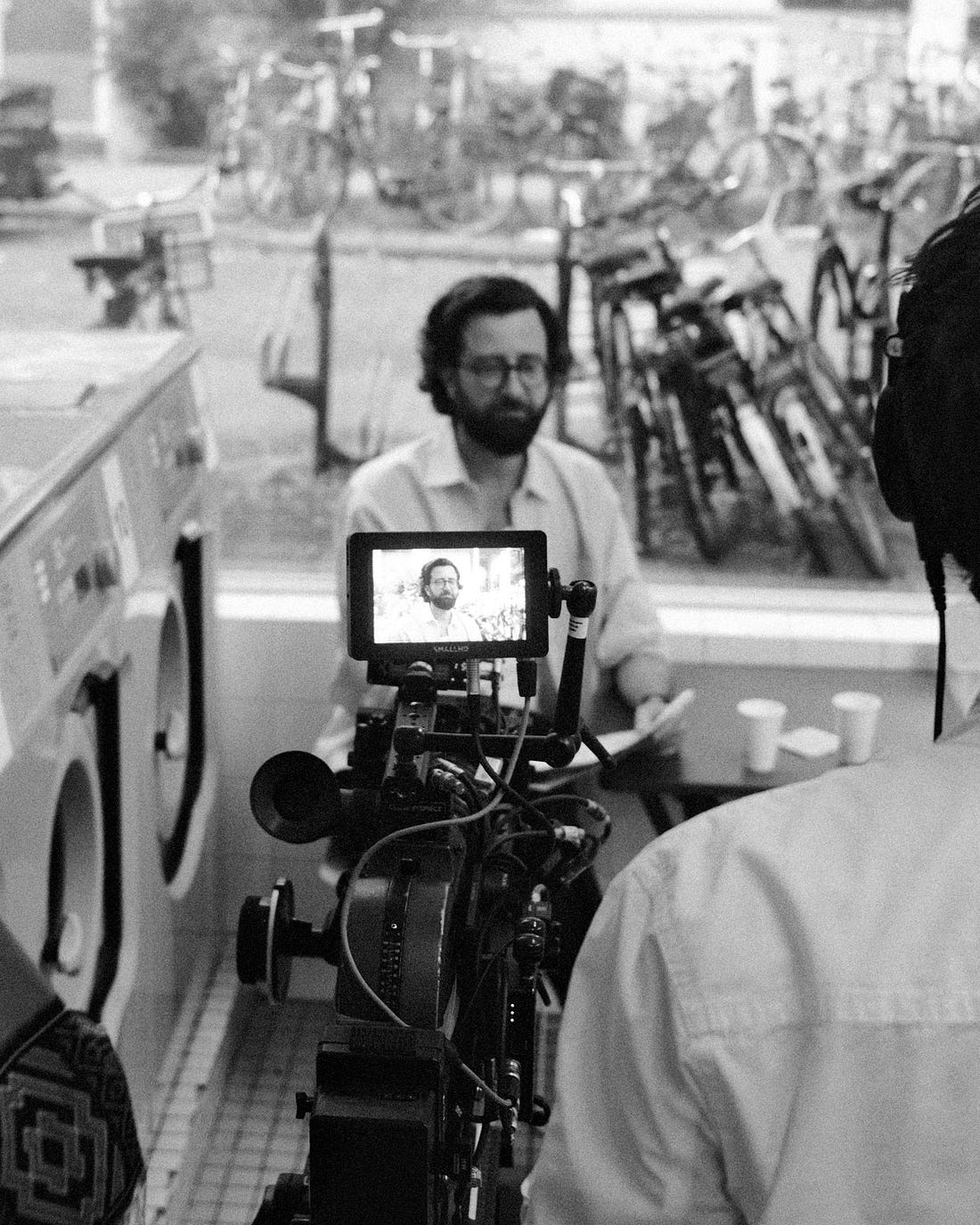
The other thing I noticed was how small and light the setup was. Harry would show up to a shoot with the S5IIX and a couple of vintage compact lenses, and that was it. No massive rig, no external recorder, no monitor hanging off the side. The camera has a built-in cooling fan so it can record 4K continuously without overheating, the stabilization is good enough to shoot handheld while walking, though at times we used a tripod as well. For our kind of run-and-gun narrative shooting, where it’s usually just Harry and myself and one guest actor, we’re often working fast with no additional crew in public spaces. That minimal footprint makes a huge difference. Harry also uses it for stills, and the photos are genuinely so lovely. It has the same 24.2-megapixel full-frame sensor and phase-detect autofocus as the Panasonic S5 II, which is already a fantastic stills camera. So when we’re on set and say Harry wants to grab some behind-the-scenes shots between takes, he can use the same camera to get some great publication-quality photos. One camera body, two completely different jobs, both done well.
After a few months of working with this camera, I understand why Harry swears by it. The Lumix S5IIX is one of those cameras that’s better than its reputation. It deserves more attention than it gets, so I thought I’d do my part here in case one of you is looking. What’s Next?My 2026 looks very exciting and film making is a big part of that. Earlier this week, I shot a new video about a not-yet-announced new film stock, which I will post next week. I am in pre-production now for the second season of The Chain, which I am so excited about. Especially about all the new guest actors and the mystery at the heart of the story. I’m also excited to dip back into documentary things again to make more videos around my own photography projects, especially the Community Documentary projects that are coming up. So much video, and all of it is about learning towards the next step of an actual short film in the future. If this letter did something for you, I’d really appreciate it if you shared it with a friend. ❤️ Your Turn — GiveawayThere are three movie reference hidden in this issue, which you can find by looking for three footnotes. Answer the questions in the footnotes by leaving a comment here and I will randomly select one commenter with three correct answers to receive a mystery goodie bag from my studio with a photo books, some rolls of rare film, some test prints, or whatever I pull from the drawer that week. Next Week: A brand new film stock! First couple rolls shot, and it’s WEIRD but awesome. Plus, a new….video! Talk soon, Wesley PS If you happened to find yourself here but aren't yet a subscriber, hit the button below and receive Process every Sunday. This Week’s Camera + ToolsCamera: Panasonic Lumix S5IIX, which you can pick up second-hand in “as new" shape from our friends at MPB for under €1500. Way cheaper than other more talked about cameras that have the same or less attractive specs as a hybrid camera. Process is supported by MPB.com, my go-to for buying, selling, or trading used gear. Everything comes with a 12-month warranty.
Process is also supported by Squarespace, which I’ve used to host my photography portfolio for more than a decade. It made it easy for me as a non-technical person to present my work professionally to attract clients and showcase projects. They’re also been supportive of many creative projects throughout the years, including my own One of Many project back in 2015.
If you’re looking for a home for your work, especially if you shoot in series, it’s worth checking out. I can recommend it, based on my personal experience. Use code WESLEY for 10% off any Squarespace subscription. Lab: All my film is developed with love by Carmencita Film Lab. Use code “PROCESS“ for a free upgrade. A Few Ways To Support This WorkIf Process adds something to your week, here's how to help keep it going: grab a copy of my photo book NOTICE Journal Volume One or the Process Workbook series. Every physical order includes a limited edition Creatives In/AMS preview zine, a surprise, and stickers. Process Photo Club members get 40% off NOTICE and 100% off all four Workbooks. Not a member yet? Join here. 🗃️ Browse the Process Archive. 1 Referencing the opening line of my favorite movie. What’s the title? 2 Referencing a classic line from my favorite trilogy. What’s the title of this specific film? 3 Referencing another classic franchise film. Who said this line? You're currently a free subscriber to Process ☼ On Photography, by Wesley Verhoeve. For the full experience, upgrade your subscription.
|
232 ☼ The Filmmaker I've Been Avoiding





Read User's Comments(0)

Portable Home Co... is calling
|


|




|

| ||||||||||||||||||||||||||||||||||||||||||


|

|



Assinar:
Comentários (Atom)