Hello, This week starts on a sombre note as it focuses on the aftermath of the devastating earthquake that has killed more than 2,700 people in Southeast Asia. The death toll has reached 2,719 and is expected to rise to more than 3,000, Myanmar's military leader Min Aung Hlaing said in a televised address on Tuesday. He said 4,521 people were injured, and 441 were missing. Myanmar has been in crisis since 2021, when the military seized power from an elected government, brutally crushing protests and sparking an armed uprising. The conflict is complicating rescue efforts to reach those injured after the nation's biggest quake in a century. One rebel group said Myanmar's ruling military was still conducting airstrikes on villages in the aftermath of the quake, and Singapore's foreign minister called for an immediate ceasefire to help relief efforts. People across the country are affected by "widespread violence", and the health system has "been decimated by conflict, overwhelmed by outbreaks of cholera and other diseases", said Mohammed Riyas, Myanmar director for the International Rescue Committee. Also on my radar today: |
|
|
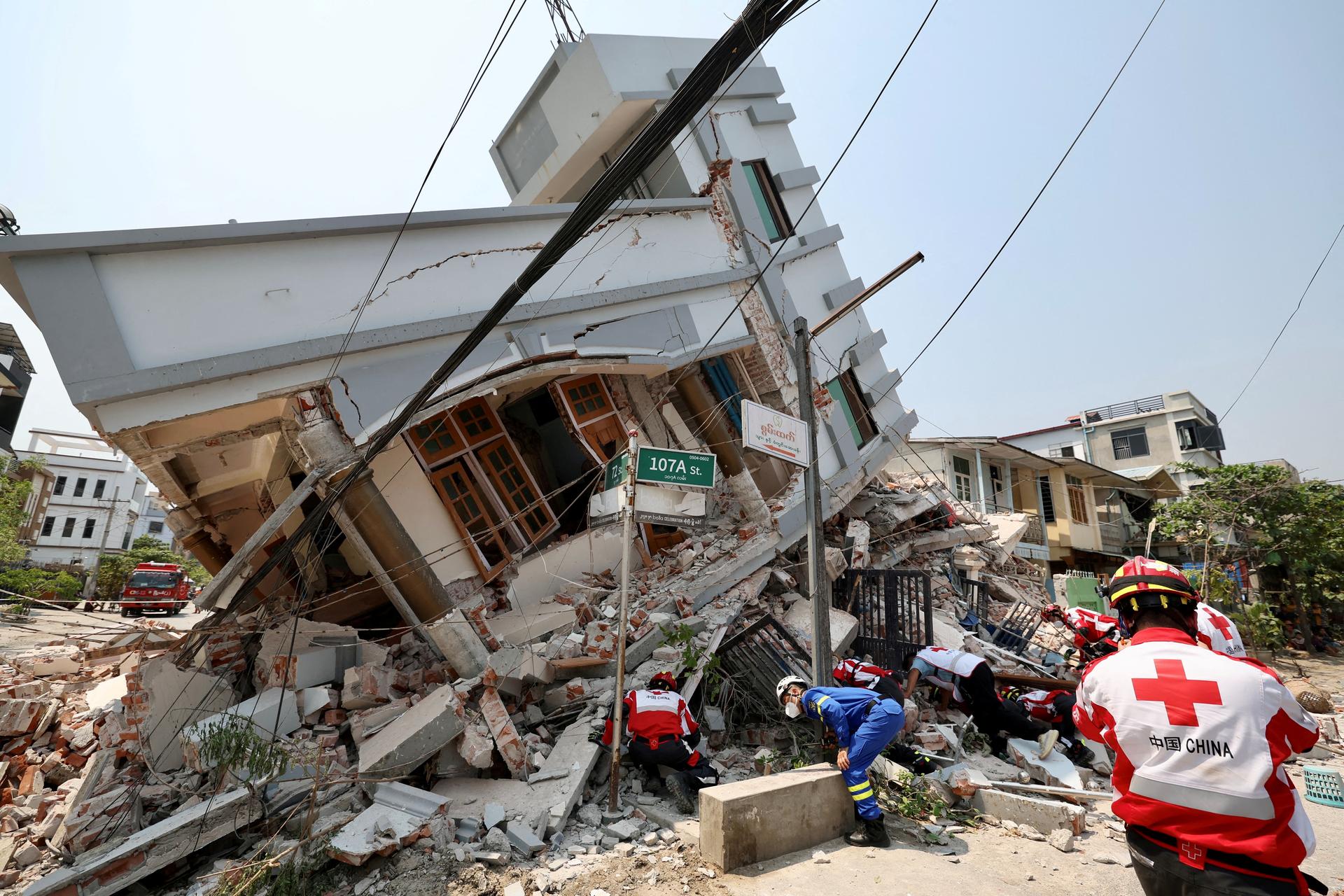
Chinese Red Cross International Emergency Response Team work at a collapsed residential building following the earthquake, in Mandalay, Myanmar. China Daily via REUTERS |
'Can't afford another disaster' |
"The powerful earthquake hit the country at the worst possible time," Sheela Matthew, deputy country director for the World Food Programme, said in a statement. "Myanmar just can't afford another disaster." In January, the United Nations said the country was facing a "polycrisis" marked by economic collapse, intensifying conflict, climate hazards and deepening poverty. More than half of the country lacks access to electricity, and hospitals in conflict zones are out of service. More than 3.5 million people have been internally displaced and many more driven across the borders amid fighting between the military and a mosaic of armed groups that have seized control of vast swathes of territory. Hospitals in central and northwestern Myanmar are struggling to cope with the influx of people injured in the quake, the agency stated. Seventeen cargo trucks of shelter and medical supplies arrived to address shortages of medicines, including blood bags and anaesthetics. China, India and Thailand are among Myanmar's neighbours that have sent relief materials and teams, along with aid and personnel from Malaysia, Singapore and Russia. The United Nations said it was rushing relief supplies to survivors in central Myanmar. "Access to all victims is an issue... given the conflict situation. There are a lot of security issues to access some areas across the front lines in particular," Arnaud de Baecque, resident representative of the International Committee of the Red Cross in Myanmar, told Reuters. |
|
|
Bangkok building collapse |
Over in the Thai capital Bangkok, rescuers pulled out another body from the rubble of an unfinished skyscraper that collapsed in the quake, bringing the death toll from the building collapse to 12, with a total of 19 dead across Thailand and 75 still missing at the building site. An anti-corruption watchdog had flagged irregularities in the construction of the skyscraper before it collapsed, the head of the group told Reuters. Initial tests showed that some steel samples collected from the site were substandard, Thai industry ministry officials said. The government has launched an investigation into the cause of the collapse. "It is strange that no other buildings suffered like this," Anek Siripanichgorn, a board member of the Council of Engineers Thailand told Reuters. "Even other tall buildings under construction did not collapse." |
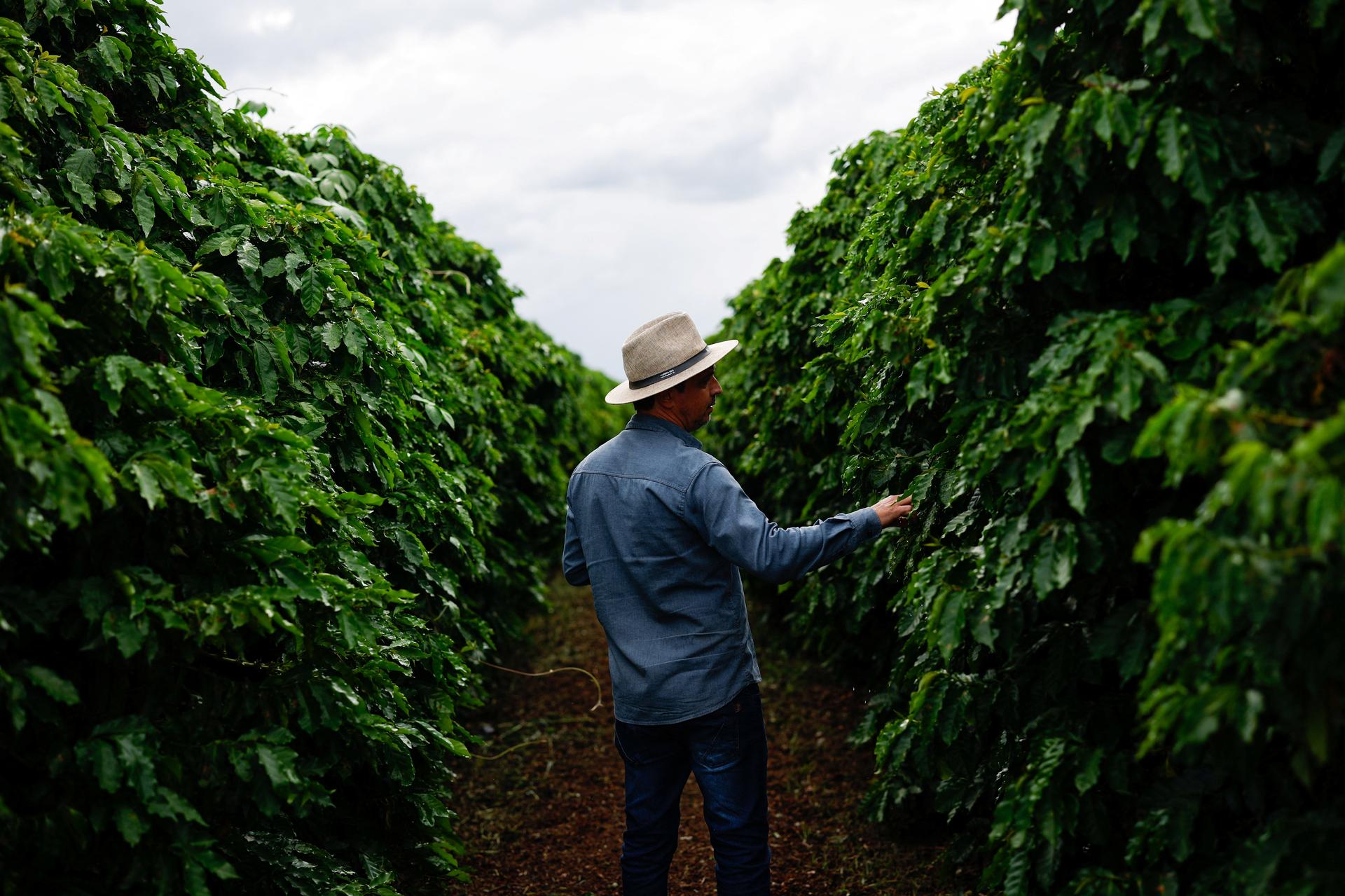
Rodrigo Brondani, manager of irrigated coffee farm Joha, walks by coffee trees in in Luis Eduardo Magalhaes, Bahia state, Brazil. REUTERS/Amanda Perobelli |
- Coffee, climate change and costs: Coffee growers have typically depended on Brazil's abundant spring and summer rains, but last year's drought hit production and only around 30% of coffee fields are irrigated, according to industry assessments. Farmer Rodrigo Brondani has invested heavily in irrigation at his industrial-scale farm, which is becoming increasingly important in the industry. But irrigation can be costly, and supplying water to irrigated farms has become very difficult. Click here for the full Reuters analysis.
- Race and water: Martinique, a French territory in the Caribbean, is facing a cost-of-living crisis as prices and poor services led to months of protests and unrest late last year. Despite tourists flocking to crystalline waterfalls nestling in the tropical rainforests, locals have to endure tap water that runs yellow. Like many contentious issues in Martinique, water is intertwined with questions of class and race, including the prominence of a handful of families descended from white owners of enslaved people.
- Gaza aid worker graves: Fifteen emergency and aid workers from the Red Crescent, Palestinian Civil Defense and the United Nations have been recovered from a grave in the sand in the south of the Gaza Strip, U.N. officials said. U.N. aid chief Tom Fletcher said in a post on X that the bodies were buried near "wrecked & well-marked vehicles," adding: "They were killed by Israeli forces while trying to save lives. We demand answers & justice."
- Patriotism and retail: Growing anti-American sentiment in Canada has led to a "Buy Canadian" movement which is sending new ripples of concern through the executive offices of U.S.-based consumer companies that want to sell their products on Canadian retail shelves. A dramatic reshuffling of Canada's retail shelves illustrates the impact of patriotic consumerism in the country, which imported nearly $350 billion of products from the U.S. in 2024. Sign up here for the Reuters Tariff Watch newsletter to keep up with the latest global trade and tariff news.
- DEI in U.S. gov contracts: The Trump administration has ordered some French companies with U.S. government contracts to comply with his executive order banning diversity, equity, and inclusion programmes and to confirm their compliance in a questionnaire entitled "Certification Regarding Compliance with Applicable Federal Anti-Discrimination Law." Reuters has seen a copy of the questionnaire. Click here for more on the story.
|
|
|
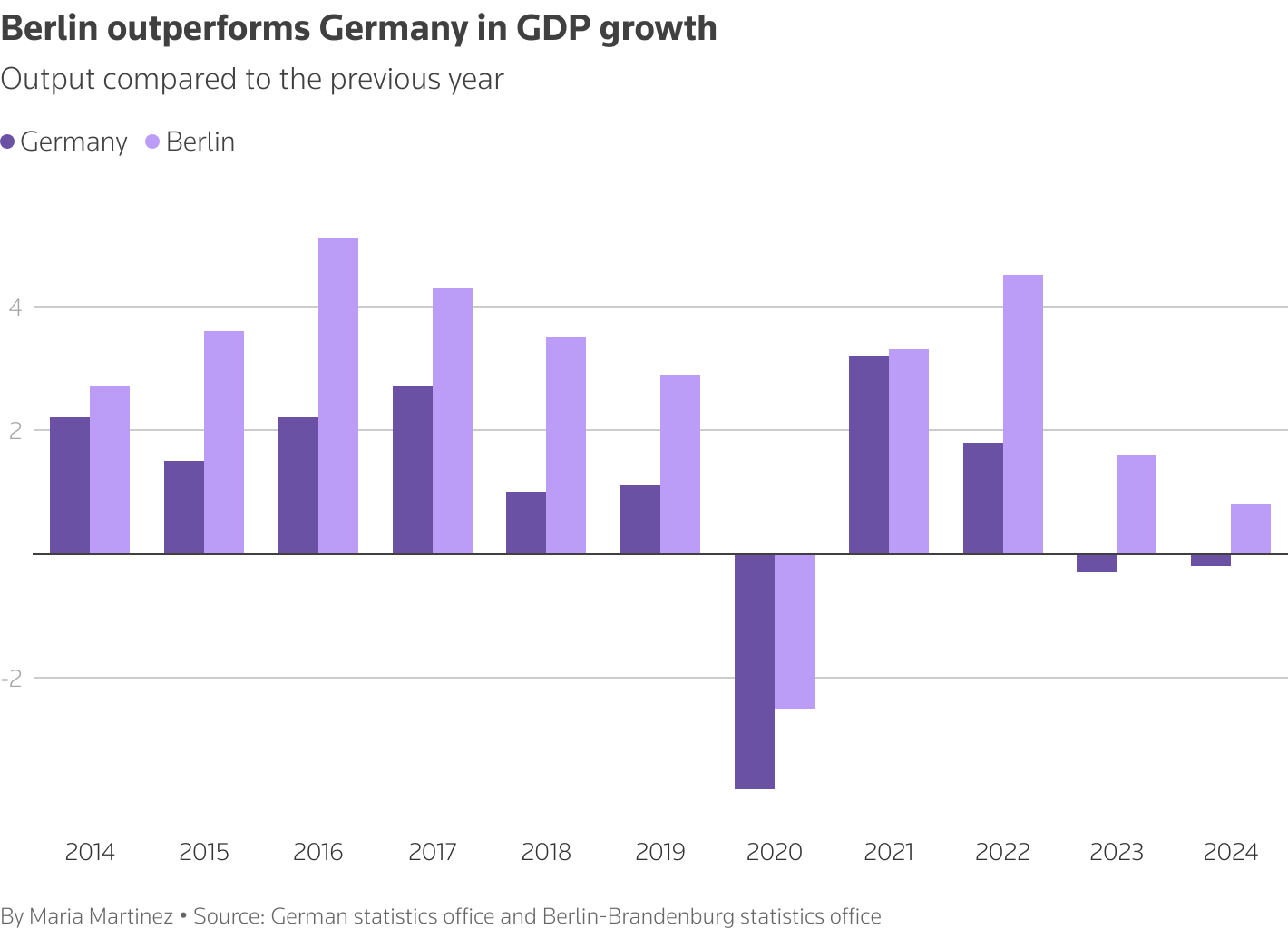
Germany's capital Berlin has fallen victim to a rising plague hitting all major "cool" cities around the world. It's gone from "poor but sexy" to "rich and snoozy" as the city has become a victim of its economic success. Rising costs are threatening the livelihoods of artists and bohemians who after the fall of the Berlin Wall flocked there, drawn by low rents and many abandoned buildings. Rising prices are also now starting to squeeze the budgets of those who followed the startup boom decades later. Click here for the full Reuters story. |
|
|
Sustainable Switch was edited by Mark Potter. |
Sustainable Switch is sent three times a week. Think your friend or colleague should know about us? Forward this newsletter to them. They can also sign up here. Want to stop receiving this email? Unsubscribe here. To manage which newsletters you're signed up for, click here. Terms & Conditions and Privacy Statement |
|
|
|






0 comentários:
Postar um comentário