Hello, South Korea, Ecuador, China and Turkey have been struggling with wildfires and earthquakes this week as reinsurance company Swiss Re released a report showing that hurricanes, storms, floods and other natural disasters may cause $145 billion in insured losses in 2025, nearly 6% up from 2024. Before we get into the details of the disasters, please note there will be no Sustainable Switch on Thursday and Friday this week, but I'll be back with the latest environmental news next Tuesday. Now back to South Korea where more than 1,200 residents in the city of Daegu have been ordered to evacuate after strong winds whipped up a wildfire and prompted the closure of a highway in the area due to concerns about the blaze. The wildfire affected an estimated 50 hectares (123.6 acres) in less than two hours due to dry conditions and constant winds, the Korea Forest Service said in a statement. In March, South Korea suffered its worst ever natural fire disaster, with nearly 30 people killed and historic temples incinerated. In keeping with natural disasters in Asia, click here for a Reuters graphics map using scientific analysis to show why Myanmar's "supershear" quake last month was so devastating. The quake has killed more than 3,700 people, flattened communities and crippled infrastructure in the impoverished nation. Also on my radar today: |
|
|
A residential building is surrounded by smoke, caused by a wildfire, in Daegu, South Korea, Yonhap/via REUTERS |
Earthquakes hit Ecuador, China and Turkey |
Over in Ecuador, a magnitude 6.3 earthquake struck its coast, the European Mediterranean Seismological Centre (EMSC) said, injuring at least 20 people, damaging buildings in the city of Esmeraldas and temporarily shutting down some oil infrastructure. The quake struck at a depth of 23 km (14 miles), EMSC said, with Ecuadorean authorities ruling out issuing a tsunami warning. Elsewhere, a 4.8 magnitude earthquake hit Tibet's remote Rutog County, China's Earthquake Networks Centre said. Over in Turkey, more than a thousand people in Istanbul turned to mosques, schools and other temporary shelters after a strong earthquake rattled the Turkish metropolis, leaving some 1.5 million buildings at risk, authorities said. The tremor revived memories of a 1999 earthquake that killed 17,000 near Istanbul, Europe's largest city which also spans across the Bosphorus Strait to Asia. February 2023's 7.8-magnitude earthquake was the deadliest and most destructive in Turkey's modern history, killing more than 55,000 people in the south and in neighbouring Syria, and leaving hundreds of thousands still displaced. |
|
|
Tallying the cost of natural disasters |
The series of wildfires and earthquakes comes as reinsurance company Swiss Re released a report showing that this year may be one of the costliest on record in insured losses caused by natural disasters. The year's projected tally of losses from natural catastrophes covered by insurance compares with $137 billion recorded in 2024 and is well above long-term averages. The report pointed to the wildfires in Los Angeles at the beginning of the year as a major contributor to the projected figure, causing estimated insured losses of $40 billion. Total losses from natural catastrophes, including those not covered by insurance, came in at $318 billion in 2024, the report said. That is up from $292 billion in 2023 and significantly above longer-term averages. |
A worker assists a customer with a torch at a supermarket during a power outage which hit large parts of Spain, in Barcelona, Spain. REUTERS/Nacho Doce |
- Iberia power outage: Electricity had been restored to most of Spain and Portugal after a major power outage hit large parts of Spain and Portugal, paralysing traffic, grounding flights, leaving people trapped in lifts and stuck on trains, while others stocked up on basics in supermarkets or began long walks home from work. Outages on such a scale are extremely rare in Europe, and authorities are still trying to find out what caused this one.
- Cyprus workers' rights: Migrant workers in Cyprus should have the same rights as all other Cypriot and EU workers, urged experts from the Council of Europe, a Strasbourg-based body, in a report. More than 20,000 domestic workers are employed migrants – mainly from the Philippines, Sri Lanka, Nepal and Vietnam – who are earning considerably less than the state-sanctioned minimum wage which applies to other workers, the report said. The report warns that the poorly paid and overworked labourers were vulnerable to abuse and trafficking.
- Harvard v Trump: U.S. District Judge Allison Burroughs set a July 21 hearing to expedite Harvard University's lawsuit seeking to block U.S. President Donald Trump's administration from freezing $2.2 billion in federal grant funding. Harvard warned that the freeze and additional threatened cuts were putting vital medical and scientific research at risk.
- Gaza aid: The United Nations and Palestinian representatives at the International Court of Justice accused Israel of breaking international law by refusing to let aid into Gaza, on the first day of hearings about Israel's obligations to facilitate aid deliveries. Since March 2, Israel has completely cut off all supplies to the 2.3 million residents of the Gaza Strip, and food stockpiled during a ceasefire at the start of the year has all but run out.
- Pakistan water treaty: Aqeel Malik, the Minister of State for Law and Justice in Pakistan, told Reuters that Islamabad was preparing legal action over India's suspension of a key river water-sharing treaty, as tensions intensify between the neighbours following an attack on tourists in India-administered Kashmir. The legal plans include at least three different avenues including raising the issue at the World Bank – the treaty's facilitator. Click here for the full Reuters story.
|
|
|
A two-month-old female pygmy hippo named "Moo Deng" bites her keeper Atthapon Nundee at Khao Kheow Open Zoo in Chonburi province, Thailand. REUTERS/Athit Perawongmetha |
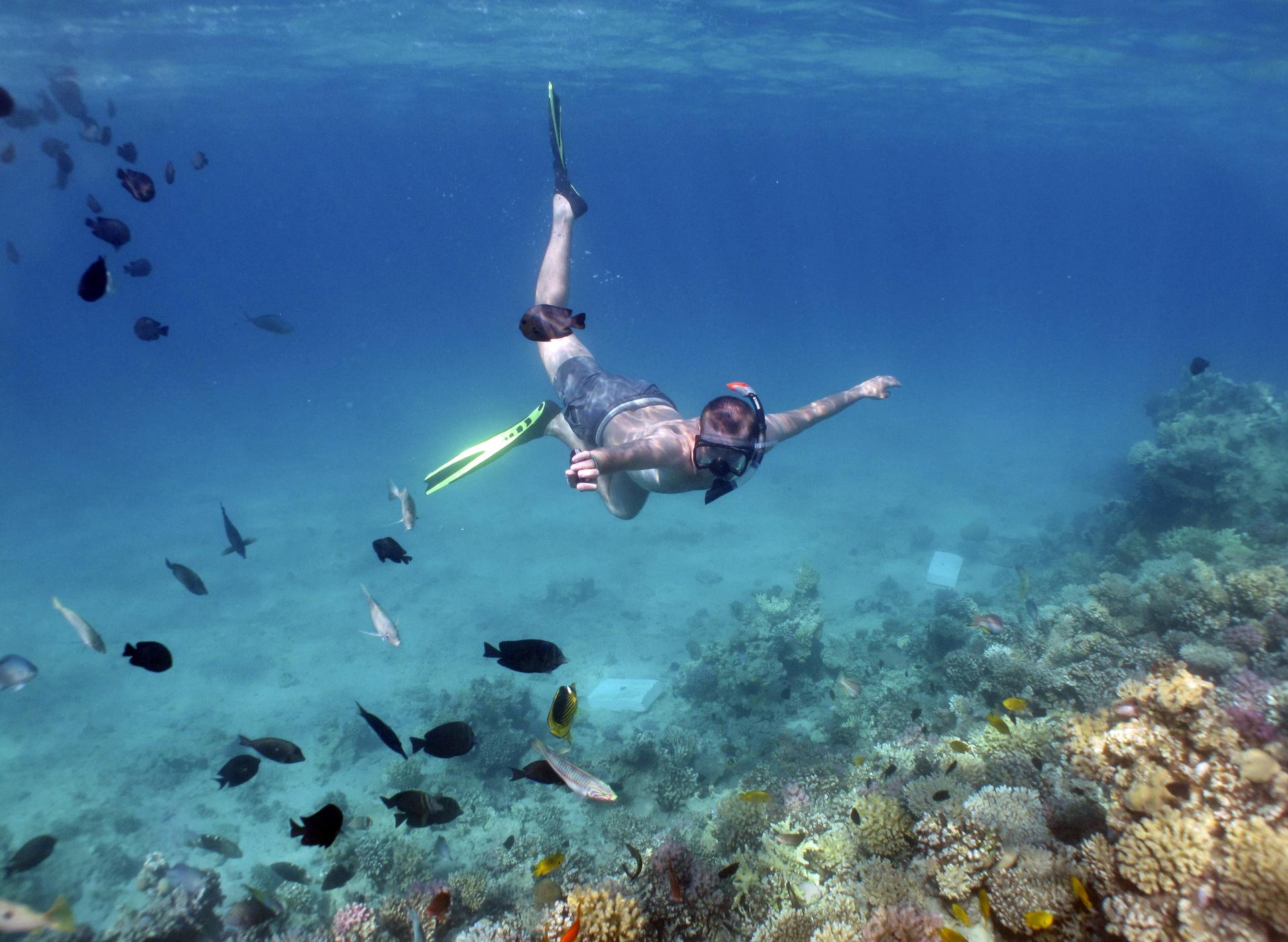
Today's spotlight shines a light on a project aimed at helping communities profit from efforts to protect at least 30% of the world's oceans by the end of the decade. The new initiative launched last week, dubbed Revive Our Ocean, is led by the NGO Dynamic Planet together with the National Geographic Society's Pristine Seas programme and will assist local communities in their efforts to establish "marine protected areas" in coastal waters. It will focus initially on tackling overfishing and ocean climate impacts in Britain, Portugal, Greece, Turkey, Mexico, the Philippines and Indonesia. |
|
|
Sustainable Switch was edited by Mark Potter. |
Sustainable Switch is sent three times a week. Think your friend or colleague should know about us? Forward this newsletter to them. They can also sign up here. Want to stop receiving this email? Unsubscribe here. To manage which newsletters you're signed up for, click here. This email includes limited tracking for Reuters to understand whether you've engaged with its contents. For more information on how we process your personal information and your rights, please see our Privacy Statement. Terms & Conditions |
|
|
|








0 comentários:
Postar um comentário