Hello! Today's newsletter follows up on yet another rollback in environmental, social and corporate policy by the Trump administration. After slashing various diversity, equality, inclusion and aid programmes, this time the administration has terminated federal employees in charge of U.S. global climate policy and climate aid. Four sources familiar with the notification told Reuters that the cuts were seen as part of the reorganization of the State Department. The career employees in the Office of Global Change, which came under the State Department's Bureau of Oceans and International Environmental and Scientific Affairs, played a leading role in U.S. negotiations under the United Nations Framework Convention on Climate Change (UNFCCC). What this will mean for U.S. presence during this year's COP30 in Belem, Brazil, is yet to be determined. Officials from the office also represented the U.S. at the International Civil Aviation Organization (ICAO) and the International Maritime Organization (IMO) and their respective shipping and commercial aviation sectors. Speaking of maritime law, Trump also signed an executive order aimed at boosting the deep-sea mining industry. The order directs the administration to expedite mining permits under the Deep Seabed Hard Minerals Resource Act of 1980 and to establish a process for issuing permits along the U.S. Outer Continental Shelf. It also orders the expedited review of seabed mining permits "in areas beyond the national jurisdiction," a move likely to spark friction with the international community. |
|
|
1. India and Pakistan tensions flare after water treaty violation |
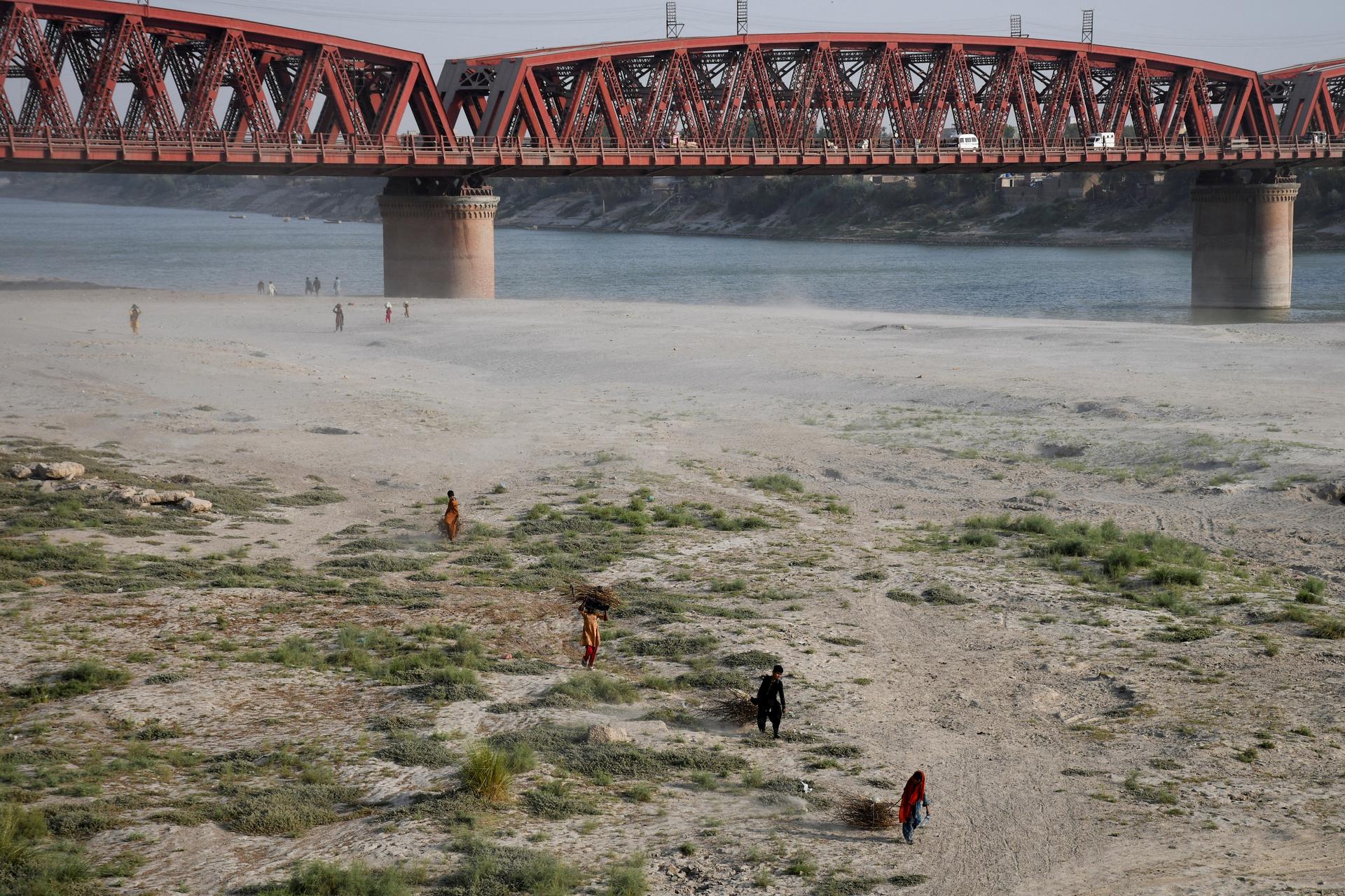
Indian Foreign Secretary Vikram Misri said that New Delhi would immediately suspend the 1960 Indus Waters Treaty with its neighbour, "until Pakistan credibly and irrevocably abjures its support for cross-border terrorism." The treaty, mediated by the World Bank, split the Indus River and its tributaries between the neighbours and regulated the sharing of water. It had so far withstood even wars between the neighbours. Islamabad said it "vehemently rejects" India's suspension of the Indus Waters Treaty and that any attempt to stop or divert water belonging to Pakistan would be considered an "act of war and responded with full force across the complete spectrum of national power". Pakistan is heavily dependent on water flowing downstream from this river system from Indian Kashmir for its hydropower and irrigation needs. Suspending the treaty would allow India to deny Pakistan its share of the waters. |
People walk on the dry riverbed of the Indus River in Hyderabad, Pakistan. REUTERS/Yasir Rajput |
2. New Jersey wildfire could become state's largest in nearly 20 years | A fast-growing wildfire that was burning in New Jersey's Pinelands near its Atlantic Ocean beach towns this week could become the largest in New Jersey in about 20 years, according to Shawn LaTourette, the state's commissioner of environmental protection. A fire in May 2007 in the same area consumed 17,000 acres (69 sq km). The Jones Road Wildfire had spread to 13,250 acres (54 sq km) on Wednesday night and was 50% contained, the New Jersey Forest Fire Service said in a statement. |
3. Istanbul's strong quake triggers nerves and new pledges to prepare |
More than a thousand people in Istanbul turned to mosques, schools and other temporary shelters after a strong earthquake rattled the Turkish metropolis this week, leaving some 1.5 million buildings at risk and raising anxieties about the city's lack of preparedness. There were no deaths from the tremor, the biggest in years in Istanbul, which sits just north of a fault line crossing the Marmara Sea, authorities said. |
4. Global coral bleaching crisis spreads after hottest year, scientists say |
The world's fourth mass bleaching event, which scientists declared one year ago, has shown few signs of slowing down, according to the International Coral Reef Initiative and data from the U.S. National Oceanic and Atmospheric Administration which track reef health. Instead, it has grown to be the most widespread on record, with 84% of reef areas – from the Indian Ocean to the Atlantic to the Pacific – subjected to intense heat stress for a duration expected to cause bleaching as of March 2025. |
5. What does the International Monetary Fund's focus look like post-Trump? |
Well, U.S. Treasury Secretary Scott Bessent called for the IMF and the World Bank to refocus on their core missions of macroeconomic stability and development, saying they had strayed too far into issues such as climate change, gender and inclusion. The IMF's new Managing Director Kristalina Georgieva told a news conference that the fund will stay "laser focused" on preventing balance of payments crises and incorporate the Trump administration's concerns into its policies but will keep supporting countries affected by climate change. |
|
|
Click here or the image above to check out a much needed heart-warming video on turtle conservation in the coastal town of Grand-Popo in southern Benin, where local conservationist Karlos Mensan Gbewa and his team patrol the beaches at night with a mission to protect nesting turtles and increase the survival chances of their hatchlings. |
|
|
- Can there be a balance between tourism and nature conservation? Mark Hillsdon, contributor at Ethical Corp Magazine, went to Jamaica to find out its impact on the island's beautiful environment. Click here for the full story.
- This annual general meeting season, Reuters U.S. Sustainable Business Correspondent Ross Kerber, spoke to academics who argue that investors might claim more influence if they were to make their voting intentions public before the events.
- Clean power sources generated more than half of all U.S. electricity supplies for the first time in March, writes Reuters global energy transition columnist Gavin Maguire. Click here to find out more.
|
|
|
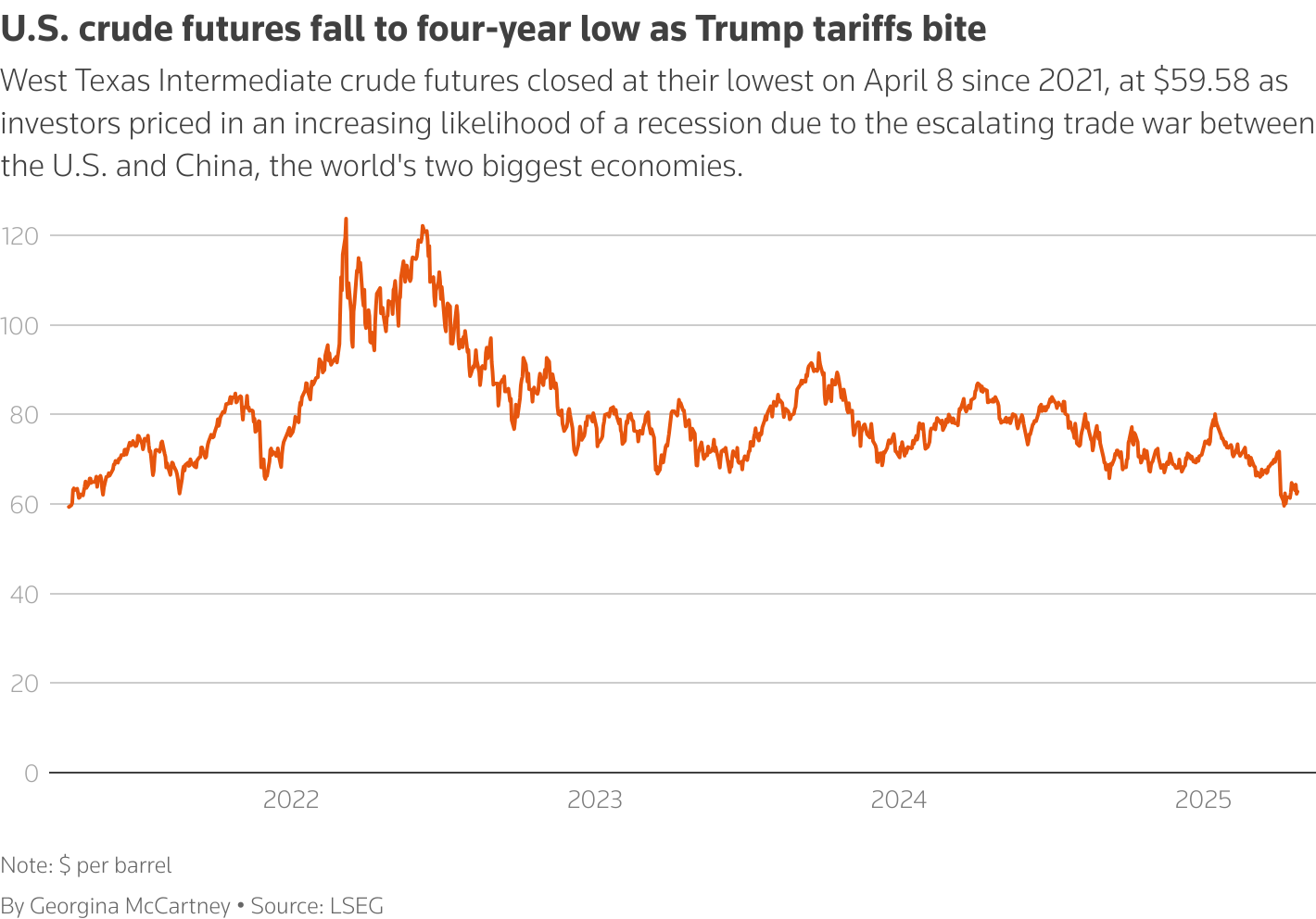
Energy transition: Today's climate lens takes a look at where fossil fuel prices sit as major oil conglomerates have turned away from clean energy projects to ramp up their oil supply. This week, oil prices fell and were set for a weekly decline of over 2% on the back of oversupply concerns and uncertainty around tariff talks between the U.S. and China. Brent crude futures were down 41 cents to $66.14 a barrel at 0953 GMT, falling 2.6% on the week. Worries are growing about excess supply after President Donald Trump implemented a national energy emergency declaration, which he made on his first day in office to speed permitting in an effort to boost domestic energy supplies and bring down fuel prices. This comes as several OPEC+ members have suggested the group accelerate oil output increases for a second month in June, Reuters reported earlier this week. |
|
|
That's right. Today's number is zero. That's because of India's new policy - aimed at cleaning up one of the world's most polluted cities - which states that no new sales of gasoline, diesel and gas-based two-wheelers will be allowed in New Delhi from April 1, 2027. |
|
|
Sustainable Switch Climate Focus was edited by Mark Potter. |
Sustainable Switch is sent three times a week. Think your friend or colleague should know about us? Forward this newsletter to them. They can also sign up here. Want to stop receiving this email? Unsubscribe here. To manage which newsletters you're signed up for, click here. This email includes limited tracking for Reuters to understand whether you've engaged with its contents. For more information on how we process your personal information and your rights, please see our Privacy Statement. Terms & Conditions |
|
|
|








0 comentários:
Postar um comentário