We have been here before, especially in the decade after 9/11, when the US-led wars in Afghanistan and Iraq sparked scores of attacks on Western targets.
Take, for example, the 7/7 train and bus bombings in London that killed 56 people in July 2005. At the time, prime minister Tony Blair's government was utterly insistent that the attack had nothing to do with the UK's involvement in the Iraq and Afghanistan wars, a stance undermined when it was revealed that one of the bombers had said precisely the opposite in a video recorded before the attacks.
Other attacks carried out in protest of the US-led Western 'war on terror' include the bombings of trains in and near Madrid's Atocha rail terminus in March 2004, killing 191 people, and the targeting of two nightclubs and the US embassy in Bali in October 2002, killing 202 people, including 88 Australians.
Another such attack killed more than 50 people at two synagogues and the British Consulate in Istanbul in 2003, while another targeted US-owned hotels in Jordan's capital of Amman, killing 60. Similarly, 55 people died when the Marriott hotel in the Pakistani capital of Islamabad was bombed in 2008; German tourists lost their lives when a historic synagogue was bombed in Tunisia in 2022; and holiday resorts frequented by Israelis in Egypt and Kenya were attacked in the mid-2000s.
Few if any of the attacks were organised solely by al-Qaida from Afghanistan or Pakistan. Many were organised locally, albeit sometimes involving connections to and no doubt inspiration from al-Qaida.
There was something of a pause on these attacks as the Iraq War eased in the early 2010s, but they resumed amid the four-year US-led air war on ISIS from 2014.
To name just a few of the attacks that took place, mostly across Europe, in the mid-2010s, 130 people lost their lives in a series of coordinated bombings across Paris in November 2015; the following year, a truck was used to kill 86 people and injure hundreds in a Bastille Day crowd in Nice, in the south of France, and 12 died in a similar attack on a Christmas market in Berlin.
So far, there is little direct comparison between these many attacks over two decades and what is happening now in relation to Gaza, but that might be about to change.
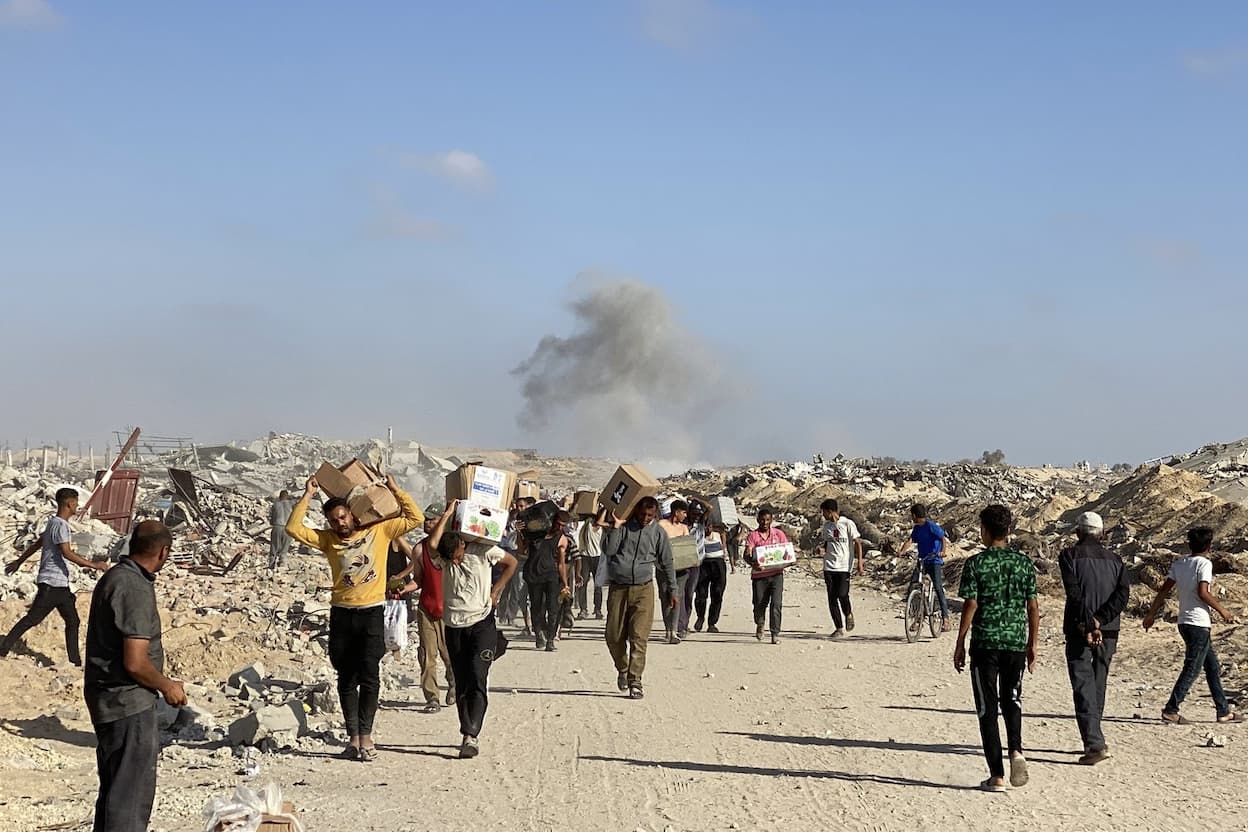
This week has seen the start of the US-organised distribution of food in Gaza through the controversial Gaza Humanitarian Foundation (GHF), which is run in close association with the IDF and intended to replace the hugely experienced UN organisations that have been distributing aid for decades.
The GHF, a US-backed organisation that was founded in Delaware in February but is based in Geneva, Switzerland, is establishing four major distribution hubs in southern Gaza. It will use these to distribute aid to families that have somehow been screened for any connections to Hamas.
The hubs will be guarded by armed US private security contractors and their locations will do much to enable the relocation of Palestinians to the three small zones determined by the IDF.
In other words, a US-backed organisation employing US security guards is enabling the Israeli government's plan to clear most of Gaza's population into what are essentially small holding pens before they can be forcibly relocated overseas.
This has led the GHF's executive director, Jake Wood, to resign this week. Wood said it had become "clear that it is not possible to implement this plan while also strictly adhering to the humanitarian principles of humanity, neutrality, impartiality, and independence".
Right across the Middle East, the war in Gaza is commonly seen as an Israeli/US operation, with Washington providing a huge array of weapons and US Army personnel operating radar systems within the country.
From this week, there will also be an armed US organisation directly involved in the mass movement of Palestinians in a new Nakba. That alone increases the chances of further attacks like last week's killings in Washington.



0 comentários:
Postar um comentário