Hello,
Today's newsletter focuses on extreme weather events, including a glacier collapse in a Swiss village and wildfires in Manitoba, Canada. These come as a U.N. report warns of rising global temperatures over the next five years, with Arctic warming predicted at more than three times the global average.
Let's start with the glacier collapse in the Swiss Alps and the deluge of ice, mud and rock that crashed down a mountain and engulfed some 90% of the village of Blatten.
Rescue teams with search dogs and thermal drone scans have been looking for a missing 64-year-old man. Local police suspended the search on Thursday afternoon, saying the mounds of debris were too unstable for now.
Blatten's 300 residents had already been evacuated earlier in May after part of the mountain behind the Birch Glacier began to crumble.
Water trapped behind a mass of glacial debris blocking a river in southern Switzerland has sparked warnings that further evacuations may be needed amid the risk of flooding in the Alpine valley.
Up to 1 million cubic meters of water are accumulating daily as a result of the debris damming up the river, said Christian Huggel, a professor of environment and climate at the University of Zurich.
Residents struggled to absorb the scale of devastation that buried most of their picturesque Swiss village, in what scientists suspect is a dramatic example of climate change's impact on the Alps.
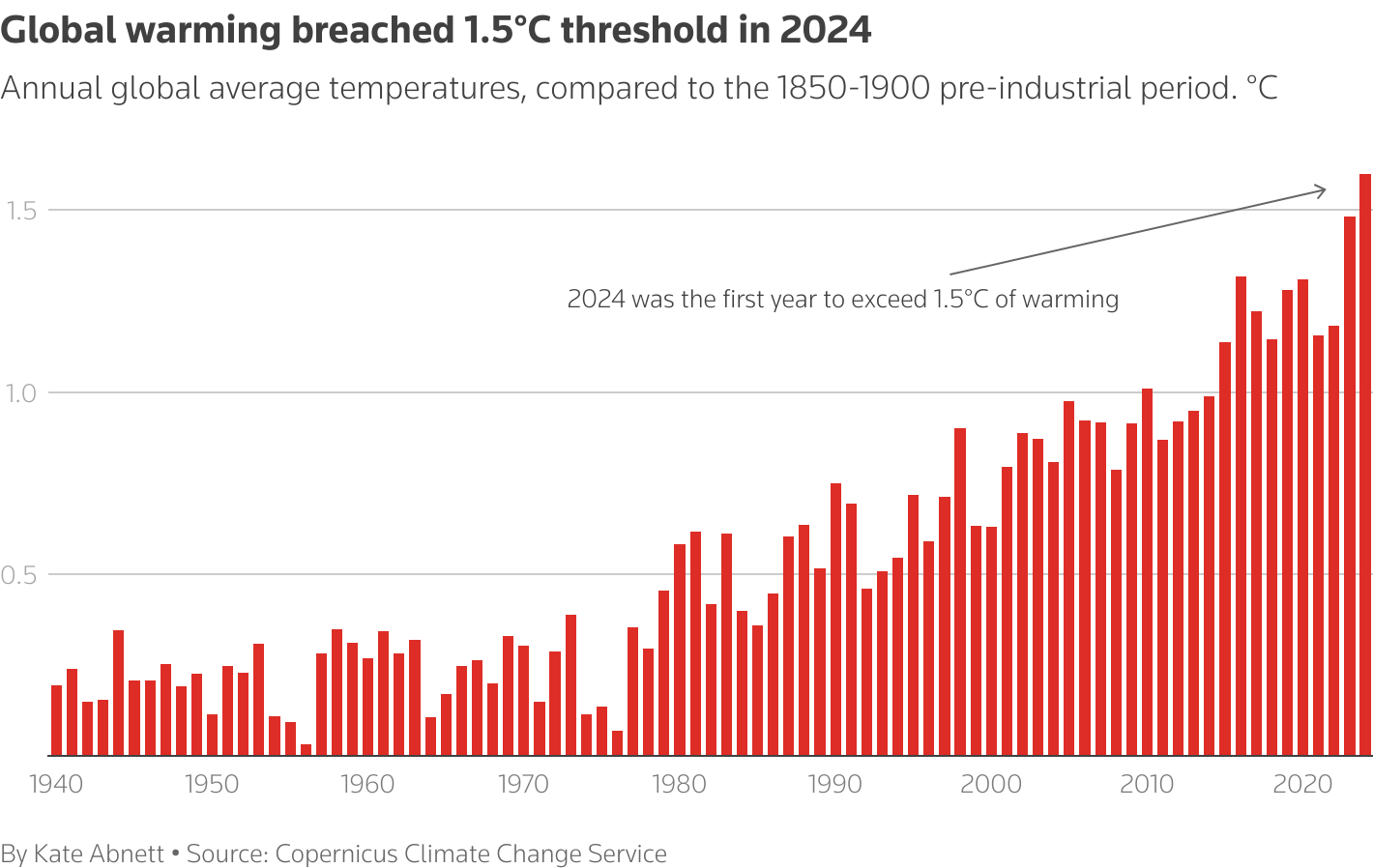
Scientists have found that the world is expected to experience more record temperatures over the next five years, with Arctic warming predicted at more than three times the global average, according to the report by the World Meteorological Organization (WMO).
There is an 80% chance that at least one of the next five years will see record heat, with a high likelihood that average warming will exceed 1.5 degrees Celsius (2.7 degrees Fahrenheit) above pre-industrial levels, according to the report.
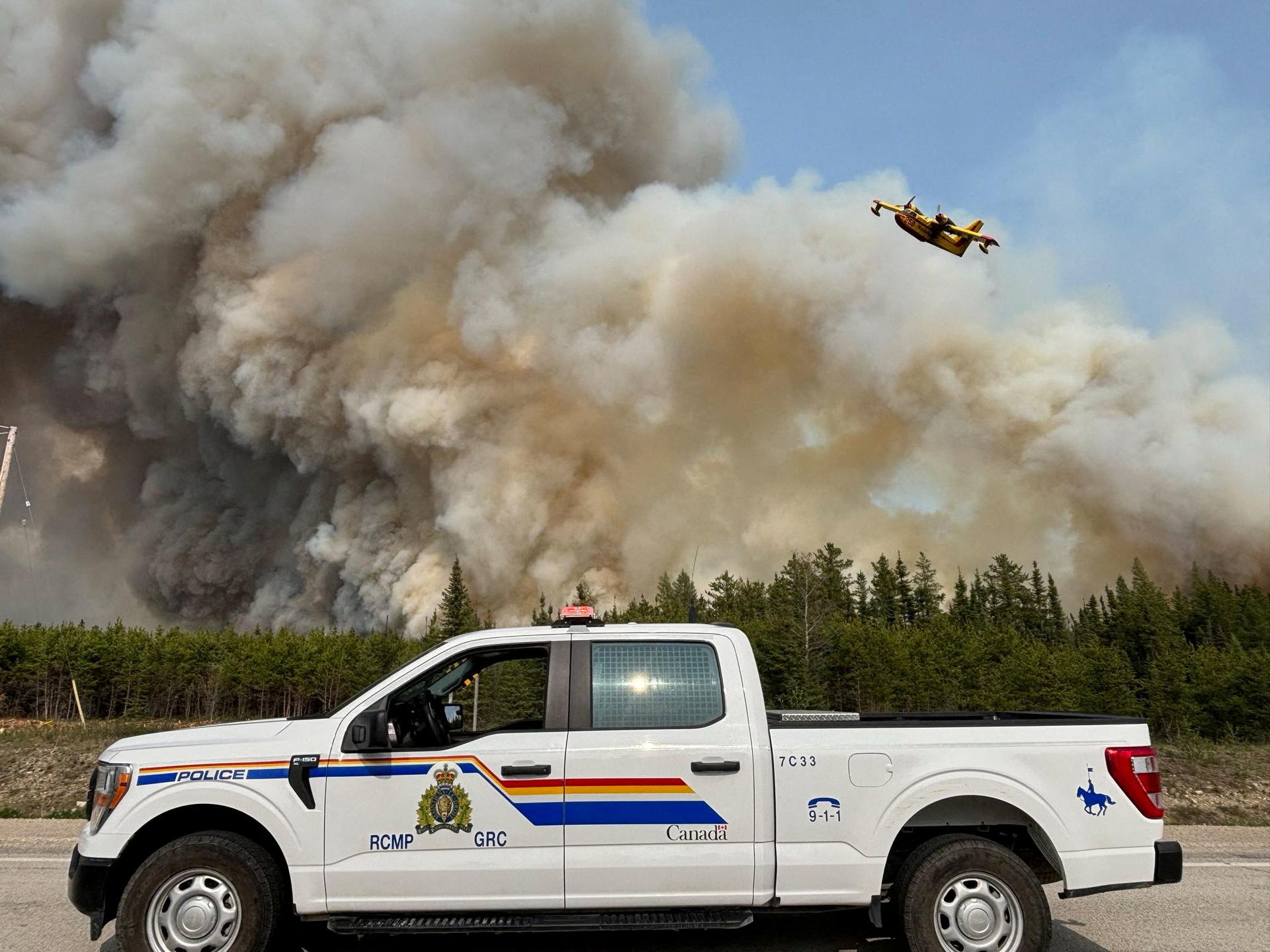
Keep scrolling for more updates on this week's extreme weather events such as the wildfires in Manitoba and the drought in northwest England. And click here to let us know what you would like to read more about our Reuters climate tracker survey.








0 comentários:
Postar um comentário