Dear reader, The Life Cinematic is coming to an end. My reviews will instead be shared as part of the Independent Culture newsletter, which you'll receive automatically from 14 June. If you do not wish to receive the Independent Culture newsletter, please opt out by clicking here and updating your preferences before 13 June. You can unsubscribe at any time via the link in the newsletter. |
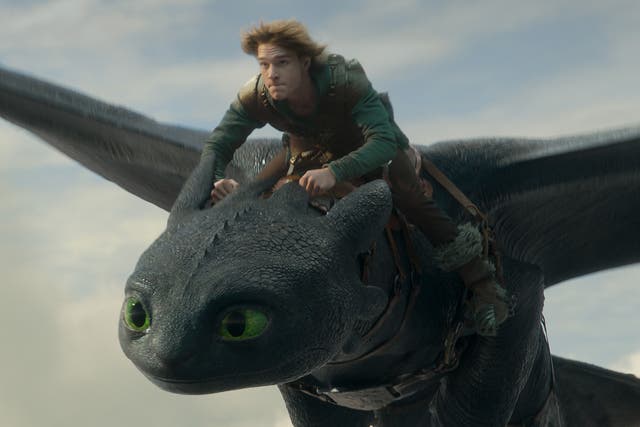
At what point did the phrase "it's exactly like the original" not only become a compliment, but the driving force behind every Hollywood remake? The new, live-action How to Train Your Dragon is largely identical to its source, the 2010 DreamWorks animation, down to individual shots and the swell of John Powell's recognisable score. It may not have been made with generative AI but it certainly replicates its process, scraping images from a pre-existing artwork and re-rendering them with the prompt, "make it more grounded and more realistic". In practice, it's merely blander and greyer. You have to wonder if studios are trying to prep us for the inevitable.
Dean DeBlois, who directed the original alongside Chris Sanders, returns here to recount the story of teen viking Hiccup (originally voiced by Jay Baruchel, here played by The Black Phone's Mason Thames), a social outcast on the fantastical isle of Berk, who makes an unexpected friend in a supposedly deadly dragon he christens Toothless, a half-salamander, half-black cat kind of beast. Read the full review here.
Out this week: If you want to see the same film twice, Universal's live-action How to Train Your Dragon (**) is out in cinemas this week. Or, you can check out Daisy-May Hudson's stirring social realist drama Lollipop (*****), in which Posy Sterling delivers one of the best performances of the year as a woman fighting for custody of her children. Or, there's John Maclean's quasi-western Tornado (****), a perfect companion to his earlier Slow West, both with the real texture of cowboy campfire stories. And, lastly, Jane Austen Wrecked My Life (***), a Gallic take on the literary infused romcom, sweet but a little surface level. |
|
| | Written by Clarisse Loughrey |
|
|
If it feels like you've already seen Ballerina – the new John Wick spin-off in which Ana de Armas plays a pirouetting assassin –you're likely thinking of 2018's Red Sparrow, in which Jennifer Lawrence stars as a Russian ballerina-turned-spy. It's that, or maybe the flashbacks in Black Widow of the Marvel superhero's childhood in the nefarious (and also Russian) Red Room, in which regular time at the barre formed part of the programme's deadly curriculum.
It'd be nice if someone in Hollywood could try out a different metaphor for lethal feminine strength. But, for now, we're here, where Armas's Eve Macarro is raised by the same Ruska Roma (once again, Russian) clan that transformed Keanu Reeves's Wick into the feared Baba Yaga, trained in the art of both murder and pliés. She's seeking revenge against the man (Gabriel Byrne's the Chancellor) responsible for her father's (David Castañeda) death, all while trying to dodge a constant volley of "female assassin" stereotypes.
Her mentor, Nogi (Sharon Duncan-Brewster), at one point looks her dead in the eye and tells her to "fight like a girl" – a sentiment then echoed in the film's closing credits, in a track by Evanescence and musician K Flay. It's as if Nike's suddenly rocked up with a van full of moisture-wicking polyester leggings to sell. When Eve crosses paths with Norman Reedus's character and his adorable little daughter, the narrative develops an odd push-and-pull effect where it can't decide whether her cold heart has been melted by awakening maternal urges, or whether she's simply mystified that everyone's assumed that for her.
It's a little frustrating that Ballerina is even tempted by such bog-standard trademarks of the genre, since it's all neatly countered by how rough, nasty, and deviously imaginative Eve is when she fights. She takes a kick and a punch as well as Wick does. She goes ham with a box full of grenades and a flamethrower. Read more here. |
|
|
A document of where I've gone and the things I've seen |
Monday, 9 June
I spoke to director Michael Pearce and star Domhnall Gleeson about their new Apple TV+ thriller, Echo Valley, and what it takes to build a different kind of antagonist. Wednesday, 11 June
I checked out Alberto Sciamma's Cielo, shot entirely in Bolivia, which premiered recently at SXSW London. It's a beautiful, colourful film, with a nicely macabre outlook rooted in the difference between faith and delusion, old and new religions. It should arrive in UK cinemas in due course. Thursday, 12 June I travelled into London for an early preview of Pixar's new, intergalactic comedy Elio. |
|
|
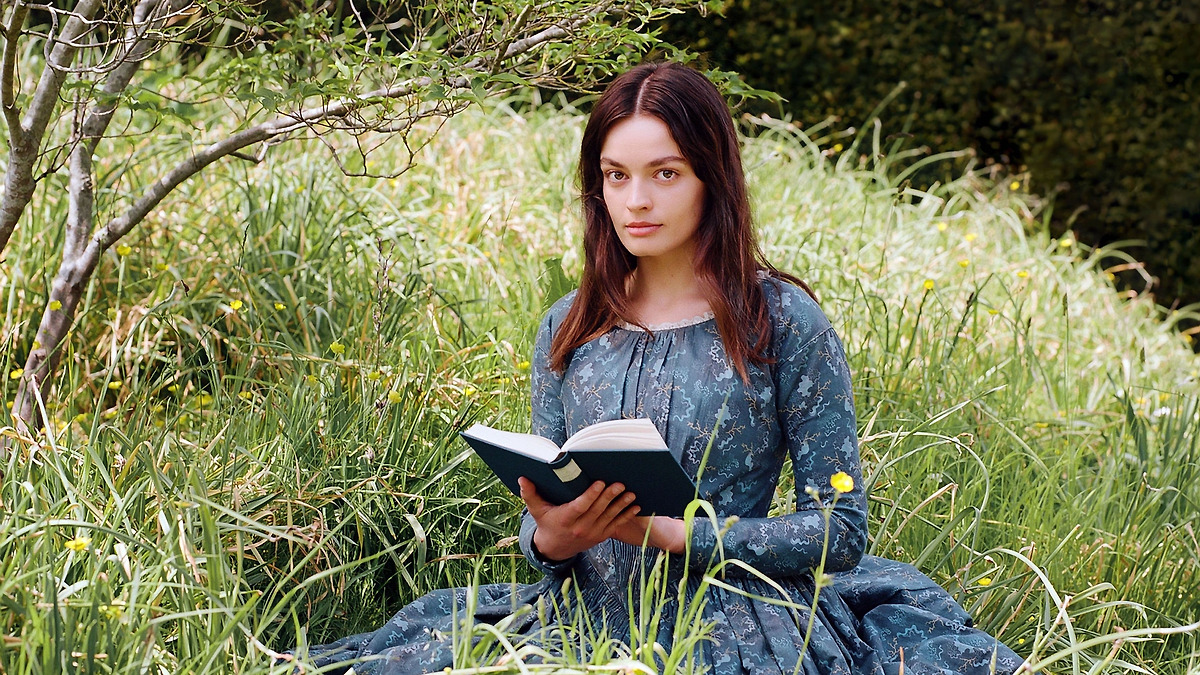
The Society of Avid Film Watchers | After I watched Emily for the first time, I did what I usually do when a film smacks me right in the soul – I went to the bathroom and cried for ten minutes. It wasn't the reaction I'd anticipated from Frances O'Connor's debut, a semi-fictitious portrait of the Brontë sister who wrung such tortured romanticism out of her one and only novel, Wuthering Heights. If I'm totally honest, I'd read the book at the wrong time in my life – when I was deep in my cynical, Catcher in the Rye-obsessed teen phase – and had dismissed it all as phoney. But there was something about O'Connor's Emily, as portrayed by Emma Mackey, that played like a reflection. It was the way she struggled to meet people's eyes. The way she hid away when company came over. And, mostly, the way her strangeness was carried like a burden by those around her. When I got home, I immediately Googled the question: "was Emily Brontë autistic?" I've not really written about it before, but the past year has been one of deep self-reflection, spurned by a psychotherapist in the family who sent me a diagnostic test for autism spectrum disorder and gently suggested I take it. The results were pretty conclusive. As anyone who's been on this journey will know, it's an incredibly complex thing to categorise and pin down. And even more impossible to formally diagnose – especially for high-masking women. But the months of research have seen a lot of things click into place. And, more recently, I've found myself constantly returning to something Emily's own sister, Charlotte, once wrote of her: "an interpreter ought always to have stood between her and the world." If I had to condense my current understanding of autism, or at least my own experience of it, it would probably boil down to that single phrase. So, when I was offered a chance to talk to Frances O'Connor for Emily's home entertainment release (it's out this week, and hopefully my review will urge you to watch it), I only really had one question in mind. Had she heard about the academic theories that Emily may have been autistic? And what could she even do with the idea – especially when diagnosing someone purely off anecdotal evidence is basically impossible and, as I'd be inclined to agree, a little morally questionable? I found O'Connor's response moving in itself. There's no need for us to say, concretely, what Emily was or wasn't. But the fact O'Connor's film is open enough to the notion that I could see myself in Emily, at a time when my own understanding of the world is shifting so dramatically, feels like enough. I've condensed some of her responses, including a discussion about Emily and Charlotte's relationship, below. |
"Some of the people that I talked to – and I probably shouldn't say who they were, they were people who've written books about the Brontës – but when I asked this one particular writer, she said: I would never come out and say it publicly because I feel like, to put a label on someone like Emily, is kind of reductive. And that it would prevent people from seeing all those different aspects of her and that's part of her. But I don't know if I necessarily agree, because I think it's really great to celebrate everybody. And a lot of amazing artists are on the spectrum. And a lot of amazing scientists. Their brain – there's not a dysfunction in their brain, that is their brain. That is how they function in the world. That's how they perceive the world. And just because it's different doesn't mean it's bad or wrong. So I think it's kind of good to, you know, to make those kinds of connections with her. And that's kind of why I included those kinds of aspects of her. I don't know if she was autistic, because everything's anecdotal. You can't definitively say that she was, but it does kind of fit in a lot of the kinds of things that people say about her behaviour. When Wuthering Heights came out, it was really a controversial novel. And people kind of freaked out about it. And I think Charlotte had to do a lot of damage control, even for her own novel. Charlotte spent a lot of time explaining her sister to the world, I think. But I also think she probably did act as an interpreter walking around the world when they were together. And I do think that was, you know, a lot of pressure on Charlotte to be that person who always had to navigate that stuff for Emily. But the point of the film is really to, kind of – if you are different – to celebrate that and not to feel like that it's a negative thing. And actually, that thing that you feel is not a good part of yourself, it actually may be your gift, and that there's something really beautiful in that. I think it was definitely a push-pull power struggle between the two of them – probably their whole lives, and not in a malicious way, just in a way of two people kind of coexisting, where one person is incredibly adept at kind of moving through the world. And was quite social and was able to kind of walk into society and function quite well. And Emily, who, that's a complete nightmare for and had no skills in that at all. The other thing is that when they all sat down to write their first book, Emily wrote Wuthering Heights, and Charlotte wrote The Professor, which never got a publisher until after she died. And I feel it's because she wrote what she thought people wanted. She wasn't really writing from her true place yet. And that it wasn't until she read Wuthering Heights that she had the courage to write Jane Eyre. So I feel like they coexist together, those novels, and live in the same world. I have three sisters. So for me – you get defined in the family, and people give you a place in the family. And sometimes you don't deserve that spot, or you don't want to be that – what they assigned to you. You've got a lot more inside you. So, I wanted to kind of play around with that. And I think I do slightly push Charlotte in terms of who she really was. But in this film, this Charlotte is someone who is completely playing by the rules. Who wants her father to love her. And she's kind of abandoned her imaginative self in order to be loved by her father, which is really the patriarchy. I feel like we know those moments when our friends start wearing makeup. When we're, like, 13. And they start to become more sexualized. And it feels that, for me, it was anxious-making – that thing of people moving over into a grown-up position, and kind of losing themselves a little bit. Because to be that kind of woman is very much rewarded in society. But maybe you have to move away from your true sense of who you are. So I was interested in exploring that through Emily and Charlotte. But there are the real Brontës. And then there are the Brontës that exist in my film. They're together, but there are things that are serving my narrative." |
|
|
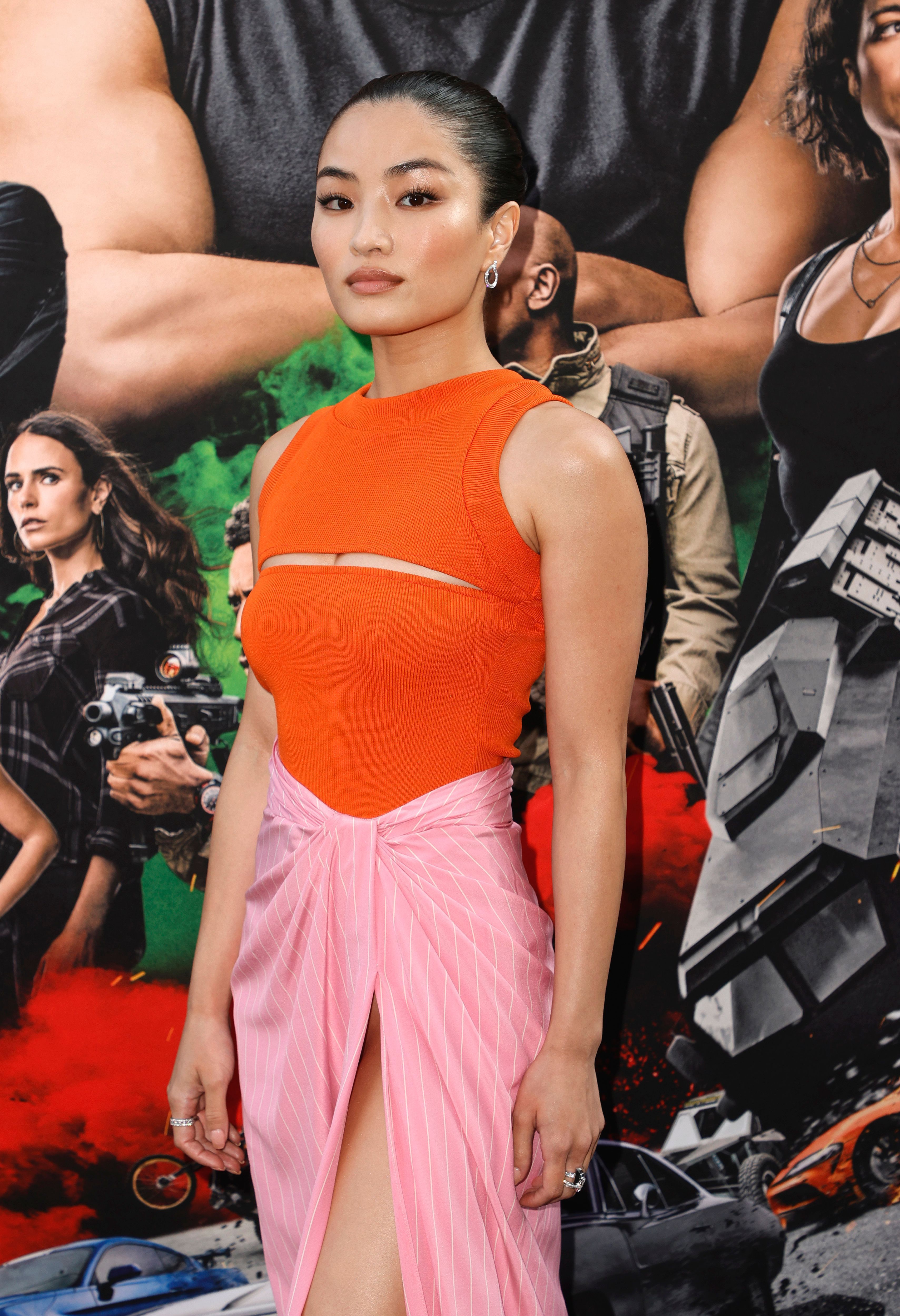
Anna Sawai attends the Universal Pictures "F9" World Premiere at TCL Chinese Theatre on June 18, 2021 in Hollywood, California.
(Photo by Frazer Harrison/Getty Images) |
|
|
In case you missed it, this will be the last edition of The Life Cinematic. My reviews will instead be shared as part of the Independent Culture newsletter, which you'll receive from 14 June. Thank you for reading, it's been a pleasure to share my thoughts with you in this space. |
|
|
Don't forget to complete your registration |
We've noticed that you still have not completed your registration to The Independent. Registration is a free and easy way to support our journalism. It allows us to better understand our readers and tailor your experience. |
By registering, you'll also gain access to a range of exclusive benefits, including: |
- Limited access to Premium articles
- Access to The Independent app
- Access to more than 20 newsletters
- Commenting on independent.co.uk
|
|
|
Join the conversation and follow us |
|
|
Download the free Independent app |
|
|
Please do not reply directly to this email You are currently registered to receive The Independent's film newsletter. To unsubscribe from The Independent's film newsletter, or to manage your email preferences please click here. This e-mail was sent by Independent Digital News and Media Ltd, 14-18 Finsbury Square, London EC2A 1AH. Registered in England and Wales with company number 07320345
Read our privacy policy and cookie policy
|
|
| |





0 comentários:
Postar um comentário