Hello! Today's newsletter continues to focus on the aftermath of the floods that have swept across Pakistan, the Himalayas and India, and also looks at Nigeria's struggles with rising incidents of coastal erosion. This week, Pakistani authorities have evacuated more than a million people from homes in Punjab province, officials said, as the worst flooding there in four decades caused havoc in hundreds of villages and submerged vital grain crops. Torrential monsoon rain and neighbouring India's release of excess water from its dams swelled three rivers that flow into the eastern province, forcing authorities to breach riverbanks in some places – causing flooding in more than 1,400 villages, Punjab's disaster management authority said. Elsewhere, heavy rain swept across the Himalayas, killing at least 36 people in India over the past 24 hours and forcing authorities to open major dams. In the deadliest single disaster, a landslide killed 33 people near the Hindu mountain shrine of Vaishno Devi on a pilgrim route in India's federal territory of Jammu and Kashmir on Tuesday afternoon, officials said. Over in Nigeria, an ocean surge swept through the village of Apakin in June, one of Lagos' last indigenous coastal communities, washing away fishing boats, nets and graves. It was only the latest event in the settlement of roughly 3,000 people that are losing homes and livelihoods to rising seas. Despite pledges of support from Commonwealth leaders, worsening ocean surges have left the centuries-old community feeling powerless, with residents fearing their ancestral land could soon be lost to the sea, according to local chief Abimbola Iyowun. Lagos State says rising seas pose the biggest long-term climate threat, but environmentalist Philip Jakpor argues that government-backed projects like the massive Dangote oil refinery and deep sea ports are equally damaging to coastal communities. |
|
|
1. Record wildfires burn more than 1 million hectares of EU land this year |
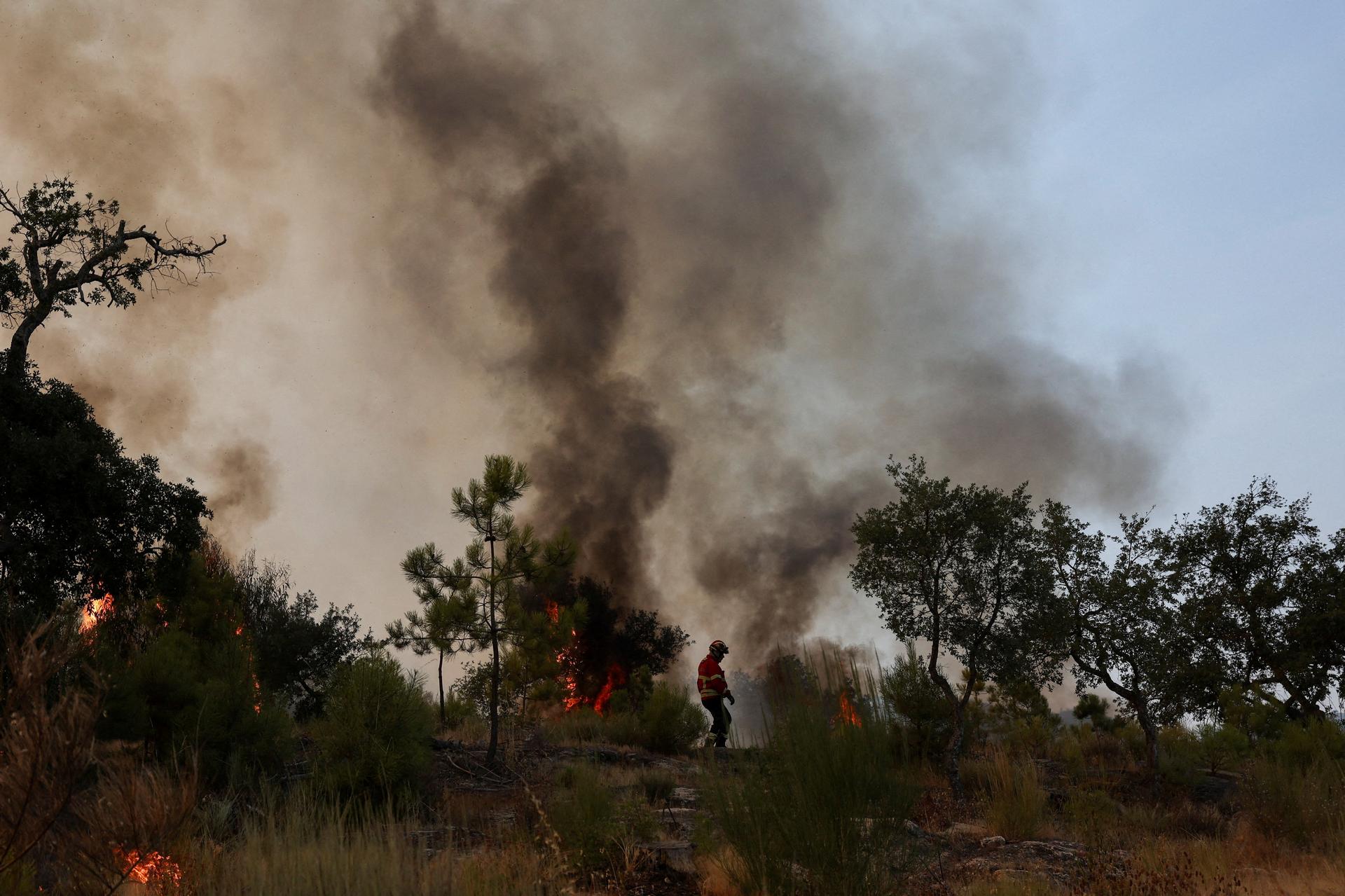
A total of 1,028,000 hectares in the European Union had been ravaged by blazes as of Tuesday – an area bigger than Cyprus, and higher than the total in any year on record, data from the EU's European Forest Fire Information System, analyzed by Reuters, showed. |
A firefighter moves through burning trees and shrubs during a wildfire in Castelo Novo, Fundao area, Portugal. REUTERS/Violeta Santos Moura/File Photo |
2. A timeline of Trump's moves to dismantle the US wind and solar energy industries |
Click here for a timeline of U.S. President Donald Trump's wind and solar energy rollbacks as his administration continues to unravel federal support for clean energy projects. |
3. Methane emissions rising in beef-rich Brazil, climate group says |
Brazil's methane emissions increased 6% between 2020 and 2023, when the world's largest beef exporter released 21.1 million tons of the potent greenhouse gas, its second-highest level ever, according to a study released by the Climate Observatory. That figure exceeded all the greenhouse gases emitted by Italy in the same year, the Climate Observatory said. "Methane is a greenhouse gas that can warm the planet much more than carbon dioxide," Climate Observatory, a network of environmental organizations from Brazilian civil society, said in a statement. |
4. Sky-high electricity costs hinder Britain's net zero mission | Looks like it's not just households suffering from Britain's sky-high energy bills! The International Energy Agency said large energy intensive companies in Britain paid about four times more for electricity last year than U.S. businesses, and more than double competitors in France and Germany. Besides hitting competitiveness and contributing to stubbornly high British inflation rates, power prices have acted more generally as an obstacle to Britain's shift towards cleaner energy and the government's goal of hitting net zero by 2050, according to more than 25 industry figures including business owners, energy managers and policy experts. Click here for the full Reuters story. |
5. World oil market looks more 'bloated' after OPEC+ hike, IEA says |
The world's oil supply will rise by 2.5 million barrels per day in 2025 – up from 2.1 million bpd previously forecast – as the Organization of the Petroleum Exporting Countries will further increase output and supply from outside the group increases as well, the International Energy Agency said. The IEA, which advises industrialised countries, said in its monthly report that oil supplies will also rise by a further 1.9 million bpd next year. OPEC maintained its forecast for demand to rise by 1.29 million bpd this year – almost double the IEA figure. |
|
|
Click here for a Reuters video on a positive animal conservation story about how Mexico's jaguar population has increased significantly in recent years. But the largest feline in the Americas is still in danger of extinction, said a Mexican advocacy group that released a national census of the animals. |
|
|
- Why bother with this year's climate conference in New York as the Trump administration is pressing on with vast sustainability rollbacks? Well, click here to read Helen Clarkson, Climate Week New York CEO's answer to that question in a comment for Ethical Corp Magazine.
- Click here for key data points marking the ups and downs of fossil fuels and clean energy sources within the U.S. power generation system, according to an analysis by Reuters Global Energy Transition Columnist Gavin Maguire.
- As the world heats up, little attention is being paid to the plight of garment workers – most of them women – who keep the global fashion industry running, even as their health and safety deteriorate, writes Namit Agarwal, head of the World Benchmarking Alliance's work on social sustainability, in a comment for Ethical Corp Magazine.
|
|
|
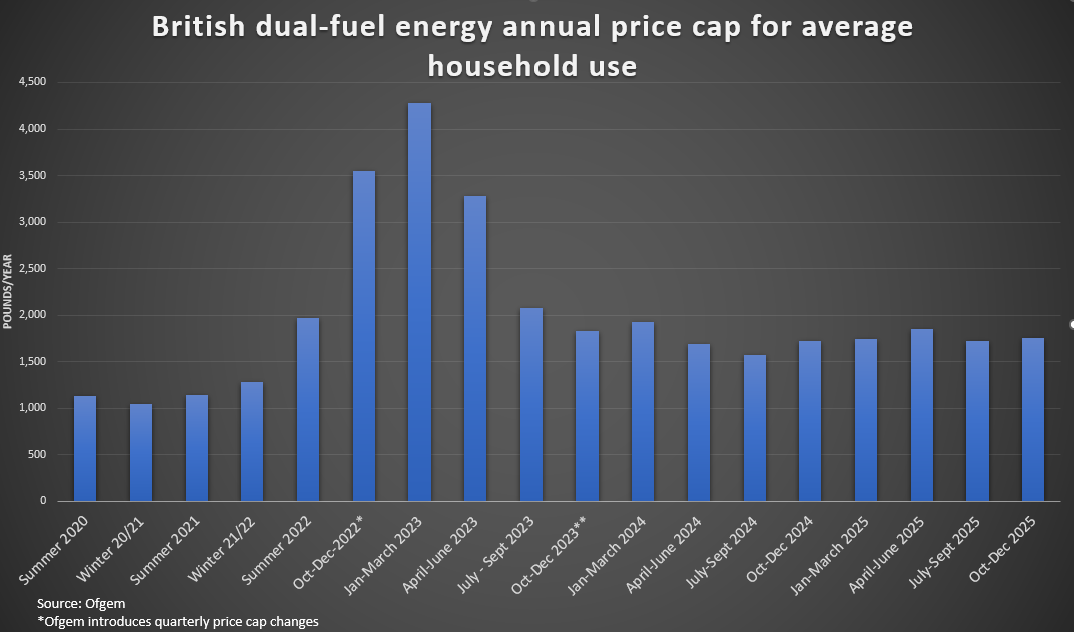
Today's lens follows up with a 'Climate Buzz' story on Britain's rising energy bills as millions of households already grappling with strained budgets will see higher energy bills from October after regulator Ofgem increased its price cap by 2%. The price hike by the regulator, a non-ministerial government department, comes after inflation hit its highest in 18 months in July and the government faces pressure over the affordability of its net zero plan. |
|
|
Or $2.24 billion is what it costs to fix the road damage caused by extreme rainfall that happened across swathes of China, the transport ministry said, highlighting how climate risks are placing additional pressure on the ailing economy's public purse. The preliminary estimate covers damage to roads since the start of flood season, Li Ying, a ministry spokesperson, told reporters, and includes 23 provinces, regions and municipalities - more than two-thirds of China's administrative divisions. |
|
|
Sustainable Switch Climate Focus was edited by Mark Potter. |
|
|
Sustainable Switch is sent three times a week. Think your friend or colleague should know about us? Forward this newsletter to them. They can also sign up here. Want to stop receiving this email? Unsubscribe here. To manage which newsletters you're signed up for, click here. This email includes limited tracking for Reuters to understand whether you've engaged with its contents. For more information on how we process your personal information and your rights, please see our Privacy Statement. Terms & Conditions |
|
|
|








0 comentários:
Postar um comentário