You can replace this text by going to "Layout" and then "Page Elements" section. Edit " About "
Pague com LPs do Mister Colibri
Quer comprar celular,Tablet,pen drive, GPS e muito outros produtos e ainda podendo pagar tudo em LPs ?Pois saiba que isso é possível,basta você visitar o site downloadstotal.com e realizar a sua compra com toda tranquilidade e segurança!!!
Thanks for reading The Briefing, our nightly column where we break down the day's news. If you like what you see, I encourage you to subscribe to our reporting here.
Greetings!
As we wrap up for the Labor Day weekend, one question has persisted through this week: Why is Nvidia CEO Jensen Huang so determined to demonstrate his need for the Chinese market? With Nvidia's ability to sell its artificial intelligence chips to China currently in limbo—caught between U.S. and Chinese government restrictions—another CEO might be playing down China's importance to the company. Nvidia is growing like gangbusters without China, so you can imagine another CEO saying, "Don't worry, we'll be fine."
But that's not what Huang did on Wednesday. In talking to analysts about Nvidia's July-quarter results, he spotlighted just how much business Nvidia is missing out on. "The China market, I've estimated to be about $50 billion of opportunity for us this year if we were able to address it with competitive products," he said, adding that it's likely to grow 50% per year, in line with the rest of the world. (In comparison, analysts project Nvidia will generate $206 billion in revenues in the 12 months ending January, according to S&P Global Market Intelligence.) Huang also noted on the call that half of the world's AI researchers are in China and most of the leading open-source models are created there. "It's fairly important, I think, for the American technology companies to be able to address that market," he said.
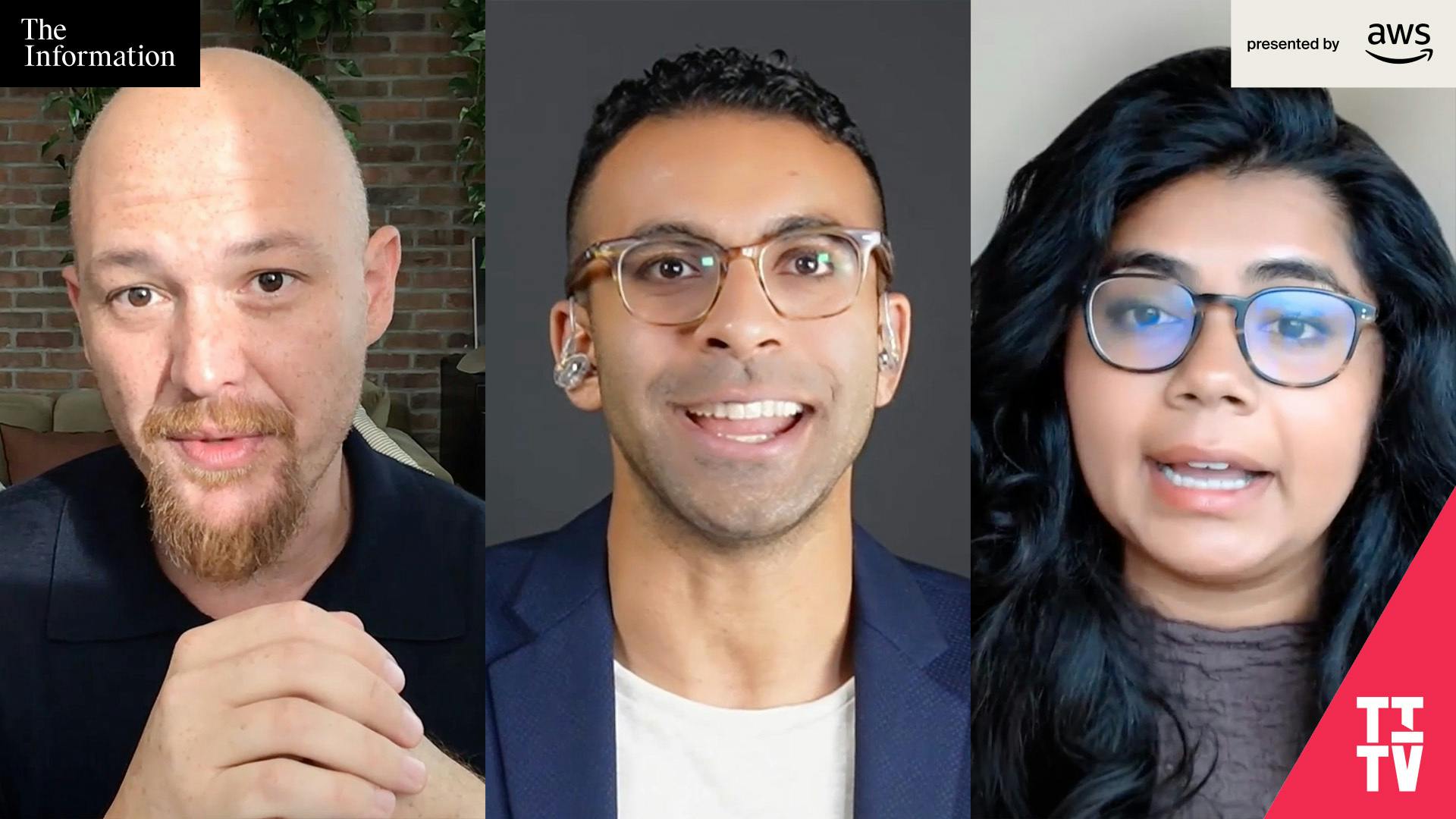
During a discussion on The Information's TITV this week, Seaport Research analyst Jay Goldberg said that in making these comments, Huang was "negotiating in public with the U.S. government…to make something happen." Presumably, Huang is worried that if Nvidia doesn't regain access to the market, China will over time become more competitive with its own chips and eventually take on Nvidia globally.
The problem with focusing on the U.S. government, though, is that President Donald Trump's administration has already demonstrated it is OK with Nvidia selling to China, as long as the government gets a cut of the money. (Goldberg pointed out that Nvidia has indicated it needs codification of that arrangement, possibly through legislation, before it can ship chips based on it.) It's China that is the issue: the Chinese government wants its industry to become self-reliant. Chinese regulators have ordered local companies not to buy Nvidia chips.
And Chinese firms have a growing number of locally grown chip alternatives to choose from. While they might not be on par with Nvidia's chips, local companies are starting to adopt them anyway. We scooped the news today that DeepSeek, one of the top AI developers in China, is now working with Huawei to use that company's chips for training some of its models. The Wall Street Journal meanwhile reported that Alibaba has developed a new chip that could be used for a broader range of AI tasks than its previous chips. As smart as Huang is, it's doubtful he can win over both the Chinese and U.S. governments.
The Information's Stories of the Week
Apple has discussed acquisitions of AI firms, such as of French model maker Mistral AI, as it tries to catch up in AI, we revealed in this deep dive. But its company culture, which opposes big acquisitions, is working against that push.
Also on the AI front, we looked at how Anthropic's idiosyncratic hiring approach might be helping it hold on to its staff better than its rivals, and we explained why OpenAI is so focused on health care. We profiled Vast Data, one of the leaders in the increasingly important data storage market. And we took an in-depth look at how the legal battle between Elon Musk and Sam Altman could play out.
In dealmaking, we revealed that crypto fund Pantera is looking to raise up to $1.25 billion to turn a public company into a solana investment firm. Chinese venture capital giant HongShan, formerly Sequoia China, has been slow to deploy a $9 billion war chest it raised a few years ago, a sign of the times in China. And we broke the news that AI database startup Pinecone is considering a sale.
Google watchers are on high alert, waiting for the antitrust ruling on how the company's search operations will be restructured to deal with the finding that it's a monopoly in that market. Meanwhile, we dug into the implications of Google's other antitrust case concerning ad tech; a court hearing to deal with its monopoly in that market gets underway next month.
In Other News
• Alibaba Group said its revenue from cloud computing services in the quarter through June grew 26%, boosted by triple-digit sales growth for AI-related products.
• China's top economic planner warned against excess competition and wasteful investment in the country's AI industry (more here).
• Flip, a video-sharing social media app that at one point tried to challenge TikTok's dominance, has shut down, according to a message to users and the company's website.
• Taz Patel, head of advertising and shopping at AI search engine startup Perplexity, has left the company after nine months, according to Adweek.
Today in The Information's TITV
Check out today's episode of TITV in which we talk with Replit CEO Amjad Masad about his take on AI margins and selling data.
Recommended Newsletter
Dealmaker was named the "Best in Business" newsletter for its insightful coverage of private technology and the AI hype cycle. Start receiving the newsletter here.
Reserve your spot for The Information's WTF 2025 Summit. With AI reshaping business, volatile markets, and rising political uncertainty, the boldest women are coming together to lead through change. Ticket prices increase September 5th.







0 comentários:
Postar um comentário