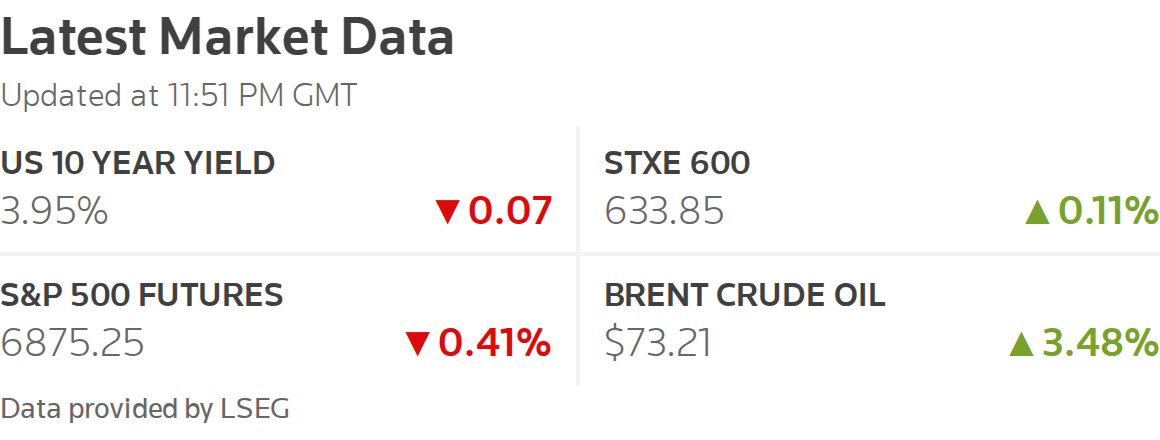
European and U.S. stock futures are in a more sober mood after Friday's euphoria, perhaps reflecting the realisation that things must be getting worse for the U.S. economy for the Fed to consider cutting rates even as inflation heads for 3% and above.
The "why" matters. It's one thing to ease policy because inflation is cooling, but another thing entirely to have to ease to support the economy and head off an unwelcome rise in unemployment.
Powell argued the inflationary impact of tariffs was likely to be a one-off rise in the price level, but that risks sounding like the "transitory" tag given to the initial spike in prices post-COVID.
The Fed's favoured core PCE price index due on Friday is already expected to tick up to a 19-month high of 2.9%, and a 3.0% reading would cause some sticker shock for the long end of the Treasury curve.
The Street also has to digest $183 billion in new supply this week, an outsized meal even for a market this big.
Talking of outsized, Nvidia reports on Wednesday and needs to knock the lights out to justify its $4 trillion market cap - which is fast approaching the worth of the entire Nikkei index.
Expectations are for a mere 48% rise in earnings per share on revenue of almost $46 billion, so the bar is high.
Which could be why options imply the chance of a 6% move in the share price in either direction depending on the results.
It was notable last week that tech stumbled a little as some began to wonder how much of hundreds of billions of dollars going into AI investment will ever make a return, or is this another dot-com bubble.
There will be much interest in how exactly the proposed deal with President Trump works, where Nvidia pays the U.S. government 15% of its earnings on some chips sold to China in return for export permits.
Details are scarce and analysts are not even sure that it's constitutional, but that's State Capitalism with American Characteristics for you.







0 comentários:
Postar um comentário