| Welcome, Weekenders! In this newsletter: |
| • The Big Read: Cheap goods, sales gimmicks fuel WhatNot's $11.5 billion live-shopping empire |
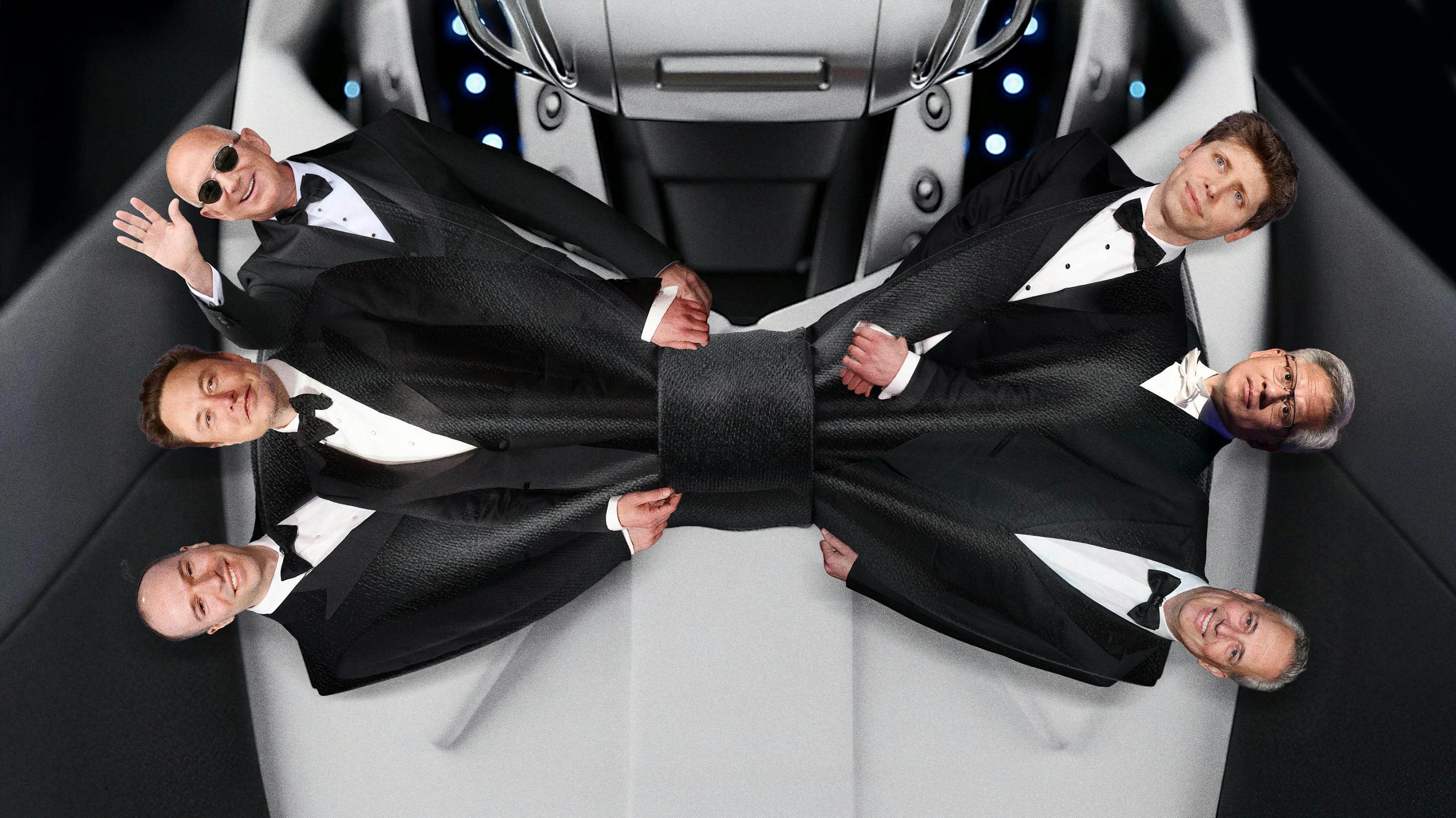
| • Shopping and Style: A tech mogul's guide to black tie |
| • Plus, our weekly pop culture Recommendations: "Wisecrack," "Threads of Empire" and "Jay Kelly" |
| |
| The FDA said at a panel this week that it is open to making changes on the black-box warnings for testosterone products. That's good news for men with low testosterone, which can cause fatigue, low libido and depression and leads to higher risks for Type 2 diabetes and heart attacks. |
| But one issue that didn't get much attention during the two-hour discussion is how testosterone is an increasingly popular part of anti-aging regimens, including one reportedly used by the guy who ultimately controls the FDA: That would be Robert F. Kennedy Jr, the Secretary of Health and Human Services. Silicon Valley denizens have embraced all kinds of supplements and off-label prescription drugs aimed at increasing longevity—including testosterone. |
| Kennedy, who has been photographed working out shirtless and wearing a pair of jeans, shared with Lex Fridman's podcast listeners in 2023 that he uses testosterone replacement therapy as part of an anti-aging regimen approved by his doctor. Joe Rogan has spoken several times on his own podcast about how taking testosterone and making lifestyle changes dramatically improved his health. Larry Lipshultz, one of the speakers on the FDA panel and a professor of urology at Baylor College of Medicine, summed it up for me afterward: "The older the person is, if he looks fantastic, the more likely it is he's probably taking T," shorthand for testosterone. |
| Testosterone is considered a controlled substance, putting it in the same category as ketamine. That designation happened in the wake of doping scandals involving athletes in the 1980s and ended up scaring off many clinicians from prescribing testosterone to patients that needed it. Doctors on the panel told the FDA they want the agency to remove the designation, and FDA head Marty Makary indicated before the panel got started that he is open to new thinking. If the FDA follows through and changes the warnings, more doctors are likely to prescribe it. The worry is that it might lead to overprescribing, particularly from online clinics where doctors may not meet the patients. |
| Mohit Khera, a urologist and Baylor College of Medicine professor who was on the FDA panel and has studied declining testosterone levels in men, said testosterone therapy is "not just about sex and muscles." He called a man's T level "the best barometer of his overall health." He said many men don't know that taking even small amounts of testosterone can make them infertile, and some of them end up in his clinic looking for help to reverse the problem. |
| Normal testosterone levels have a very wide range. More research is needed on the question of when to intervene if a man's T level is within the normal range but just barely. Some patients seem to think if they double their testosterone levels they might double their libido, Khera said. He tells them, "It doesn't necessarily work that way."—Amy Dockser Marcus |
| What else from this week… |
| • AI experiments at The Washington Post aren't going well. |
| • The New Yorker's Jay Caspian King thinks the fear that social media will kill off literacy and books is overblown. He makes a fun argument, which I suppose doubles as an effective call to go on reading at length on your phone—reading things like, say, New Yorker.com stories. |
| • Próspera, a city full of cryptonians backed by Marc Andreessen, Peter Thiel and Sam Altman, is falling apart in Honduras and jeopardizing the whole private cities movement. In other words, como se dice, "Uh-oh"? |
| • Blake Scholl's Boom Supersonic has had an uncanny ability to keep sucking up more venture capital for creating a supersonic airplane, which hasn't flown a single commercial route after more than a decade of efforts. Now he's got more money—this time to build a supersonic turbine that could help mitigate an AI energy crisis. I give Scholl credit: He runs on an infinite supply of gee whizness, which is often all you need to get billions of dollars out of investors. |
| • Stripe's Patrick Collison made a number of thought-provoking points recently: Effective altruism is dead. What replaces it? Unclear. He also said out loud what people have been saying quietly in tech: The gamification and gamblification of everything is outta control. I can see both becoming hot-button regulation issues along with AI during the midterms and then again in 2028—opportunities that will attract large amounts of gamified gambling.—Abram Brown |
| |
|
|
 |
|
| The immortal words of David Gindi, one of the more popular resale merchants on Whatnot, have stuck in my mind. "People don't watch TV," said Gindi, who does a thriving business as a purveyor of things like cheap jewelry and Pokémon trading cards. "They watch Whatnot." |
| And entertainment spectacles sure do abound on Whatnot, one of the more successful examples of importing Asia-style mobile live shopping to America. It's a cross between eBay and TikTok, with the joys and pitfalls of both, as our Ann Gehan explains in this week's Big Read. The concept digitizes the strategy QVC has dominated for decades, and Whatnot, faces stiff competition from a host of other digital competitors in addition to established retailers—most notably TikTok. Still, investors keep shoving money at the company, which recently saw its valuation hit $11.5 billion. |
| As Ann points out, you haven't really lived until you've experienced the highly theatrical unboxing of a mass amount of sports cards, a bit of drama that's something like watching a poker game and an art auction rolled into one. |
|
 |
|
| The holidays are here, bringing a calendar full of events that invite formal dress. And the White House keeps asking Silicon Valley over for dinner. The combination of the two means everyone is wearing their finest more often, and quite more than a few tech moguls need some snazzing up—and a refresh on the black-tie basics. Fortunately, Derek Guy, who many of you may know as the Twitter Menswear Guy, makes his Weekend debut with plenty of suggestions. |
| Abram Brown is the editor of The Information's Weekend section. You can reach him at abe@theinformation.com or find him on X. |
| |
 |
| Listening: "Wisecrack" |
| It's tough to do a good joke about a beloved mother's murder. And I would've thought it'd be difficult for someone to come up with a lot of funny lines about their own beloved mother's murder, but I have to hand it to British comedian Edd Hedges: He manages to do it pretty deftly, displaying a really—erhm—sharp sense of humor. |
| At first, Hedges used the material in his stand-up routine, but after TV producer Jodi Tovay blundered into one of his performances at the Edinburgh Festival Fringe, she talked him into joining forces for "Wisecrack," a real genre-bender of true crime and comedy: full of Hedges' hedgerow wit and stories of childhood as the pudgy kid in village England—and skimping not at all on the terror that befell him and his family a decade ago.—Abram Brown |
| Reading: "Threads of Empire" by Dorothy Armstrong |
| Look down at what's beneath your feet: It says more about you—and the times we live in—than you'd think. (The overly expensive Ruggable rug beneath my tootsies, which never lies snugly on its pad and stubbornly refuses to fit into any normal-size washing machine, tells me we're a society of false promises.) "Threads of Empire" examines a dozen carpets that played mute witness to important eras throughout time, and in examining them, Dorothy Armstrong, a British textile historian, manages to extract an engaging, interconnected story about wealth and sway over the last millennia. Under her scrutiny, a carpet is no mere humble floor covering; rather, it's a cloth totem of power and authority and a means to reexamine the past from an entirely different vantage point. Any number of famous people are visible from there: from John Paul Getty to Adolf Hitler to Peter the Great.—A.B. |
| Watching: "Jay Kelly" (Netflix) |
| "Jay Kelly," the latest Noah Baumbach film, is a Christmas movie. Or, at the very least, it has a good amount of narrative DNA in common with one particular Christmas classic, Charles Dickens' "A Christmas Carol," with Baumbach's namesake protagonist, aging actor Jay Kelly (George Clooney), losing himself in a regretful swirl of past, present and possible futures. |
| Honestly, Netflix's decision to give "Jay Kelly" an early December debut makes the parallels impossible to miss. But I don't point out the similarities to make a knock on the movie, which manages to thread between heartfelt and funny, and I suppose the persistence of such themes as loss, corrosive workaholism and emotional miserliness across centuries of storytelling speaks to their universality and ability to anchor a drama. Oh, and gosh—a climactic graveyard scene still really does slap, doesn't it?—A.B. |




0 comentários:
Postar um comentário