| |  | Jan 21, 2026 | | | | | Supported by |  | | | | | | Happy Wednesday! OpenAI asks advertisers to spend less than $1 million in ad trials. Andy Jassy says Amazon is open to AI shopping assistants from other companies. Netflix's fourth-quarter revenue was 17.6% higher, ahead of its projections.
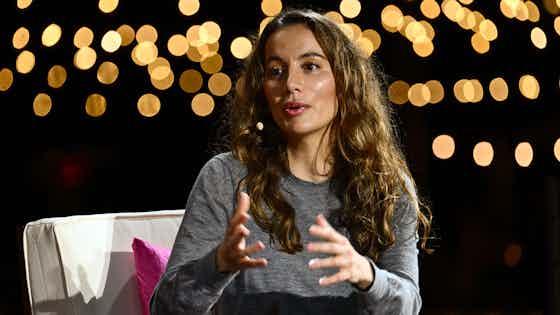
| | | | OpenAI is asking a small group of advertisers for spending commitments of less than $1 million each over a several week trial period, as the company tests new ads within its ChatGPT chatbot, The Information reported on Tuesday. The ads will launch as soon as February. To start, the company is charging on the basis of ad views as opposed to per-ad clicks that are typical at large sellers of search ads like Google and Amazon. OpenAI is also working on self-service ads. While OpenAI last week said it was introducing ads in ChatGPT for nonpaying users and subscribers in the U.S. to a new $8 a month tier, details of the ad model and cost weren't known. Advertisers have been keen to test ads in OpenAI's products, given the company's reach of about 900 million weekly active users. | | | | Amazon CEO Andy Jassy said on Tuesday that the retail giant is open to working with other companies to run their AI shopping assistants on its site, where it already offers its own shopping chatbot. "I think that over time we will work with other third-party agents as well," Jassy said, speaking in an interview with The Information's Jessica Lessin at the World Economic Forum in Davos. Amazon last year took steps to block AI shopping agents from companies including Google and OpenAI from its retail site. Jassy said that AI shopping agents often get product information or pricing wrong right now, but he expects that to improve and for retailers and AI firms to also hammer out agreeable financial terms. "I am optimistic that those will work out. We're having conversations with lots of people and I'm very bullish on agentic commerce," he said. | | | | Netflix reported 17.6% higher revenue in the fourth quarter, ahead of its projections, and revealed that its ad revenue had more than doubled in 2025 to $1.5 billion. That was the first time the company had given a precise number for its ad business, which was launched just over three years ago. But Netflix stock fell nearly 5% in after-hours trading after the company forecast that its revenue growth rate would slow to between 12% and 14% for 2026, well below last year's 16% growth. That growth rate is despite the company's expectation that its ad revenue would double again in 2026. Netflix also said it now had more than 325 million paid subscribers, the first time in a year it has given a number of subscribers. Netflix used to disclose the subscriber count every quarter but ceased a year ago. | | | | Nvidia CEO Jensen Huang is preparing for a trip to China later this month as the company works to regain its footing in this strategically important market, Bloomberg reported, citing a person with knowledge of the plans. Huang will join company festivities ahead of the Lunar New Year, a tradition he's held in the last few years, while potentially making a stop in Beijing, according to Bloomberg. Whether he'll secure face time with senior government officials remains uncertain and the itinerary hinges on whether key meetings actually come together, Bloomberg reported. The trip comes as Nvidia faces mounting regulatory hurdles in China. Beijing has narrowed the window for H200 purchases dramatically, telling companies last week imports could only be permitted in special circumstances, The Information reported. The planned visit shows Huang hasn't relented his efforts to maintain access to China, where AI developers continue to have high demand for Nvidia's advanced computing chips. The visit comes two months after President Donald Trump authorized the H200 chip sale to China, marking the biggest rollback of Biden-era semiconductor restrictions to date. While the H200 is the most powerful AI chip currently accessible to Chinese buyers, it still lags behind Nvidia's latest Blackwell chips. | | | | Elon Musk and Sam Altman traded barbs on X this week over media reports of deaths linked to OpenAI's ChatGPT and other AI-related safety issues. On Monday, Musk shared a post about a man who committed a murder-suicide after a series of delusional conversations with ChatGPT, calling the story "diabolical" and saying that AI should "not pander to delusions." On Tuesday, he followed up with another post saying "don't let your loved ones use ChatGPT." In response, Altman wrote Tuesday that "we need to protect vulnerable users, while also making sure our guardrails still allow all of our users to benefit from our tools." He also said that Musk had previously complained about ChatGPT's moderation being too restrictive. In addition, Altman took jabs at Musk's companies Tesla and xAI, writing: "Apparently more than 50 people have died from crashes related to Autopilot. I only ever rode in a car using it once, some time ago, but my first thought was that it was far from a safe thing for Tesla to have released. I won't even start on some of the Grok decisions." xAI has faced criticism in the past few weeks after Grok allowed some users to create sexualized images of real people, including minors. | | | | The Federal Trade Commission said it is appealing a November ruling that cleared Meta Platforms of accusations that the company improperly monopolized the social media business. In a statement, the FTC said the appeal will be heard by the U.S. Court of Appeals for the District of Columbia. The agency said after the November ruling that the judge in that case erred in finding that Meta did not have a monopoly in social media. A loss in the case could have forced Meta to divest from two of its biggest acquisitions, the apps Instagram and WhatsApp. "The Trump-Vance FTC will continue fighting its historic case against Meta to ensure that competition can thrive across the country to the benefit of all Americans and U.S. businesses," the agency's Bureau of Competition Director Daniel Guarnera said in a statement. In a statement, a Meta spokesperson said: "The District Court's decision to reject the FTC's arguments is correct, and recognizes the fierce competition we face. We will remain focused on innovating and investing in America." | | | | ServiceNow has signed a multi-year deal to pay for OpenAI's artificial intelligence models in its business software, the two companies said on Tuesday. Under the agreement, OpenAI will now be the "preferred" AI model provider in ServiceNow's software. In the past, ServiceNow let customers choose between AI models from OpenAI or other providers including Google and Anthropic. ServiceNow will pay OpenAI based on how much customers use the models, according to a spokesperson. Exact terms of the deal were not disclosed. The partnership reflects how both established enterprise software firms and AI labs are aiming to convince companies to spend more on AI software. OpenAI has been prioritizing growing enterprise use of its software because, unlike non-paying individual users of ChatGPT, enterprises pay each time they use the models, helping margins. Meanwhile, ServiceNow is one of many software firms racing to convince customers to spend more on AI features that automate white collar tasks like resolving IT help desk tickets or onboarding new employees, for example. | | | | Amazon has tapped former Microsoft executive Jigar Thakkar to lead Quick Suite, a collection of enterprise search and agent-building tools it launched in October as part of a broader push to develop compelling AI applications. Thakkar, whose title is vice president of Quick Suite, is a key hire for Amazon, which hasn't had the same level of traction for its cloud applications as it has in cloud infrastructure services. During his nearly two decades at Microsoft, he was part of a group that built its Teams workplace collaboration product. Thakkar spent the past seven-plus years as CTO and head of engineering at MCSI, a financial services firm. Quick Suite, which is similar to products from companies like Glean and Atlassian, is off to a good start internally, with "hundreds of thousands of users," according to a company spokesperson. In a sign of its importance, Amazon CEO Andy Jassy personally announced Quick Suite when it launched in October. | | | | Netflix is converting its offer for Warner Bros. Discovery to make it all cash, but at the same $27.75 a share level that the companies agreed in early December, both companies said Tuesday. The revised offer reflects pressure from bidder Paramount Skydance, which is offering $30 a share for all of Warner Bros. Discovery. Netflix is only buying the film studio and streaming operations of WBD, leaving aside its cable channels. WBD plans to spin off the cable channels as a separate company before the Netflix acquisition is completed. Netflix's original offer was a mix of cash and stock but since the deal was announced, Netflix's stock price has fallen, reducing the value of the offer. Meanwhile, Paramount has argued that its offer is superior because the cable channel spin off won't trade at a very high level. | | | | Pinterest named former Spotify ads chief Lee Brown as its first Chief Business Officer, overseeing sales, content, "ad product marketing" and "customer-facing operations." The appointment comes days after Brown quit DoorDash after just a few months. At the same time, Pinterest said Chief Revenue Officer Bill Watkins has decided to leave the company. Watkins had been with the firm for 12 years, helping Pinterest scale from zero to more than $4 billion in revenue, the company noted. Pinterest also hired Claudine Cheever from Amazon as Chief Marketing Officer, to oversee marketing and communications. | | | | | Popular articles
By Erin Woo and Stephanie Palazzolo
By Aaron Holmes, Sri Muppidi and Catherine Perloff
| | | | | Opportunities Empower your teams to stay ahead of market trends with the most trusted tech journalism.
Learn more
Reach The Information's influential audience with your message. Connect with our team | | | | | |













0 comentários:
Postar um comentário