If, by his own admission, the only thing that can stop Donald Trump is his own moral compass, on the evidence of his latest adventurism, what on earth might he do next?
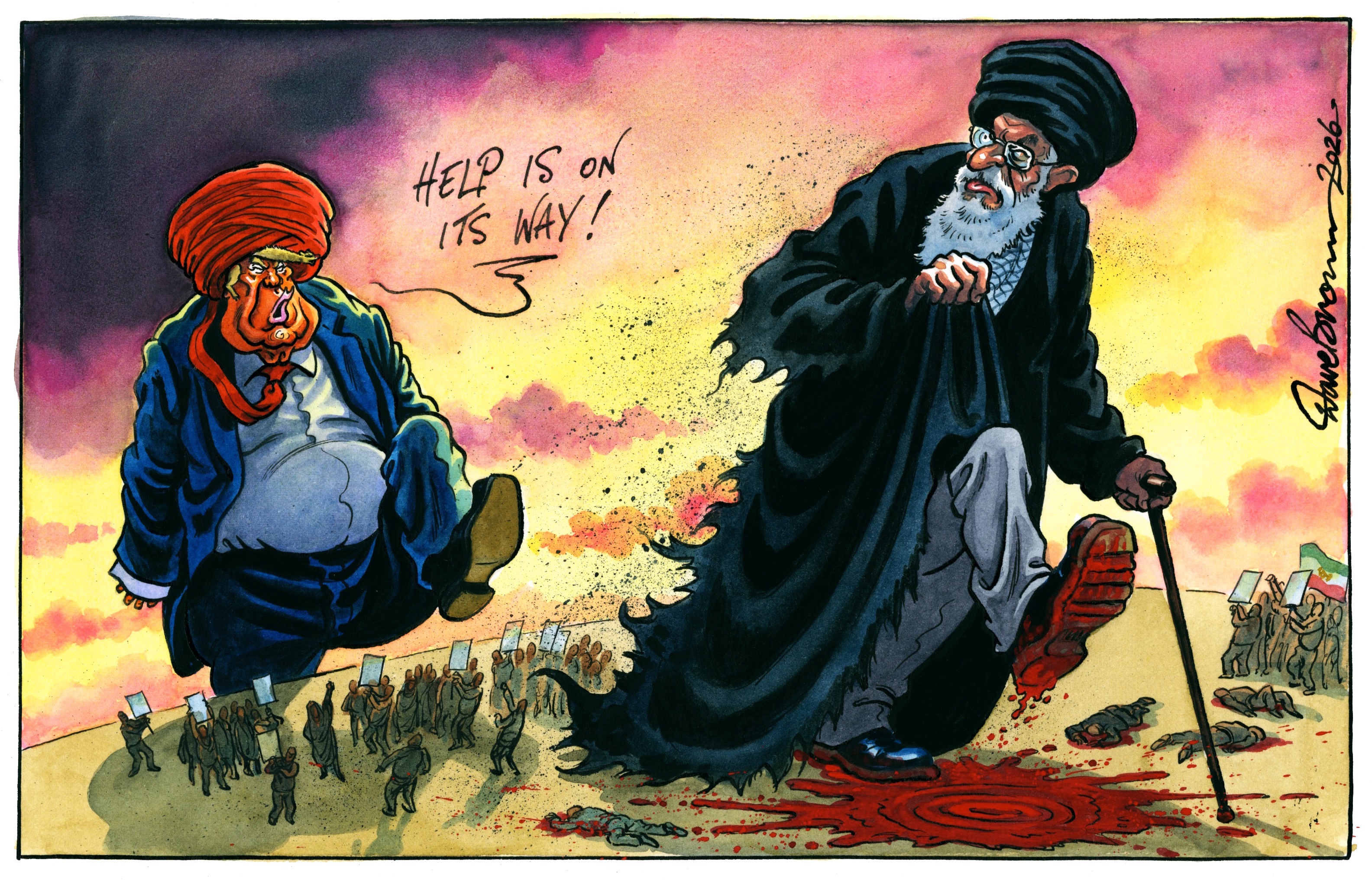
That was the question international lawyer Emir Gürbüz posed in The Independent last Friday, shortly after the US president had – deep breath, now… deposed Venezuela's authoritarian leader Nicolas Maduro, threatened to invade Greenland, impounded a Russian "shadow" oil tanker off the coast of Scotland, and wondered aloud about helping the Iranian people throw off their shackles by dropping some bombs.
Potentially even more damaging than Trump's wanderlust is how, "in a looming Russian crisis, he might leverage Nato", wrote Gürbüz. "Rather than coming to an ally's aid, as is set out under Article 5 – the cornerstone of the Alliance which holds that an attack on one is an attack on all – the US might choose to offer protection only if the member state agrees to some kind of payment, perhaps land".
As for the not-so small matter of growing unrest across Iran, for historian Mark Almond, the collapse of an Islamic regime that for 47 years has run the country as a hardline theocracy, might be more consequential for the entire Middle East than the fall of the Berlin Wall in 1989 was for Europe. Indeed, it might be as pivotal as the storming of the Bastille, a full two centuries earlier.
"Like the French Revolution, to be truly epochal, any successful revolt will take place against a domestically generated ideological regime, rather than the kind imposed externally, such as a communist regime dependent on the Kremlin. This Iranian revolution already has all those hallmarks.
"Whereas Marianne, the personification of the French Republic – she who embodies Liberté, égalité, fraternité – sports a red headscarf in the famous Delacroix painting, the brave women of Iran, in a stunning show of religious defiance, have been busy throwing off theirs."
And, as Katharine Quarmby – whose birth father was Iranian – wrote, when Tehran finally falls, it will be thanks to brave young women like Rubina Aminian, the 23-year-old fashion student killed by the regime during a #freeIran street protest. "While there is no one leader at the centre of this uprising, just people who want democracy, it is women who have been at the forefront.
"The brave young women who have been filmed dancing and singing in the streets without their mandatory hijab have lit a fire under this revolution. So too have those who have sparked a viral trend, being pictured lighting cigarettes from a burning photo of the Supreme Leader – an act of defiance when smoking is heavily restricted for women."
But not everyone is encouraged by how the tyranny might be winding up. Shabnam Nasimi was disappointed at how "the first thing Western liberals and self-proclaimed progressives do when people rise up in Iran to protest isn't to ask what they want, it is to ask if it's 'Zionist-backed', 'US-backed', 'a CIA operation'. It is the easiest way to delegitimise a movement before anyone has even listened to it – and I am tired of it."
For Mark Almond – it's that man again – first to feel the shockwaves when Iran falls will be the United Nations: "It's a dirty little secret that secretary general Antonio Guterres needs not just authoritarian states like Iran and its allies, but also the Arab monarchs, in order to keep the UN afloat."
And, always adept at spotting a cloud among all the silver linings, Sean O'Grady noted how Tehran's murderous response to the popular uprising has finally given the US president "a proper target for his tariff war".
"Donald Trump can get some things right. I say that with some hesitancy, given the fact that his behaviour and policies represent a working definition of modern fascism, but the imposition of penal secondary tariffs of 25 per cent for countries that do business with Iran is one such."
I, for one, can't wait to see where Trump's moral compass takes us all next week…














0 comentários:
Postar um comentário