Why you should have a ‘divorce shower’
|
|
|
This week, I was asked to write a piece for Voices about the rise of the so-called “divorce shower” – or “breakup registry” on sites like Etsy, which has recently added them to its collection of wedding, honeymoon and baby gift lists.
Apparently, according to relationship expert Vicki Pavitt, a massive 50 per cent of Gen Z and millennials think breakups should have their own moment or ritual – and, it turns out, their own bedding, too. “The breakup registry was launched to acknowledge breakups as significant emotional transitions that deserve care and support,” said Pavitt, pointing out that the most popular items on the lists were bed linen, clothing and accessories, plus interiors to “make over” a once-shared space.
What I found interesting wasn’t so much the “wish list” itself (who amongst us hasn’t craved a new set of posh scented candles to soothe a broken heart… or, better yet, splashed out on a new perfume, a bougie bracelet or a plush pair of diamanté lobster-motif slippers – just me?) but the concept of marking the end of a relationship in a concrete way. I appreciate the idea of a ritualistic ending as much as the zenith of a love story. We’ve all been to engagement parties or weddings, so why not a “divorce party”?
In fact, I’ve been to three. One friend chose a wild night out at a club in London; one wanted to don silly wigs as we cried into tissues at home; another picked an all-night karaoke session. But I’ll bet they all had something in common (and I don’t just mean a headache the morning after the night before): a sense of closure and a certain finality that you just can’t get from “blocking” someone on your iPhone.
|
|
|
I’d love to hear your opinion of “divorce showers” – whether you’ve been to one (or just think they’re a brilliant or disastrous idea). How do you – personally – like to deal with a break-up? Do let me know by emailing victoria.richards@independent.co.uk.
Or, if you want more direct advice on love, work, family and relationships, email me at dearvix@independent.co.uk.
|
|
|
‘My son was radicalised online when he was 14’
|
Oof, this is a hard one to read – but it’s vital, especially when so many of our kids have unfettered access to the internet and millennials like me have no real idea how it all works (unless you’re an expert in Snapchat, Roblox and TikTok… in which case, can you teach me?).
In this piece, following a new report into the Southport tragedy which showed that the killer’s parents bore considerable blame for the horrific events (Axel Rudakubana spent years watching extreme and violent content online without any supervision), Radhika Sanghani hears from another mother about the agonising experience of realising her teenage son had been radicalised by the far right on the internet.
And with the likes of Tommy Robinson attempting to organise rallies for the far right in London next month, it’s more important than ever to keep our eyes wide open. Personally, I plan to deal with this by going to every protest against the far-right I can – and proudly taking my children with me.
|
|
|
|
My son *John was radicalised online when he was just shy of his 15th birthday – but I had no idea. His friend showed him a meme on his phone of soldiers living on the streets because immigrants had taken all the houses. My son blindly believed it, and because we had a family member with mental health issues after being in the military, it infuriated him. It felt personal. He was invited to join a far-right forum by a friend, and from there, it quickly spread. He joined more and more platforms, and his consumption of propaganda grew. I didn’t know what he was watching, but I could see changes in his behaviour. John was always a lovely boy to be around – happy-go-lucky, fun, loving and kind – but he quickly became unrecognisable. He was argumentative, disrespectful and started calling me “stupid”, “thick” and telling me to “get back into the kitchen”. Looking back, I should have seen that as a warning sign to the kind of content he was consuming, but I didn’t think. I was just so confused.
|
|
|
What women really think of AI
|
|
|
If you’re anything like me, you’ll have one eyebrow raised when it comes to all things AI (especially when it comes to examples such as this story, in which scientists created a fictional disease – then AI told people it was real). Many of us work in jobs that are under direct threat from AI (journalism is no exception) – I, for one, worry constantly about the decimation of the creative industries; and it feels distinctly dystopian to see warning labels on films and books stating “No AI Used” or that they’re “AI-free”.
Still, this week I thought I would talk to someone who believes AI can be a force for good… particularly for women. I wanted to find out how – and why.
Michelle Battersby, president of Peanut, told me they’ve just rolled out a new, first-of-its-kind AI product, “Ask Peanut”, which positions itself as an augmentation of the “lived human experience” that can only be gained from other women. It launched on Monday – but, she insists, it’s not trying to take over or have the final say. “Everyone has a chatbot, but what women actually need is confidence and validation, which comes from other mums and women who have been in their place before them,” Michelle said. “We’re not building AI to replace what community can do, but an AI that makes our community stronger by placing them as the true source of knowledge.”
What that means is that when you ask the Peanut chatbot a question about (say) something to do with health or parenting, it sifts through millions of conversations between real women on the platform and then gives you a summary of the answers. It sounds a bit like having your local neighbourhood in one handy search engine (horrifying as that sounds, especially when it comes to unsolicited views on politics or recycling bins). I’m still sceptical, but I do like the caveat “Ask Peanut” leaves behind when it’s asked any question: “I’m just AI – let’s check it with the community.”
What do you think? Would you use a tool like this? Or do you already have one (aka a stream of amusingly titled WhatsApp groups in your archive, like I do)?
|
|
|
The quiet heartbreak of being a divorced dad
|
This piece by David McReady really moved me – it’s always refreshing when men open up and share their vulnerabilities and feelings, particularly in the “lifestyle” sections of newspapers (an area traditionally dominated by women and viewed – wrongly, in my opinion – as being made up exclusively of “soft” topics). There’s nothing “soft” about this poignant and deeply personal depiction of divorce, in which David – who separated from his wife 15 months ago – admits he could never have imagined how it would feel to live in a different house from his daughters. He may only be six minutes away, but that has never felt so far.
Reading this article also left me reflecting on the disparity in childcare arrangements in so many (too many!) divorces. I know of plenty of dads who only have their kids “every other weekend”, or once a fortnight. One dad I know moved hundreds of miles away (of his own accord) and only sees his children once a month. Why? They’re missing out on the excruciating joy that comes with the everyday machinations of life and parenting: the 8.30am frantic school runs, the search for shoes, the panic when someone realises they were meant to have done an entire project about Ancient Rome but forgot – so you find yourself trying to craft something out of empty toilet rolls at 7am.
Parenting, in my view, should always be as close to 50:50 as you can get it. So why isn’t this the case for so many divorced couples? I’d love to hear about your experiences.
|
|
|
I've now been separated for 15 months. Divorced for six. My kids are 10 minutes away, six if I walk quickly, which I often find myself doing without meaning to. Same borough, same school run, different life. There is a particular kind of distance that has nothing to do with miles.
I have them four nights out of every 14, but that can sometimes change. I don’t exist as a daily presence in my children’s lives. I’m not estranged. I'm not absent. I am six minutes away. And still, most mornings, someone else is making their breakfast.
|
|
|
You don’t have to be a mother to change a girl’s life
|
I loved this piece – when Catherine Carr was making a series called About The Girls for BBC Radio 4, the teenage girls she spoke to surprised her by revealing that their “role models” were usually found very close to home. Sure, Kylie Jenner and Taylor Swift got the odd mention – largely for their impressive business acumen – but on the whole, the women these teenage girls were watching were their mothers, aunties, sisters, cousins, teachers, coaches and grandmothers.
|
|
|
During their teenage years, when friendships can be fraught with emotion, girls talked about finding a “sisterhood” among the women in their lives. Feeling solidarity among your peers can be hard, they explained, when some seem intent on making your life a misery. Grannies and godmothers can lend perspective and calm, offer hope and respite from the relentless insecurity of teenage life. Mums and grandmas who had broken “their own glass ceilings” by being the first to finish school or attend university; the daughters and granddaughters of tenacious and ambitious women who prove what it takes to succeed and lead.
|
|
|
|
|
Nice guys bore me – but ‘bad boys’ treat me terribly
|
|
|
Nice guys bore me – but ‘bad boys’ treat me terribly
|
|
|
I’m 40 and I’m starting to panic that I’ve missed the boat when it comes to finding a husband – because antiquated as it may sound, I do really want one. I‘ve never been married and I’ve always dreamed of sharing my life with someone special. I’ve had so many three-to-six month relationships I don’t even know if I could list them all without forgetting someone’s name, but I haven’t met anyone I actually wanted to go the distance with (well, apart from one, who I dated for a year, but he ended up breaking my heart).
I don’t have much of a problem being asked out on dates, thankfully – and I have met a lot of guys who wanted to be with me ... but the ones who have been keen to be “long-term” have always been “nice guys” (or “too nice”, to put it a different way). And even though they were lovely and kind and actually messaged back (rather than disappearing for days on end), I got bored. There wasn’t enough of a “spark” because they had no “edge”.
The men I’m drawn to are charismatic, unpredictable and sweep me off my feet – but they’re all the same: flakey and (ultimately) disrespectful, because they’re not really interested in a “real” relationship. I can tell they probably have two or three women on the go and I end up feeling paranoid and insecure and anxious, the whole time I am with them. But, you can’t help who you’re attracted to, can you? And I seem to be constantly attracted to “bad boys”. Why can’t I find a “bad boy” who is decent enough to want to settle down? Someone like that must exist?!
|
|
|
Have you been to a ‘divorce party’?
|
Last week, after Labour MP Samantha Niblett called for a British “summer of sex”, I asked you whether you thought it was a good idea too (let’s not forget: one of her ideas was to bring sex toys into Parliament. Ooh err, Right Honourable Gentleman...). Here’s what you said:
|
|
|
In our latest poll, I’d like to know if you have ever been to a divorce party (or equaivalent). Click here to vote.
This week, I heard from Luba Kassova, an award-winning researcher, journalist and co-founder of audience strategy consultancy AKAS (covering equality, media, AI and social trends). Luba is also a TEDx speaker and was recently crowned one of ‘25 stand-out women in journalism in 2026’. She shared with me AKAS’ latest report, The Global Misogyny News Coverage Tracker, which was published this week.
Drawing on 1.14 billion online news articles from 2017–2025, the report reveals that global coverage of misogynistic harassment and violence against women is woefully low, falling to a nine-year low of 1.3 per cent in 2025, even as violence against women remains endemic. Meanwhile, “gender ideology” narratives surged 42-fold globally over the same period.
|
|
|
One in nine women worldwide has experienced violence at the hands of a man in the last 12 months. One in three women has been sexually violated in her lifetime. Yet much of the global news media continues to treat this as a peripheral story. When coverage does appear, it is too often shaped by sensationalist incident-reporting, focused on the perpetrator rather than the survivor, and stripped of the structural context that would help audiences understand – and ultimately challenge – the deep-rooted forces that make such violence so widespread.
|
|
|
An in-depth analysis of nearly one million Epstein-related news articles published between January 2017 and February 2026 found that coverage was overwhelmingly skewed towards story angles about power, wealth and elite networks rather than the misogyny-related suffering of survivors or the structural conditions that enabled decades of abuse. The term “structural” appeared in just 0.5 per cent of this coverage, and the phrase “violence against women” in a mere 0.1 per cent. The Epstein files coverage stands as a case study in failing to connect high-profile abuse patterns to the systemic gender inequalities that make them possible and pervasive. By focusing overwhelmingly on the notorious figure, the money, his connections to other powerful men – and largely ignoring the gender-based lack of agency of women and girls at the heart of it – much of the world's media missed the most important story of all.
|
|
|
I’m off to The Devil Wears Prada 2 premiere (dahling)
|
As I write this newsletter, I am preparing to don my heels and shimmer into a fancy dress, ready to be fully “runway-ready” (and yes, that’s the mandatory dress code) for the premiere of The Devil Wears Prada 2 in Leicester Square. I’m taking my teenage daughter with me to walk the red carpet, and we cannot wait to (hopefully) spot Meryl Streep, Anne Hathaway, Emily Blunt, Stanley Tucci and a whole host of stars.
To prep for tonight, we rewatched the original film and (with the exception of some eye-watering fat-shaming of Anne Hathaway’s character for being a “size 6”… faints) it remains a frank and hilarious account of glossy magazine journalism that isn’t too far removed from reality. I’ll report back on who we saw – and what happened!
|
|
|
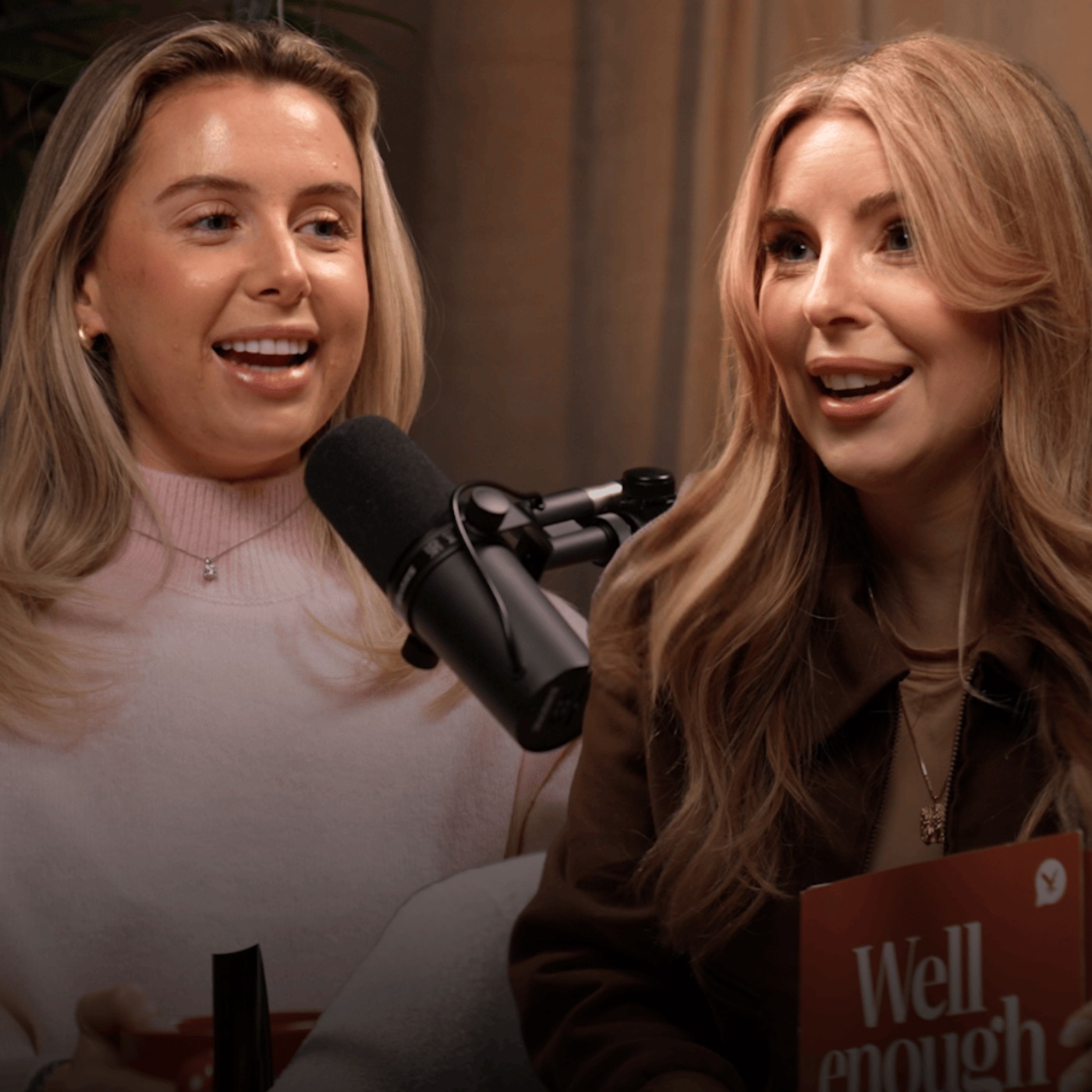
Sophie Richards: Why men need better education on periods and fertility |
This week, Sophie joins Emilie to break down inflammation as your body's "first response team," how she discovered it was driving her symptoms, and the dangerous wellness trends she fell for.
|
|
|
|
|
Sophie Richards: Why men need better education on periods and fertility |
This week, Sophie joins Emilie to break down inflammation as your body's "first response team," how she discovered it was driving her symptoms, and the dangerous wellness trends she fell for.
|
|
|
|
|
|
|
|
|
|
|
Join the conversation and follow me
|
|
|
Please do not reply directly to this email
You are currently registered to receive Independent Women from The Independent.
To unsubscribe from Independent Women from The Independent., or to manage your email preferences please click here.
This e-mail was sent by Independent Digital News and Media Ltd, 14-18 Finsbury Square, London EC2A 1AH. Registered in England and Wales with company number 07320345
Read our privacy policy and cookie policy
|
|
|
|






0 comentários:
Postar um comentário