The fitness advice you have been given might be right – but unhelpful
|
|
|
Hello!
What is your idea of a good time? For some, it might be a movie marathon and a tub of ice cream. For others, a walk or run will fit the bill. The issue in the fitness world is that people struggle to relate to others’ preferences.
For various reasons, fitness professionals tend to be leaner and more athletic. Their first bite of the exercise apple probably tasted phenomenal and, having found they were rather good at it, they’ve kept the habit going ever since. This is partly why avid exercisers can’t understand why people resist the thing that brings them so much joy.
Less active people, on the other hand, might have horrible early experiences with exercise – especially compared to a more relaxed activity they’ve enjoyed for years, such as watching TV, scrolling social media or listening to music.
Therein lies the problem. We all know exercise is good for us, but it’s hard to encourage someone to do something they don’t enjoy, especially when there are more appealing alternatives at our fingertips thanks to our phones.
In this week’s newsletter, we’re going to try to solve this.
|
Can exercise really be enjoyable for everyone?
I recently interviewed David Keohan, a 47-year-old father-of-three from Waterford in Ireland. Boozing through his 20s left him obese and feeling depressed, so at 32 he decided to make a change and headed to a sports shop to buy a pair of trainers.
“I remember the young fella working there laughing and going, ‘Are you sure, man?’” Keohan tells me with a characteristic giggle. Undeterred by the shop assistant’s lack of faith, he started running. Then he started swinging kettlebells. Then, during Covid lockdowns, he began lifting boulders in his back garden (which eventually led to him unearthing an entire lost culture around Irish stone lifting, but that’s another story).
“I got bitten by the bug of feeling good,” Keohan says. “Before, I never knew what feeling good felt like, if that makes any sense? But once you start to feel good, it’s amazing, and you realise how bad you felt for the last 10 years.”
This reinforces my belief that movement can be enjoyable for all. But the form you enjoy might exist outside the classic PE curriculum of football, rugby, cricket and athletics – the sports that likely shaped your early encounters with exercise.
The trick to making exercise more appealing
Finding a fun form of exercise can be tricky, and trial and error is key. But it’s still hard to motivate yourself to get started. For this, I have some tips.
From what I’ve learned as a coach, the human brain is fairly transactional. If we are going to do something, there has to be a worthwhile reward. We go to work so we get paid; we buy a meal out knowing it will taste great; you’re reading this newsletter hoping for actionable health tips, and hopefully I’ve held up my end of the bargain.
To make movement feel worthwhile, we have to up the value of exercise by making it easy (there are tips for making movement more accessible here), enjoyable and appealing. A big part of the latter is understanding the benefits.
A 10-minute walk, or even a few bodyweight squats, after a meal can help your body regulate blood sugar better. This can protect you from diabetes and shield you from the symptoms of metabolic syndrome (high blood pressure, wider waist circumference and raised cholesterol) as you age.
Research from 2025 suggests adding just half a serving of vegetables, 96 seconds of exercise and 15 minutes of sleep to each day could add years to your life in some cases.
Simply standing up every now and then during long bouts of sitting can reduce your risk of heart disease, while countless studies have reinforced exercise’s ability to boost your mood.
And this list doesn’t even touch on the muscle and mobility gains that come from strength training. These perks allow you to say yes to any active opportunity that arises in life, whether that’s playing with your kids, swimming in the sea or exploring while on holiday.
The sum of these parts is that any exercise you are able to do, especially if you were not doing it before, will likely leave your body in a far better place, inside and out. Many of the benefits on offer will also last for decades.
If this knowledge gets you through the door of your nearest gym, class or club, and you are able to find a form of exercise you enjoy – be that dance, surfing, Nordic walking or otherwise – then the pay-off for your health will be enormous.
Hope this helps!
Harry
|
|
|
Want to move more but not sure how to start? Or looking for ways to progress your existing exercise plans? Drop me an email at wellenough@independent.co.uk and I’ll do my best to help.
|
|
|
I trained with the fittest woman in the world
|
|
|
Each year the CrossFit Games is held in the US with the goal of finding “the fittest man and woman on earth”. It’s a widely contested claim, but there’s no denying that what the competing athletes are capable of is extraordinary.
This year they completed an assault course while walking on their hands, lifted barbells weighing more than 250kg, completed a gruelling, hilly trail run and sprinted 500m in a little over 1min 10sec.
After 20 of these tests of fitness, Aimee Cringle from the Isle of Man was declared the “fittest woman on earth” – the first Brit to win since 2013.
Last year I went to Worcester, where she is now based, to train with the CrossFit Games champion – and it was a humbling experience.
|
|
|
Intermittent fasting linked to better brain health – but be careful which method you choose, expert warns
|
A new study links intermittent fasting to better brain health and reduced risk of dementia. But the sample size was fairly small (47 overweight people), and further research connects similar intermittent fasting protocols (16 hours a day or more) with an increased risk of heart problems.
So, should you do it?
This is my issue with health and fitness news at the moment. Every time a new study comes out, it is plastered under attention-grabbing headlines and held as the gold standard by many. But each paper is only ever one puzzle piece of a much larger jigsaw.
From my experience, the tips to stick with are those that have withstood the interrogations of study after study. From the research I’ve read and the experts I speak to, the common denominators seem to be: eating plenty of fruits, vegetables and fibre, consuming enough calories and protein to support your activity levels, prioritising whole foods, aiming for oily fish (or an equivalent) twice per week, and avoiding eating too close to bedtime.
As always, there is more nuance to be found if you dig a little deeper. But I’d wager anyone who could roughly stick to the four guidelines above would be in rather good shape.
|
|
|
Three easy bean salad recipes to make all summer long
|
As someone with a lifetime love of magazines, who has ironically wound up working for a newspaper, I try to make this newsletter read a bit like the former. That means a personable tone and plenty of actionable tips you can pull out and interact with.
This week, The Independent’s food editor Hannah Twiggs has compiled three simple bean salad recipes to help you through this heatwave. And given they tick several of the criteria outlined in the intermittent fasting piece above – vegetables, fibre, whole foods – I thought it would be useful if I passed it on to you.
|
|
|
One man’s trash, another man’s barbell
|
|
|
|
|
I like to think I’m a rather optimistic chap in general. However, I’ve become a bit world-weary recently, courtesy of the constant onslaught of people urging me to buy things.
My inbox, Instagram feed and adverts on TV are constantly telling me I need to splash cash on the next big thing, particularly if I’m to get any fitter.
But I don’t. Neither do you.
This week, I also found a broken broom handle outside someone’s house and giddily ferried it home. This is all you need for a great workout.
Complete the circuit below five times:
Overhead squat x15
Run 400m
This workout is hard, but as always the difficulty can be scaled.
The overhead squat is a challenging movement that will raise your heart rate and boost mobility – even when you are only lifting a broom handle. If you cannot do an overhead squat with good technique, just do a normal squat or a sit-to-stand.
You can also reduce the number of rounds and repetitions if needed, as well as shortening the run or swapping it for a walk.
This is what the workout might look like for a beginner.
Complete the circuit below three times:
Sit-to-stand on park bench x5–10
Walk 100–200m
|
|
|
|
|
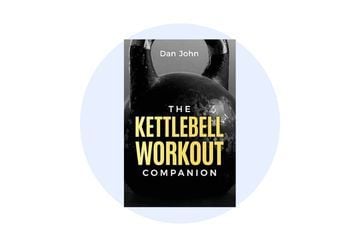
The Kettlebell Workout Companion by Dan John
|
Books and basic kit are the exceptions to prove the rule on my fitness spending freeze – so long as you choose wisely.
The Kettlebell Workout Companion from Dan John has enough information and lessons to fuel your training for the foreseeable future. His insights have been collected over more than four decades of practical coaching experience, and the result is a book that delivers effective, common sense workout tips to last you a lifetime.
|
|
|
Start leaving things lying around
|
|
|
|
|
You’re probably familiar with the phrase “out of sight, out of mind”. This is true of exercise equipment.
If you shut your kettlebells in your shed or relegate your resistance bands to a buried bag, you’re far less likely to think to use them. But if they’re in your field of vision at a spot in your house where you spend a lot of time, you’ll probably find you pick them up and have a play on a fairly regular basis.
This is why I have grip trainers on my desk, a yoga mat unrolled next to my workstation, a kettlebell in the living room and now my aforementioned broken broom handle within arm’s reach while I’m at my laptop.
With the broom handle, I’ve started doing 10 overhead squats whenever I hit writer’s block. Not only does it help jump-start my creative juices, but I’ve also noticed improvements in my ankle mobility and shoulder health.
A few squats can go a long way for your health too. A 2024 study found that breaking up long sitting spells with 10 squats every 45 minutes helped the body better regulate blood sugar levels.
|
|
|
|
I want you to spend as little as possible in your mission to become healthier and fitter.
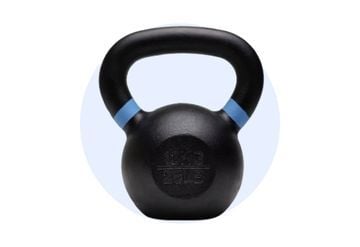
If you fall head over heels in love with exercise and wind up signing up for gyms and classes, that’s great. But for most people, doing enough to support the life they want to live is the goal, and you can do that with one kettlebell.
As long as it’s cast iron and sturdy, like this one from Northern, it will do the trick and should last you a lifetime.
|
|
|
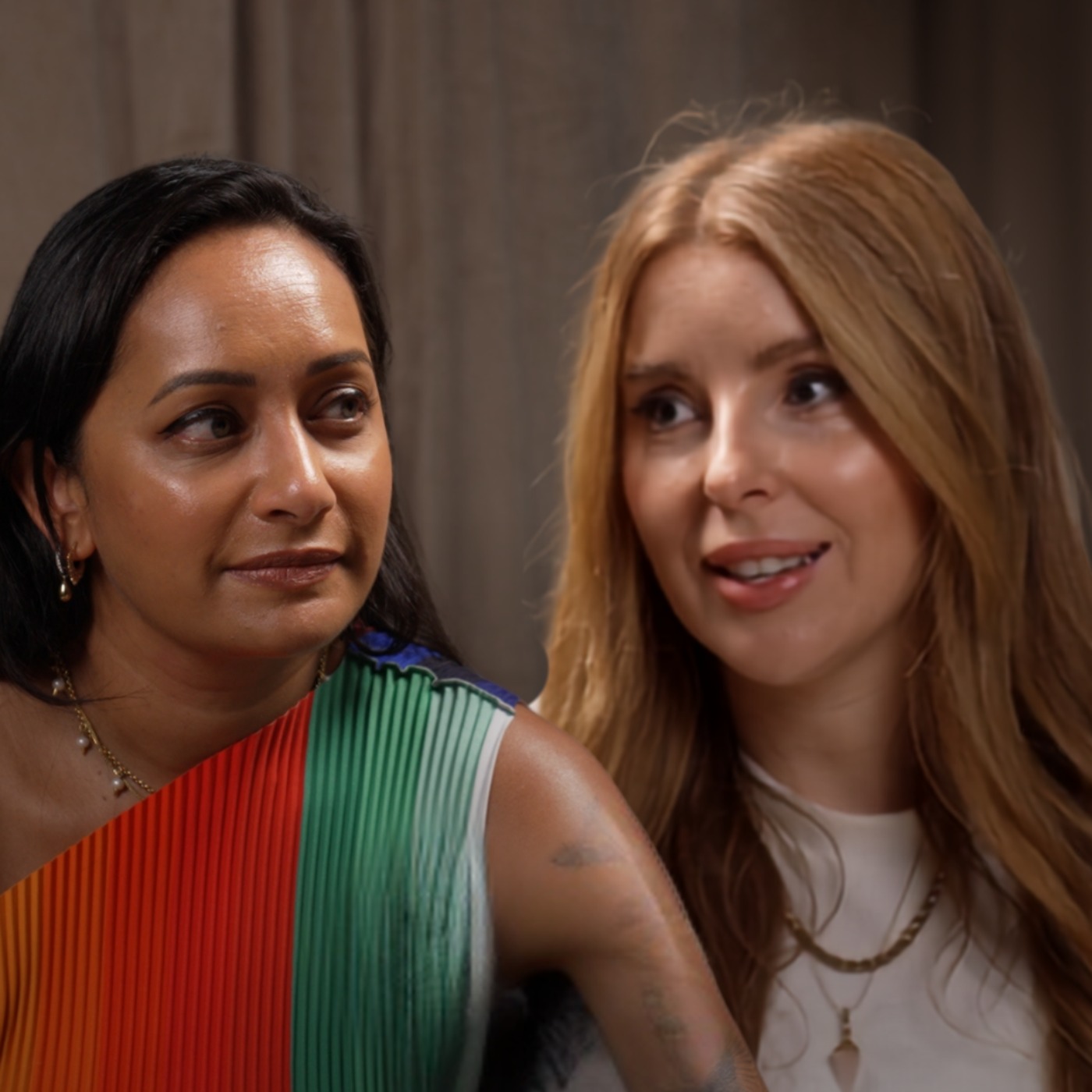
Poorna Bell: Why turning 40 changed everything |
Journalist, author and broadcaster Poorna Bell joins Emilie Lavinia for a conversation about mid-life, relationships, ageing and the pressure women face to follow a script - fall in love, get married, have children and stay desirable.
|
|
|
|
|
Poorna Bell: Why turning 40 changed everything |
Journalist, author and broadcaster Poorna Bell joins Emilie Lavinia for a conversation about mid-life, relationships, ageing and the pressure women face to follow a script - fall in love, get married, have children and stay desirable.
|
|
|
|
|
|
|
|
|
|
|
These were the most popular stories in last week’s newsletter:
|
|
|
Join the conversation and follow me
|
|
|
Please do not reply directly to this email
You are currently registered to receive the Well Enough newsletter from The Independent.
To unsubscribe from the Well Enough newsletter from The Independent, or to manage your email preferences please click here.
This e-mail was sent by Independent Digital News and Media Ltd, 14-18 Finsbury Square, London EC2A 1AH. Registered in England and Wales with company number 07320345
Read our privacy policy and cookie policy
|
|
|
|




0 comentários:
Postar um comentário