You can replace this text by going to "Layout" and then "Page Elements" section. Edit " About "
Pague com LPs do Mister Colibri
Quer comprar celular,Tablet,pen drive, GPS e muito outros produtos e ainda podendo pagar tudo em LPs ?Pois saiba que isso é possível,basta você visitar o site downloadstotal.com e realizar a sua compra com toda tranquilidade e segurança!!!
Get your deals in while ya still can, folks. And clearly, there are relative bargains to be had. DoorDash CEO Tony Xu gets what I’m talking about. On Thursday, Xu finally picked up Instacart, with Xu’s company saying it would pay about $17 billion for the grocery-delivery business. Over on X, Instacart founder Apoorva Mehta sent up a resounding huzzah, saying he and Xu had long discussed such a transaction. That wasn’t news to readers of The Information: We reported on talks between DoorDash and Instacart back in 2021. At one point in 2021, DoorDash was considering buying Instacart for more than $40 billion. By waiting, Xu obviously saved himself a bunch of money and avoided the ridiculous markups that were attached to pandemic-era darlings like Instacart. Sure, its prospects seemed rosier back then, when we were regarding physical grocery stores as potentially lethal germ pools, but Xu doesn’t seem to be getting a total lemon. In the third quarter, Instacart sales grew 17%, and it generated a decent amount of cash in that time—more than $300 million, a 13% increase.
Thanks for reading The Briefing, our nightly column where we break down the day’s news. If you like what you see, we encourage you to subscribe to our reporting here.
Greetings!
Get your deals in while ya still can, folks. And clearly, there are relative bargains to be had.
DoorDash CEO Tony Xu gets what I’m talking about. On Thursday, Xu finally picked up Instacart, with Xu’s company saying it would pay about $17 billion for the grocery-delivery business. Over on X, Instacart founder Apoorva Mehta sent up a resounding huzzah, saying he and Xu had long discussed such a transaction. That wasn’t news to readers of The Information: We reported on talks between DoorDash and Instacart back in 2021.
At one point in 2021, DoorDash was considering buying Instacart for more than $40 billion. By waiting, Xu obviously saved himself a bunch of money and avoided the ridiculous markups that were attached to pandemic-era darlings like Instacart. Sure, its prospects seemed rosier back then, when we were regarding physical grocery stores as potentially lethal germ pools, but Xu doesn’t seem to be getting a total lemon. In the third quarter, Instacart sales grew 17%, and it generated a decent amount of cash in that time—more than $300 million, a 13% increase.
The sale to Xu does solve Instacart’s leadership problem: It had looked rather rudderless since Fidji Simo left the CEO role for OpenAI in 2025. Still, Xu will need to figure out how to handle the fierce competition for online grocery sales, a battle that includes Walmart and Amazon (more on the latter company below).
One thing that held Xu up in 2021 was concern about the Biden administration. According to Valida’s reporting, Xu figured DoorDash wouldn’t get an Instacart acquisition past Biden regulators, who, of course, were trying their hardest to squelch corporate mergers and acquisitions. Those days of dealmaking famine have given way to a time of great feasting: The Trump White House has been, uh, lenient with regulatory approval. It could all shift once again after the midterms. With Democrats seemingly set to retake Congress next week, and President Donald Trump enjoying the same popularity as a DoorDasher who shows up with a carton of broken eggs, the idea of a liberal in the White House after 2028 seems a lot more plausible than it did even a few months ago.
The prospect of a Democrat in the White House will spur plenty more M&A to happen sooner rather than later. I get it. Judging by the words of liberal standard-bearer Zohran Mamdani, the New York City mayor, the left’s attitude toward mergers does not seem to have changed much since President Joe Biden creaked out of office. On Thursday, Mamdani criticized the DoorDash-Instacart deal, saying in a post on X that such moves often bring higher prices for consumers and “harsher exploitation” for workers.
In addition to politics, M&A sure seems likely to keep humming for the simple reason that there are plenty of other Instacarts out there—businesses that haven’t fared well since their pandemic glory days. Zoom, Duolingo, Coursera: I could go on. I would’ve put Bumble right there, too, had it not already limped into the welcoming arms of investor Ravi Gupta several weeks ago. (Gupta bought Bumble for about $6 a share; Bumble once traded hands at more than $75.) Other M&A action seems like it’ll be driven by the chance to spruce up an aging business with AI, which I imagine is the motivating force behind the other deal announced on Thursday: Josh Kushner’s $7.6 billion purchase of ADT, maker of home security systems, through the newly formed Thrive Holdings, an offshoot of his Thrive Capital.
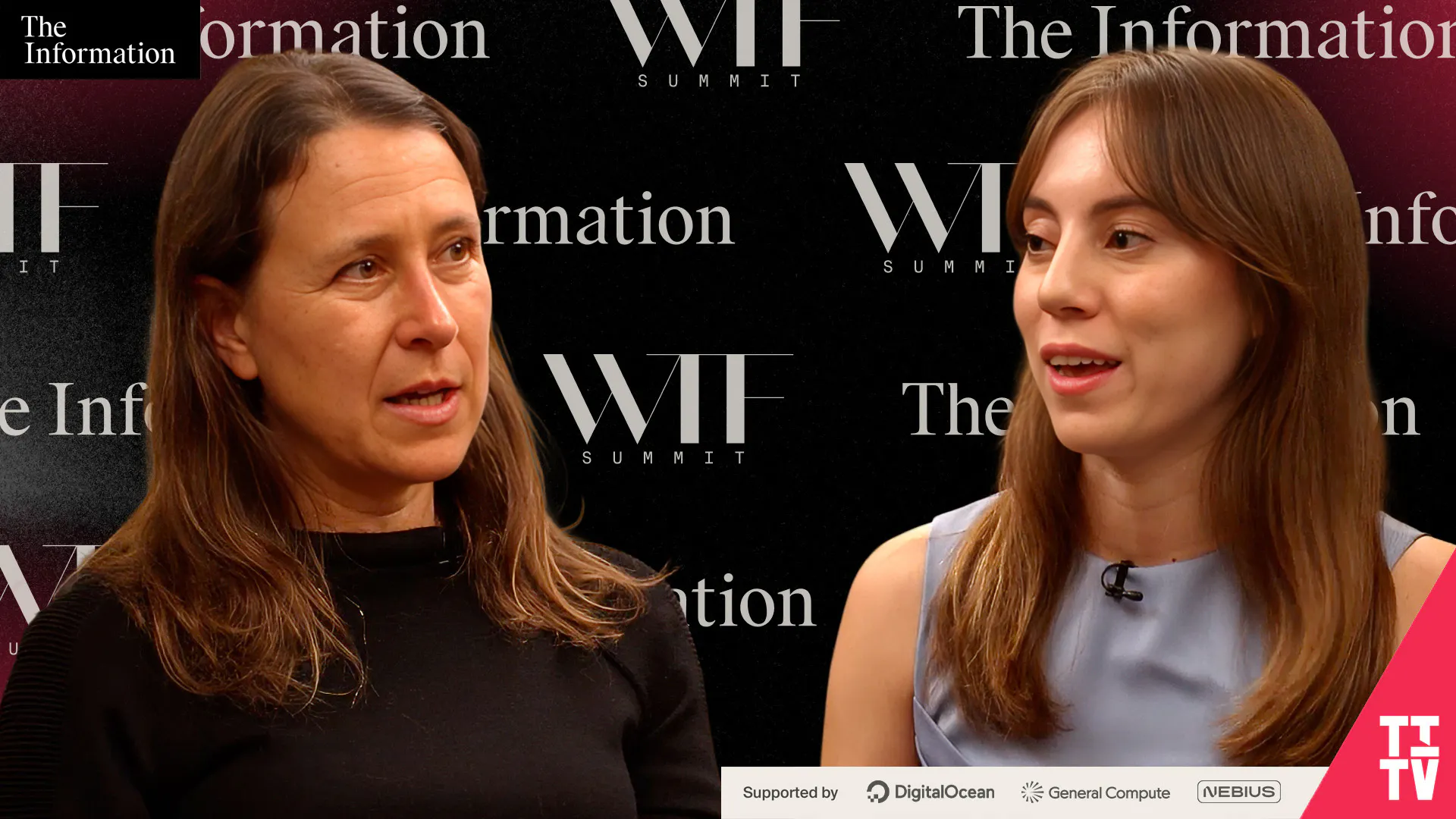
Another reason that I’m going on and on about M&A today is because I listened to what Goldman Sachs’ Kim Posnett, the bank’s global co-head of investment banking, had to say about the topic at our WTF conference earlier this week. By the sounds of things, her direct messages are cluttered with missives from deal-hungry CEOs. “They’re talking about M&A to drive growth. They’re talking about M&A to help reposition themselves in this new AI landscape. CEOs are leaning in right now—they wanna make big strategic bets,” she said. “We’re optimistic.” Still, as she pointed out, “things change quickly.”—Abram Brown
Amazon’s Agita
If there’s a lesson in the earnings reports from Amazon and Google over the past couple of days, it’s that investors are more in the mood to focus on the companies’ blemishes rather than the strong performance of their cloud units.
On Thursday, Amazon said revenues from its Amazon Web Services unit had surged 39% to $45.98 billion, its strongest growth rate in nearly four years. That was an impressive feat given that second-quarter AWS revenues grew at a record 37%. And if that wasn’t enough, Amazon CEO Andy Jassy forecast AWS growth rates of over 40% in 2027 and 2028.
On a call with analysts, Jassy went even further and predicted that AWS could be one of two businesses for Amazon with $1 trillion a year revenue within the next five to 10 years (the other is its stores business—Amazon-speak for its e-commerce business and everything else, excluding AWS).
But, it turns out, that was not enough for investors, many of whom are increasingly on edge about whether tech giants will see a sustainable payoff from the colossal amounts of money they’re spending on AI. Amazon shares dropped more than 6% in after-hours trading.
The company’s total net sales were $201.9 billion, up 12%, while its net income was $20.7 billion, down slightly from a year earlier, when it had a pre-tax gain of $9.5 billion from its investment in Anthropic. Even though Amazon’s numbers were within its own forecasts, Wall Street analysts were expecting slightly better results. The company left its estimate for its 2026 capital expenditures—most of which is going to its spending on data centers—unchanged at $220 billion.
Google had a similar experience today. Investors punished its stock, sending it down 12%. It appears they were more keen to focus on the bad in its Wednesday earnings report (sluggish revenue growth in its core search advertising business) rather than the good (a doubling of Google Cloud revenues). The AI glass seems to be half full for many investors right now.—Nick Wingfield
In Other News
U.S. intelligence agencies found that Nvidia CEO Jensen Huang was the target of a Chinese spy.
Coinbase’s latest earnings report showed the company had returned to profitability in the third quarter while sales had declined, underscoring how closely tied it remains to cryptocurrencies—despite a push to boost growth through new areas like prediction markets.
Start your day with Applied AI, the newsletter from The Information that uncovers how leading businesses are leveraging AI to automate tasks across the board. Subscribe now for free to get it delivered straight to your inbox twice a week.
Trust is quickly becoming the defining question of the AI era. Over dinner, Jessica Lessin, Founder & Editor-in-Chief of The Information, and Whitt Butler, EY Americas Vice Chair – Consulting, will talk candidly about how leaders can build that trust and keep it. Request an invite.
Join The Information and NYSE for a cocktail reception and conversation on what it really takes to go public, hosted by The Information’s Dakin Campbell. The panel will explore the trust, relationships and preparation companies need to build with advisers, investors and exchange executives, along with the many complexities founders and executives must navigate along the way. Sponsored by NYSE. Apply to attend.
The investors behind tech’s hottest startups are rewriting their own rules. They are finding new ways to raise money, taking business fights to Washington and deciding fast which bets to chase and which to walk away from.
At The Information, our reporters are already inside the rooms where these decisions get made. Here are six stories on the investors behind the checks that we’ve reported in recent weeks.
When investors take on Washington
Ramp and Airwallex once talked about working together. After the deal fell apart, some of Ramp’s best-connected investors started urging the U.S. government to investigate the rival. How the Ramp-Airwallex fight escalated shows who is leading the campaign and how Airwallex is hitting back.
Andreessen Horowitz spent years as one of the loudest backers of crypto, in startups and in politics. Now it is dropping “crypto” from the name of its flagship fund, and our reporting looks at who else is changing course.
Hot bets and warning signs
Vinod Khosla is one of the most optimistic investors in robotics. He is also warning that many of the hottest startups in the field will not hold their valuations. Khosla’s robotics warning comes with his own list of startups he passed on because of price.
Video AI is having a moment, and a four-year-old film startup just joined the unicorn club. Utopai’s plan is to make its own movies with AI and put them in theaters while much of Hollywood stays wary.
New ways to raise a venture fund
AI rounds have grown so large that some venture firms’ main funds cannot cover the checks they want to write. How VC firms find cash runs through their own investors and a big bank, and it changes what those investors get in return.
Raising a first fund is hard when much bigger firms are competing for the same founders. The daughter of Palo Alto Networks’ CEO is raising her own AI-focused fund with her father advising, and inside her new fund shows what she is targeting and what she has backed so far.
Behind every big round are investors raising cash, calling in favors and deciding what to back next.
Before it’s everywhere, it’s in The Information. Subscribe for $299 and save 25% on your first year for reporting on AI, tech and finance.
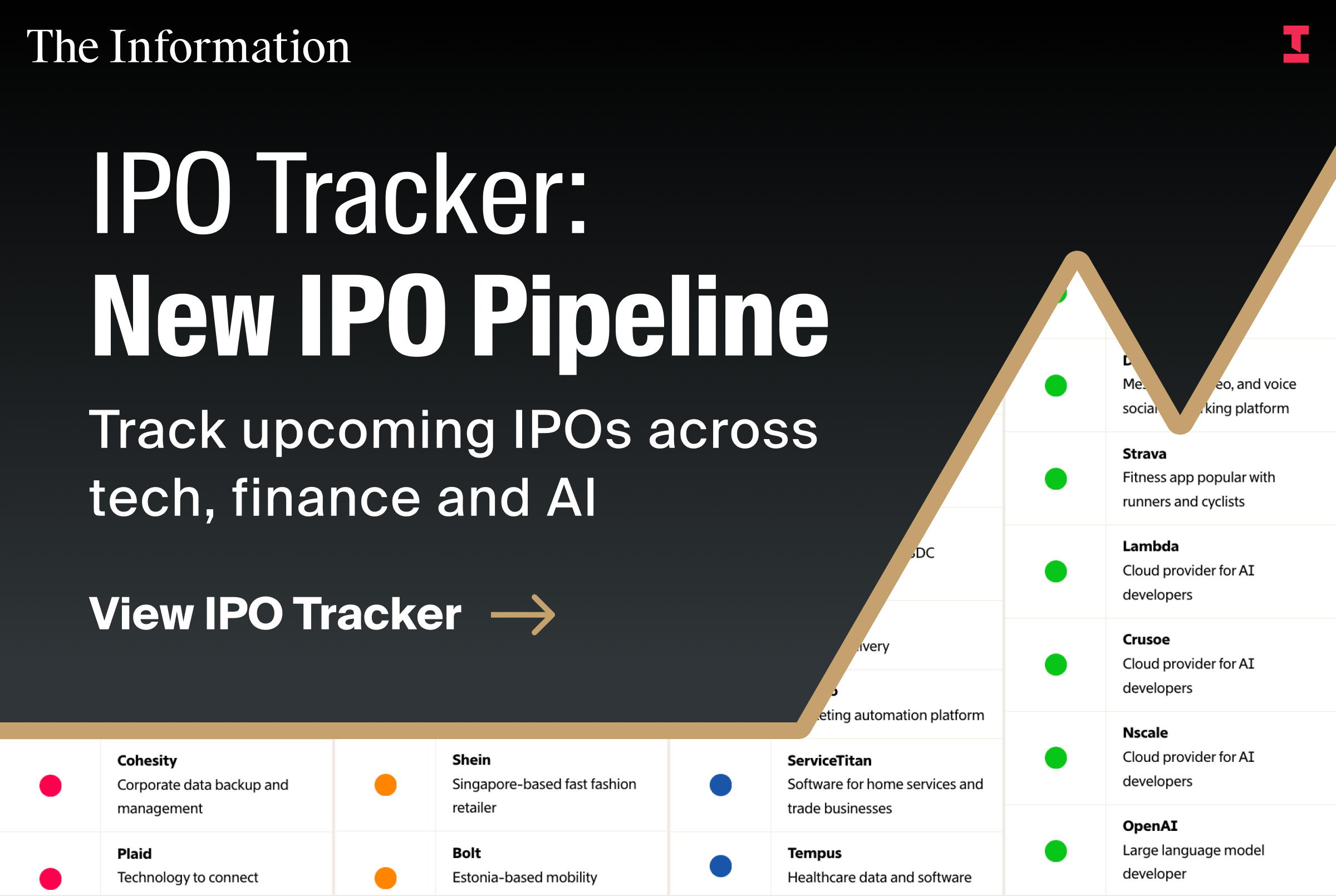
Which tech company goes public next? Follow nearly 80 companies on the road to an IPO, from Anthropic and OpenAI to Discord and Strava, with expected timing, valuations and outlook for each.
Gain access to IPO Tracker, 60+ org charts, proprietary databases, exclusive newsletters, subscriber-only events, and more by subscribing to The Information Pro.
Think you know tech? Prove it. Five quick polls a day on the biggest stories in tech.
QUESTION OF THE DAY
Physical intelligence is reportedly nearing a $20B valuation. How many years until general-purpose robots do useful work in homes?








 Gift Subscription