 | Feb 03, 2025 | | | | | | Welcome back! ChatGPT subscribers nearly tripled to 15.5 million last year. President Trump's tariffs on China will plug a trade loophole used by Shein and Temu. Texas bans Deepseek and several other Chinese apps on state-issued devices.
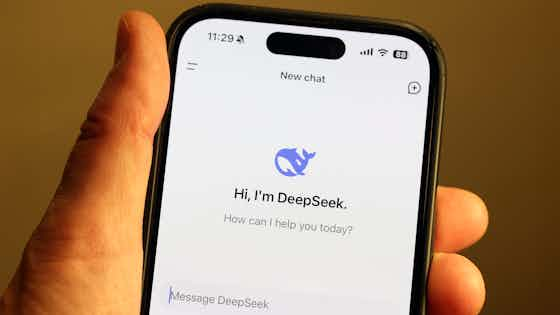
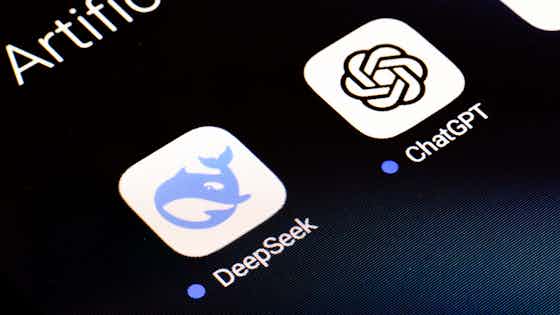
| | | | Paid subscribers to OpenAI's ChatGPT nearly tripled to 15.5 million last year from 5.8 million a year earlier, The Information reported. Based on pricing for ChatGPT, that growth implies that the popular chatbot was likely generating at least $333 million in revenue per month by the end of last year, or at least $4 billion on an annual basis. OpenAI also saw strong growth in the number of tokens (a word or a part of a word) developers analyzed or generated using its application programming interface, which gives companies such as Salesforce and T-Mobile access to its AI models. The number of tokens OpenAI's API processed or generated increased seven times, from about 200 million tokens per minute at the beginning of the year to around 1.4 billion at the end of the year, according to The Information report. Based on publicly available API pricing and data from AI evaluation startup Braintrust on which OpenAI models customers use most often, OpenAI's API business could be generating $270 million in revenue per month, or $3.2 billion on an annual basis. That figure would put OpenAI far ahead of its projection last fall that it would generate $2 billion from API sales in 2025. Despite last year's success, OpenAI faces new threats this year, especially from Chinese AI developers like DeepSeek, who offer open-source models comparable to OpenAI's at much cheaper prices. OpenAI CEO Sam Altman seemed to acknowledge the DeepSeek challenge this week and said on Reddit that the company is considering releasing some model weights—or the settings that determine how a model responds to questions—publicly. "I personally think we have been on the wrong side of history here and need to figure out a different open source strategy," he wrote. | | | | President Donald Trump's impending new tariffs on Canada, Mexico and China will plug the trade loophole that has fueled the growth of Shein and Temu, as well as a Temu-like service offered by Amazon. Trump on Saturday signed an executive order that will impose 25% tariffs on imports from Canada and Mexico, 10% on those from China, from Feb. 4. The executive order will also end a trade provision called de minimis, under which parcels valued at $800 or less pay no import duties and receive little customs inspection. Those low-value parcels imported from the three countries will no longer be exempted from import duties while also having to pay the additional tariffs like bulk-shipped goods, according to the executive order. Trump said ending the de minimis provision could help alleviate the opioids crisis in the U.S. as it has been a popular way for drug traffickers to import illicit drugs like Fentanyl. However, it will also upend the business model of Shein and Temu, which ship customer orders directly from China under the de minimis provision, allowing them to keep prices low. The model was proven so successful that it prompted Amazon to launch a new bargain section on its marketplace last year called Haul that offers the same direct-from-China shipping model. | | | | Texas Republican Gov. Greg Abbott has banned the use of the Chinese AI software Deepseek on government-owned devices to protect the state's critical data, intellectual property, and other assets from being accessed by the Chinese government, his office said in a statement. The Texas ban, which also includes several Chinese social media services, shows how U.S. authorities are responding to the rapid adoption of Deepseek, a subsidiary of a major Chinese quantitative hedge fund that offers its models and apps for free or nearly free. It follows Congress' decision yesterday to ban the usage of Deepseek on government-issued devices. It seems likely that other states will enact similar restrictions on Deepseek, and the big question now is whether President Trump, who has described Deepseek as a "wakeup call" for American tech companies, will respond with a broader move to restrict usage of the software. | | | | Shein has returned to India via a licensing agreement with billionaire Mukesh Ambani's Reliance, after the China-founded online retailer was banned in the country in 2020 along with scores of other Chinese-owned apps. In December, the Indian government approved an agreement that allows Shein to license its branding to Reliance, which will in turn develop a new online marketplace dedicated to local customers, sourcing goods from local manufacturers and storing data in local servers. Over the weekend, Reliance launched the new marketplace, sheinindia.in as well as the Shein India Fast Fashion app in Apple App Store and Google Play. Shein India currently only ships to major cities such as Delhi, Mumbai and Bangalore, according to its website. The deal marks a rare comeback by a Chinese tech company in India, which banned many China-developed apps in 2020 including TikTok following border conflicts between the two countries. | | | | Meta Platforms is considering reincorporating its business outside of Delaware, possibly in Texas or other states, according to a report in the Wall Street Journal. Such a move would put Meta CEO Mark Zuckerberg in step with Elon Musk, who has reincorporated several of his companies, including Tesla and SpaceX, outside of Delaware, the state where most big companies in the U.S. are incorporated, irrespective of where their corporate headquarters are located. It is unclear what's driving the move. Meta has made several changes to its business lately to align itself further with the Trump administration, including ending its diversity, equity and inclusion efforts and axing a fact-checking program across its apps. According to the Journal, discussions about reincorporation predated the new administration. Meta did not have a comment. | | | | Apple filed an emergency motion Thursday evening seeking to pause the U.S. government's antitrust case against Google as the iPhone maker appeals a district court judge's decision to block it from intervening. The judge last year ruled that a contract between the companies to make Google Search the default search engine of Apple's Safari browser was illegal. Following a penalty trial scheduled for April this year, the judge could strike down that deal, putting $20 billion of annual payments from Google to Apple in jeopardy. Last month, Apple sought to be added as a defendant in the case, arguing it needed to protect its own interests. Judge Amit Mehta, the U.S. district court judge overseeing the case, denied the motion because he said Apple had made its request too late and would slow down proceedings. The U.S. originally filed the case in 2020, and Apple executives testified as witnesses in the initial trial in 2023. Mehta has said he aims to issue penalties in early August 2025. | | | | Zyphra, a Palo Alto, Calif., developer of open-source models that can be downloaded to devices like phones or home entertainment devices, is in talks to raise $100 million in Series A funding at a $1 billion valuation, according to a person close to the company. Returning investor Metaplanet, which manages investments for Skype founding engineer Jaan Tallinn, is in talks to lead the latest round, according to a Metaplanet spokesperson. Bison Ventures and Future Ventures, the firm co-founded by early Tesla investor Steve Jurvetson, are also planning to participate again, these firms said. The valuation would be a show of faith in the startup's business, particularly in light of advances by China's DeepSeek, an open-source conversational AI that has matched or outperformed models from Meta Platforms, OpenAI and Anthropic. Zyphra hasn't yet generated any revenue and was valued at just $250 million when New York early-stage firm Gaia Ventures invested last quarter. It plans to generate revenue from selling corporations access to AI agents that are developed on top of its models. Investors in the company say Zyphra should have a competitive advantage over the bigger rivals as well as DeepSeek because of its focus on small foundation models that can run on hardware devices. These models are trained on fewer parameters and are cheaper to run than large models. The company also touts an algorithm that it says runs AI with less compute than comparable models. It plans to hit $30 million annualized revenue by the end of this year and grow to $100 million annualized revenue by the end of next year, according to fundraising documents reviewed by The Information. | | | | Meta Platforms CEO Mark Zuckerberg told employees Thursday that Meta sold more than one million of its Ray-Ban smart glasses in 2024, marking the first time the company has disclosed sales figures for the product. Meta has invested heavily in the glasses, designed in partnership with Ray-Ban owner Essilor Luxottica, and plans to release new versions in the coming years. Zuckerberg said this week that 2025 would be the year where the trajectory of the smart-glass category becomes clearer, including whether they are on track to become mainstream items or whether it will be a "longer grind." "Many breakout products in the history of consumer electronics have sold 5-10 million units in their third generation," he told analysts. Meta CFO Susan Li said efforts to drive further adoption of the glasses would be the main reason why operating losses from the Meta department that develops hardware devices would grow in 2025. | | | | Joan Braddi, who negotiated Google's deals to put its search engine on Apple devices beginning more than 20 years ago, left at the end of last year, a company spokesperson said. The initial deal Braddi—one of the company's earliest employees—negotiated did not include a revenue share. But by 2022, Google was paying Apple more than $20 billion a year to be the default search engine in the Safari browser. That deal became the centerpiece of the Justice Department's antitrust case against Google, and a federal judge last year agreed that the exclusive search distribution contract created an illegal search monopoly. Braddi, who was a Google vice president of product partnerships, testified as a witness at the monopoly trial. The federal judge said that after a penalty trial in April, he would issue a ruling to undo the monopoly. That could include striking down Google's deal with Apple. The iPhone maker on Thursday asked the judge to pause the case so it could appeal his recent ruling preventing Apple from joining the case as a defendant ahead of the penalty trial. | | | | Crypto exchange Kraken said its revenue last year more than doubled to $1.5 billion from $671 million in 2023. The company said its adjusted earnings before interest, taxes, depreciation, and amortization was $380 million last year. In comparison, Coinbase, the biggest U.S. crypto exchange, reported $1.2 billion total revenue and $449 million in adjusted Ebitda for the third quarter alone last year. Kraken, founded in 2011, has raised a total of $27 million from investors including Tribe Capital and Hummingbird Ventures and has not publicly disclosed a valuation. Its executives have talked about going public for years. Last year, it added Arjun Sethi, co-founder of Tribe Capital, as co-CEO. Kraken had 2.5 million funded customer accounts with $42.8 billion assets held on the platform at the end of 2024. | | | Popular articles
By Kalley Huang and Paris Martineau
| | | | | Opportunities Empower your teams to stay ahead of market trends with the most trusted tech journalism.
Learn more
Reach The Information's influential audience with your message. Connect with our team | | | | | |









0 comentários:
Postar um comentário