By Ira Dugal, Editor Financial News, with global Reuters staff |
|
|
Foreign investors over the past year have dumped Indian equities at one of the fastest clips in years, even as economic growth holds firm. The annual budget, due for release on February 1, will test whether New Delhi can lure back investors by stepping up economic reforms, without resorting to short-term stimulus. The securities regulator has accused executives at the Indian units of PwC and EY of breaching insider trading rules. Scroll down for that Reuters exclusive. And, India and the EU seal a landmark trade deal. More on that 'In Pictures'. |
|
|
From sugar rush to structural change |
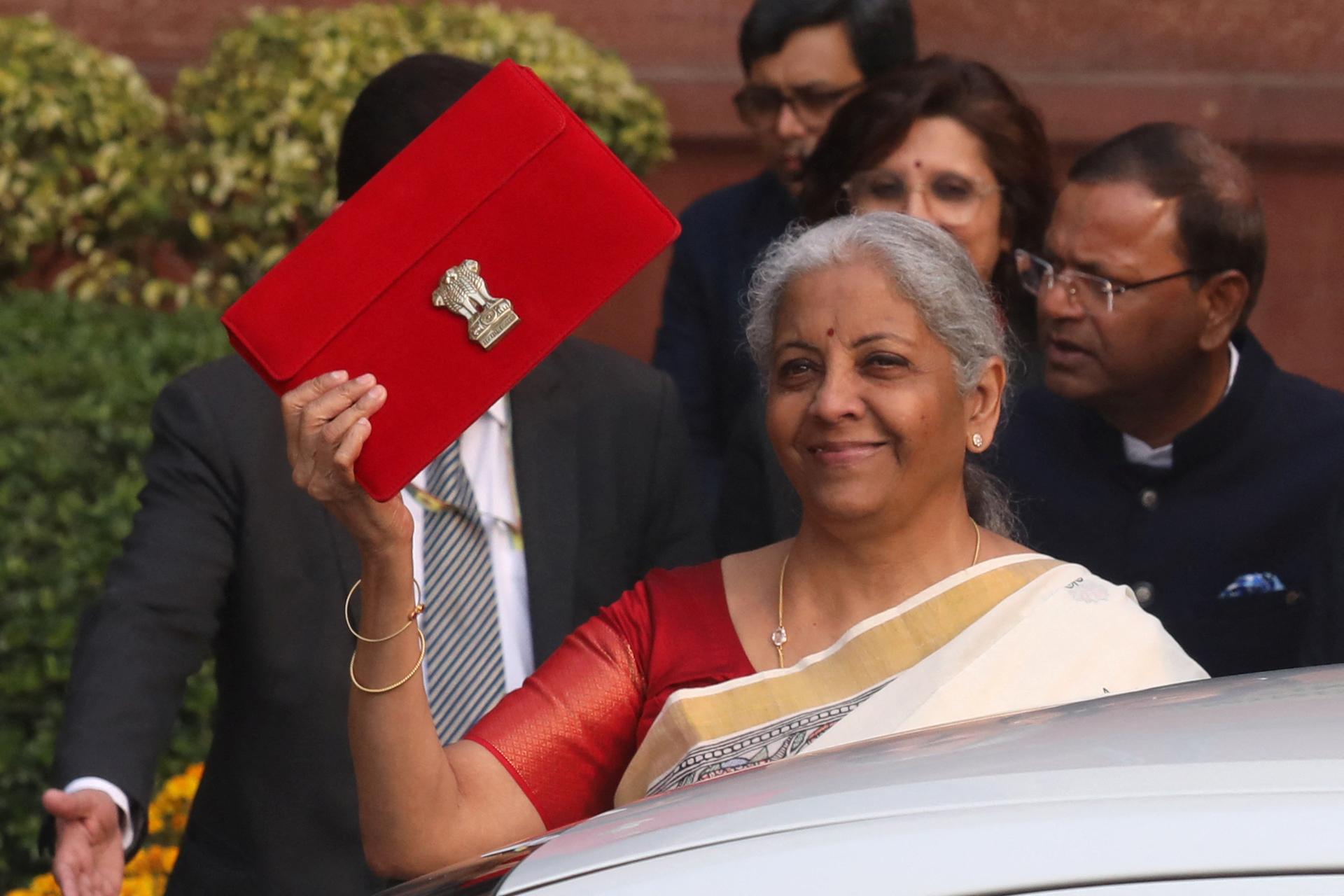
India's Finance Minister Nirmala Sitharaman leaves her office to present the annual budget in the parliament, in New Delhi, India, February 1, 2025. REUTERS/Altaf Hussain/File Photo |
Prime Minister Narendra Modi's government will announce its 13th annual budget this week against a backdrop of high U.S. trade tariffs, heavy foreign outflows from Indian equities and a rupee that is trading at record lows. Even with India's bragging rights as the world's fastest‑growing major economy and a renewed drive on reforms - from modernising labour laws to easing financial sector rules - foreign investors remain unconvinced. Since January 2025, they have sold a net $22.6 billion in Indian equities. Faced with this confluence of financial pressures, the annual federal budget, economists say, should focus on strengthening the domestic economy through additional reforms, especially allowing in more foreign investment and easing customs rules that make it more difficult to do business in India. At the same time, they advise against further reliance on the sugar rush of tax cuts like those announced over the past year, adding that any loosening of fiscal policy may spook foreign investors further and accelerate the selloff. Tax cuts, including wide-ranging reductions in consumption levies that kicked in midway through the second half of the financial year, are expected to push annual GDP growth to 7.4%, above the 6.3%-6.8% that the government predicted in January of last year. But growth is expected to slow next year as higher trade tariffs start to hurt exports and jobs. "We believe the government will focus on two pillars during such time – restraint and reforms," wrote HSBC's India chief economist Pranjul Bhandari in a note on January 20. Bhandari, like most other economists polled by Reuters, expects the federal government to keep spending in check and narrow the budget deficit to 4.2% of GDP in the next financial year, versus a target of 4.4% for this year. Economists expect the new budget will nevertheless adopt a gentler pace of fiscal consolidation, in order to support the economy, while shifting its target to the debt-to-GDP ratio rather than the annual fiscal deficit as it aims to build a more sustainable balance sheet in the medium term. The focus of spending, economists said, will remain on long-term infrastructure projects that generate jobs, rather than providing a quick boost to growth. |
|
|
Focus on roads, railroads...and reforms |
The capital spending-to-GDP ratio will likely be kept at 3%, DBS Bank said in a note. Alongside spending increases on roads and railways, it said, the budget for defence spending may see a double-digit increase. "A strong supply-side response will be important to attract fresh investment," DBS said. The government is separately considering easing foreign investment rules in the defence sector, Reuters reported. Read that exclusive story here. The budget release may include new announcements on reforms, although the government has given no indication of what will be included in the closely watched document. The reform push will be especially in focus for the manufacturing sector, whose share in the economy has been stuck at less than 15%. It could get a boost from a new panel of top government officials that is expected to advance reforms such as speedier customs clearances and case-by-case decisions on financial assistance, Reuters reported. Read that story here. Citigroup's India analysts said in a report this month that the government may also overhaul its customs duty processes to make domestic manufacturing more competitive. In the financial sector, the government is considering raising the limit on foreign ownership of state-owned banks, as well as mergers of some lenders to create larger financial institutions. "Investors are likely to watch for whether the reform push (including after the budget) will be incremental or significant for medium-term growth prospects," Anubhuti Sahay, head of India economic research at Standard Chartered Bank, wrote in a note this month. What does the budget need to do to bring back foreign investors?Write to us at ira.dugal@thomsonreuters.com. |
|
|
Shares of Adani group firms fell sharply last week, erasing $12.5 billion in market value on Friday after a U.S. markets regulator asked for court permission to directly serve summons on founder Gautam Adani. India, the Securities and Exchange Commission said, has previously refused its two procedural requests to serve the summonses for its civil case. U.S. authorities in November 2024 accused Adani group executives of participating in a bribery scheme that involved Indian electricity purchases from Adani Green Energy, a unit of the Adani group. In a statement to India's stock exchanges, Adani Enterprises said: "There are no allegations made against the Company in, and the Company is not party to, these proceedings." Adani Green issued a similar statement, saying: "No charges have been brought against it." |
|
|
The Securities and Exchange Board of India (SEBI) has accused current and former executives from PwC and EY, along with officials from U.S. private equity firms Carlyle Group and Advent International, of breaching insider trading rules during a 2022 equity raising process for Yes Bank. Read that exclusive report here. The action comes against the backdrop of a surge in capital raising by Indian companies. In another recent case, SEBI has alleged breaches of insider trading rules by Bank of America's India unit during a fundraising process. The companies have not commented publicly on the cases. |
|
|
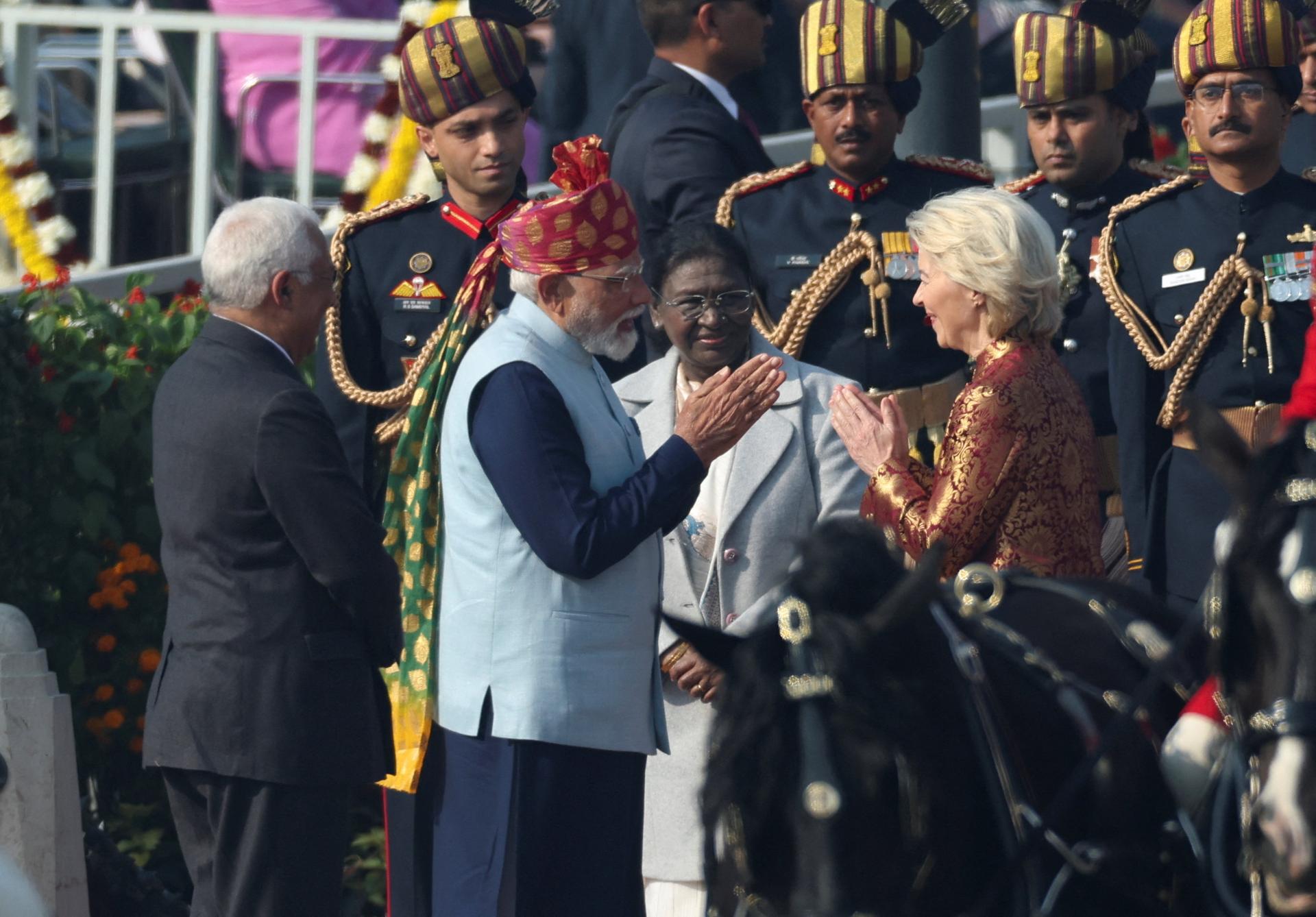
Narendra Modi greets European Commission President Ursula von der Leyen, next to India's President Droupadi Murmu in New Delhi, India, January 26, 2026. REUTERS/Adnan Abidi |
|
|
This newsletter was edited by Edmund Klamann, Editor-in-Charge, Global News Desk, in Canada. |
|
|
| | | | | Reuters India File is sent once a week. Think your friend or colleague should know about us? Forward this newsletter to them. They can also sign up here. Want to stop receiving this email? Unsubscribe here. To manage which newsletters you're signed up for, click here. This email includes limited tracking for Reuters to understand whether you’ve engaged with its contents. For more information on how we process your personal information and your rights, please see our Privacy Statement. Terms & Conditions | | | | | © 2026 Thomson Reuters. All rights reserved.
3 Times Square, New York, NY 10036 | | | |
|
|
|






0 comentários:
Postar um comentário