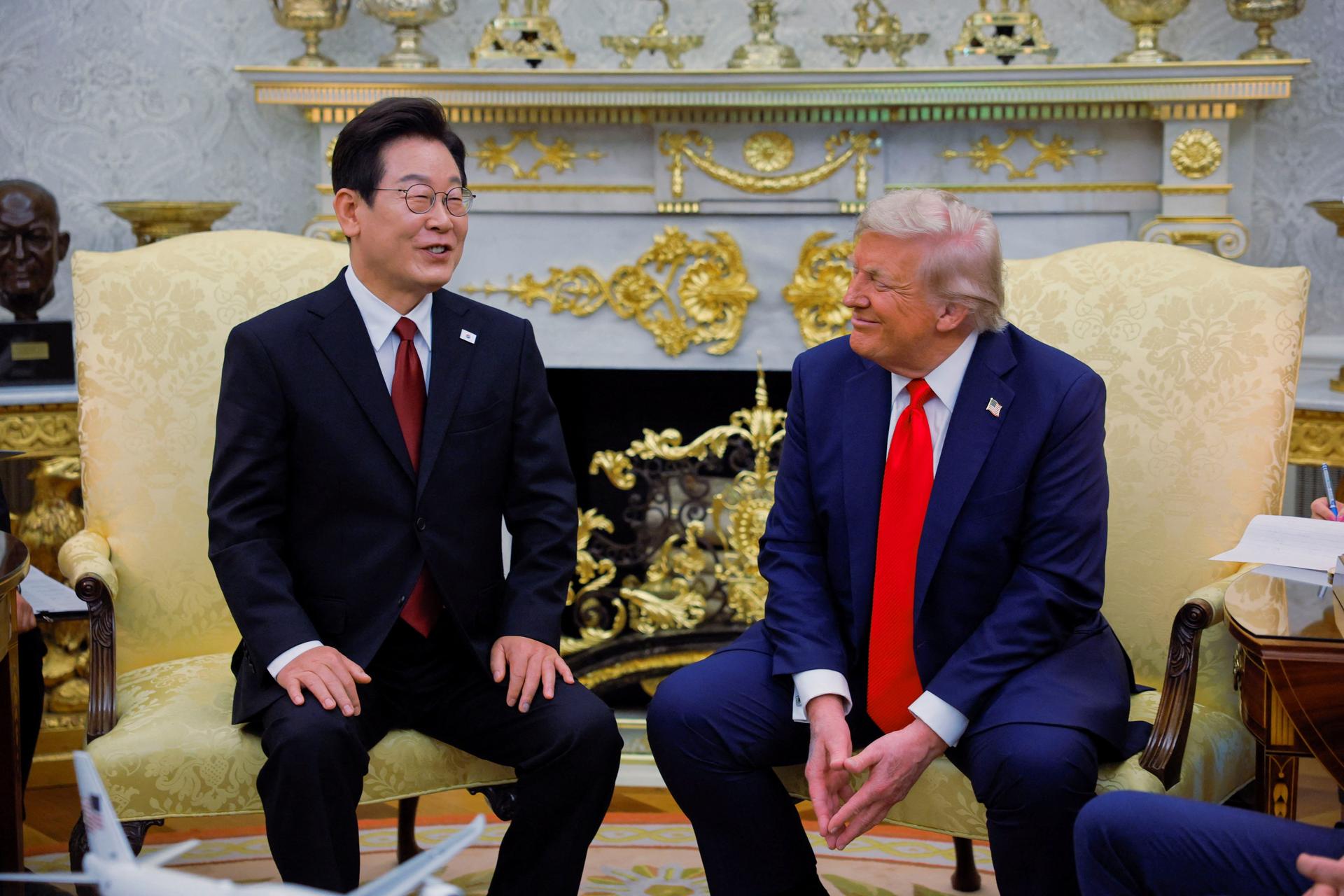
South Korea is betting that its promises to "Make America Shipbuilding Great Again" will sway Trump into going easy on tariffs that are currently set at 15%. South Korean President Lee Jae Myung made his first official visit to the White House this week to discuss trade and other details against the backdrop of a pledge by Korean companies to inject $350 billion into U.S. projects.
Shipbuilding has emerged as one of the most concrete areas of investment, with $150 billion earmarked for the sector, that once dominated in the United States but fell into decay after World War Two. Other sectors include steel and auto manufacturing where Hyundai Group pledged to invest $26 billion, as well as aerospace and critical minerals. Despite this, the 15% tariff will remain.
The EU, however, is hopeful that its long-term demand to reduce the 15% tariff on automobile exports to the U.S. – one of its biggest markets – will be met. In a joint statement last week, the U.S. said it would apply a tariff below 15% only on EU aircraft and parts, generic pharmaceuticals and ingredients, chemical precursors and unavailable natural resources, including cork. But this would not apply to wine or spirits, a key EU demand.
The good news? Both sides have agreed to consider other sectors and products for inclusion, raising hopes that autos might be taxed lower too.
India and China have had less success so far. The U.S. issued an order late on Tuesday that will impose a 50% tax on Indian imports, a move that is making investors in the country's textile and pharmaceutical companies nervous. The Indian government has "no hope" for any immediate relief or delay in U.S. tariffs.
Trump has also threatened a 200% tariff on Chinese imports if Beijing does not give magnets to the U.S., escalating an already painful trade war between the two nations.






0 comentários:
Postar um comentário