| Welcome, Weekenders! In this newsletter: |
| I'm delighted to introduce Weekend's latest addition: Jemima McEvoy, who joins as a reporter. |
| Jemima comes from Forbes, where she was a staff writer and a distinguished member of the Wealth Team, the group of reporters who assemble the Forbes 400 and World's Billionaires lists and chronicle these moguls throughout the year. Estimating their fortunes requires real reportorial verve, which will serve Jemima in good stead with us. At one point, she needed to value a prized herd of cattle in Hawaii. "I was told they were more valuable than any other cows in the world," Jemima recalls. "They weren't." |
| Jemima has jumped into The Information's world quite energetically, and you'll see her byline on both of our features this week. Speaking of which…—Abram Brown |
| In this newsletter: |
| • The Big Read: Inside Snap's mighty struggles |
| • Artificial intelligence: Silicon Valley confronts a moment of ecstasy and agony |
| • Plus, our Recommendations: "Unicorn Girl," "Breakneck" and "Rear Window" |
| |
| Over the last few days, a number of opposing truths has been made abundantly evident: We can't stop throwing money at AI, and even though we'd love to know if it's being put to good use, no one seems to have any idea whether it is. |
| Let's discuss that infinite machine money first, which has hit no slowdown this summer. DataBricks says it has raised a "Series K" funding round to continue its AI work. Anthropic may raise double what it had been planning to collect, some $10 billion. And Eight Sleep, maker of a smart mattress topper, got $100 million by launching its own AI efforts. |
| I can sense the desperation to understand whether these dollars are being well spent by the outsize reaction to a Massachusetts Institute of Technology report that went semiviral. The study had a scary number in it: "That 95% of organizations are getting zero return" on AI. It appeared to prompt a sell-off in tech stocks, with the Nasdaq losing 2.4% from Tuesday through Thursday. |
| Clearly very few people actually read past the headlines to the details of the study, because if they did, they might have been less motivated to sell. The study's conclusions are seemingly based mostly on 52 interviews, not reams of data. Indeed, the researchers' own summary of their "research limitations" really says it all: "These figures are directionally accurate based on individual interviews rather than official company reporting." |
| Directionally accurate? That sounds suspiciously like "educated guess." Yet it still prompted billions of dollars to slosh around this week. That's a little unsettling, and it speaks to how starved people are for information—not that we'll see any company offer a lot of official reporting anytime soon. Still, I, for one, generally try to confine educated guesses to low-pressure situations, like assembling tonight's potato salad. |
| Trump Shades Solar |
| President Donald Trump envisions a sorta New Dark Age, I guess: In a recent post on Truth Social, Trump renewed his attacks on renewable energy, describing solar and wind power as "THE SCAM OF THE CENTURY!" |
| Of course, America needs much, much more energy production to meet growing demands—including for the enormous needs of developing AI. |
| Which makes Trump's resistance to solar and wind baffling. It's almost as if something has fried his brain… |
| Siri, Can You Google That? |
| After years of Apple insisting it could whip Siri into shape by itself, the company is reportedly considering using Google Gemini to revamp the voice assistant. |
| According to Bloomberg, Apple recently asked Google whether it could design a custom AI model that would begin to power Siri next year, and Google has begun work on a model that Apple would run on its own servers. Before talking with Google, Apple also met with Anthropic and OpenAI. (Recently, Apple has integrated OpenAI's ChatGPT into Siri, allowing ChatGPT to answer some complex questions that Siri couldn't manage.) |
| The decision seems to underscore just how hard it is at this point for any one to come up with models capable of beating—or even rivaling—the ones that Google, OpenAI and the other veteran model-makers have spent years developing. It also suggests we may be waiting awhile before any model from anyone really does anything too astonishing. |
| While the decision to partner with Google isn't finalized, even considering the choice must pain Tim Cook, who has maintained a Jobsian obsession with doing as much as possible in house. Still, he's saving himself the kind of circus that keeps drawing so much attention over at Meta, and I wonder if Cook's concession might actually give other leaders permission to accept the inevitable and scrap their own model-making plans. Quick! Everyone google the definition of "humility."—A.B. |
| |
|
|
 |
|
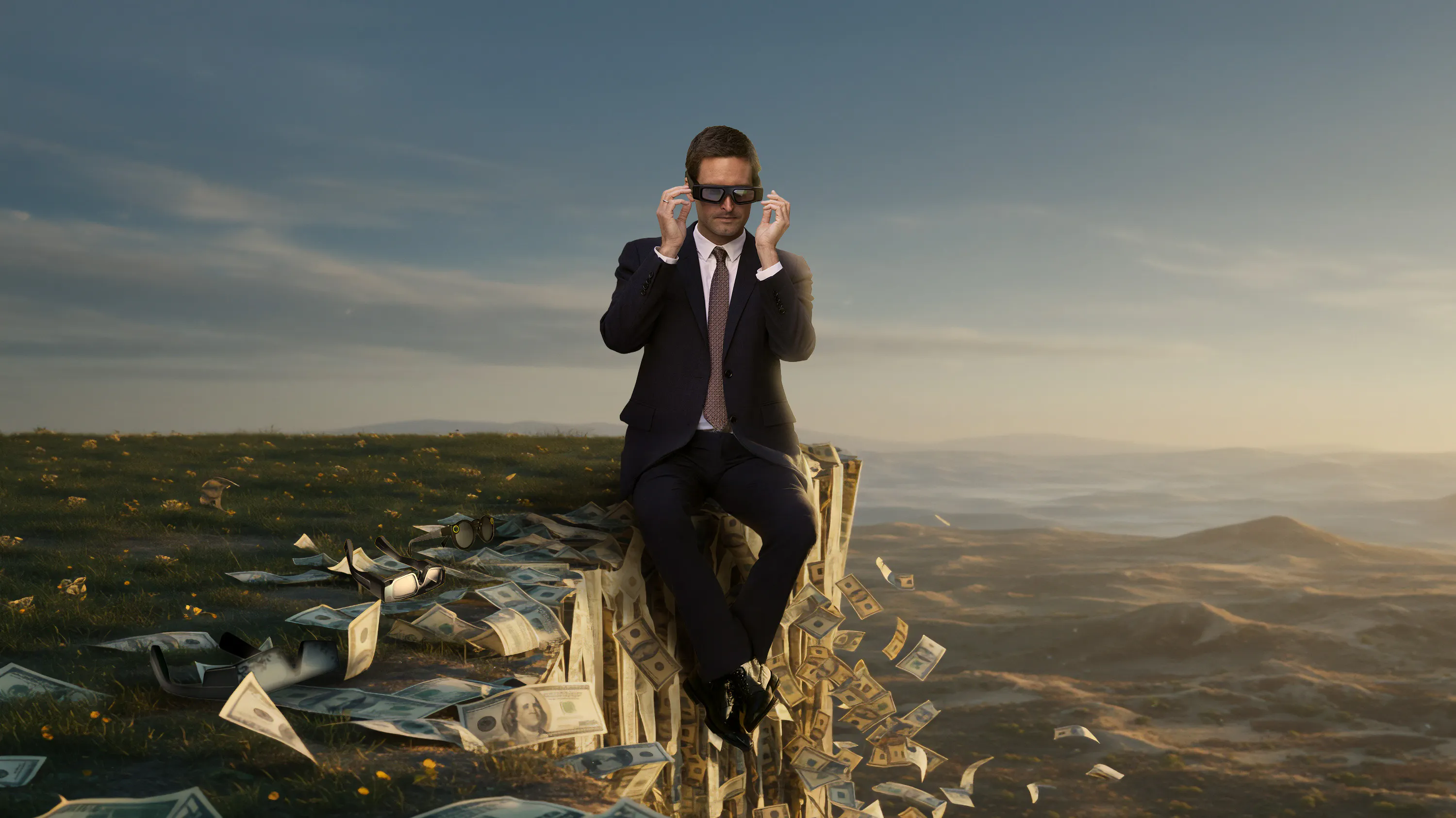
| Pity poor Snap—the company is rather besieged these days, as our Kaya Yurieff, Erin Woo and Jemima McEvoy report in Weekend's latest Big Read. |
| CEO Evan Spiegel has thrown as much money as he can at his pet project: Spectacles, the company's augmented reality glasses. But he's never gotten a blockbuster hit out of the efforts, and as competition in AR heats up, discussions in Snap have turned to possibly seeking outside funding for the glasses—or treating the project as a subsidiary, as Alphabet has done with Waymo. Snap also faces a moribund stock price, deep-pocketed rivals and its own internal worries that Generation Alpha may not be as enthusiastic about Snap and social media as past young people were. |
|
 |
|
| A while back, someone described a different revolutionary moment as the best of times and the worst of times. |
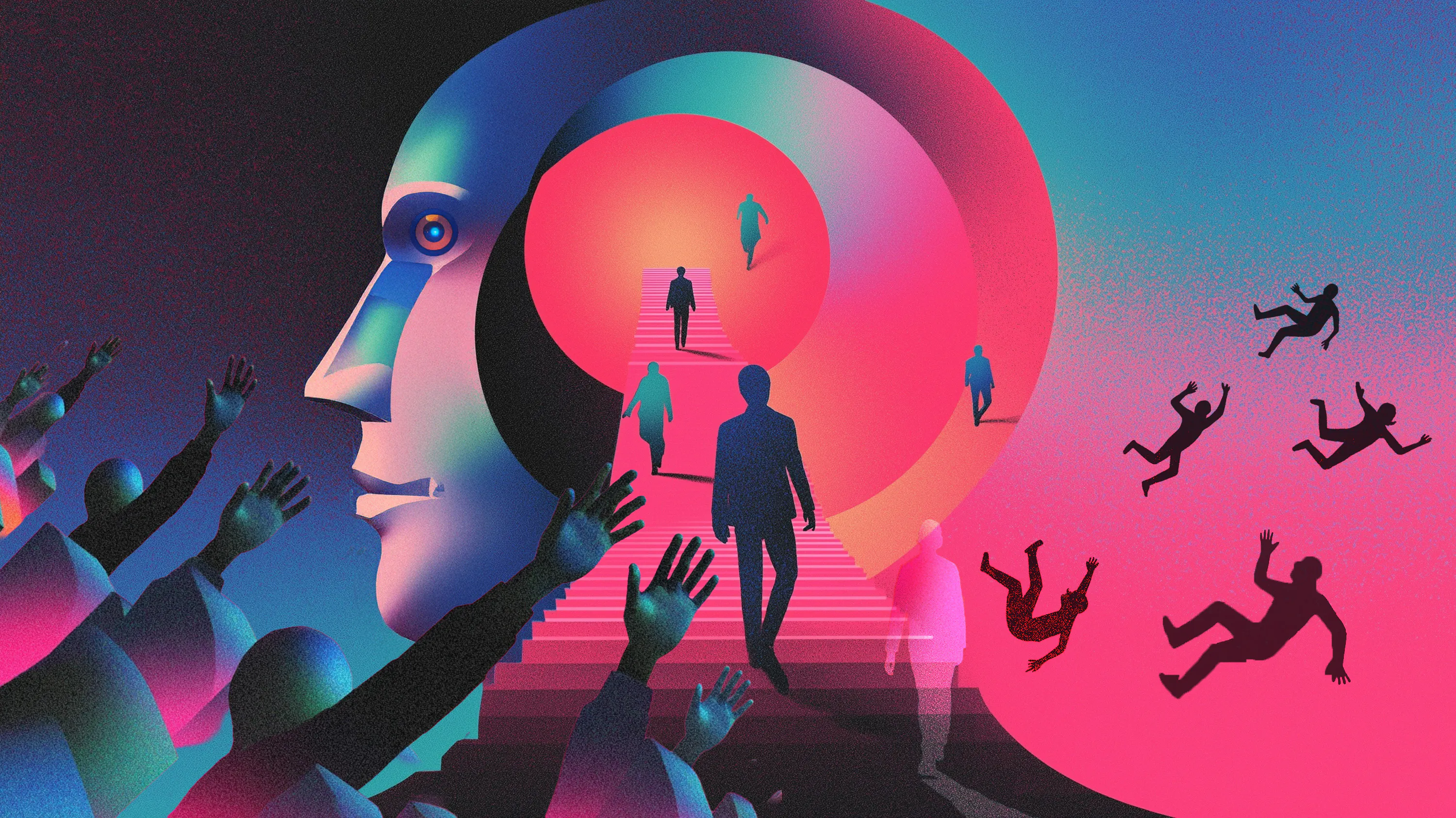
| The adage could apply to this moment in tech just as much. As the AI craze hurtles on, the Nasdaq sits at all-time highs. The IPO market seems to have reopened. Researchers are getting paid like rock stars. |
| Yet the industry's sense of excitement is intertwined with an equally profound feeling of anxiety, reports our Natasha Mascarenhas, along with Jemima and Erin. Founders and CEOs worry that they won't be able to capitalize on the technology as quickly as existing competitors, or that the tech will allow new rivals to pop up overnight. And while the boom has enriched many of the rank and file, it hasn't trickled down to everyone, leading to a not insubstantial amount of resentment and worry among some foot soldiers in tech, who fear that the era is passing them by. |
| The high-stakes moment has people like Airtable CEO Howie Liu existing on little more than paranoia (his word). "Maybe it's not the most psychologically healthy way to live," he conceded. |
| Abram Brown is editor of The Information's Weekend section. Reach him at abe@theinformation.com or find him on X. |
| |
 |
| Listening: "Unicorn Girl" (Apple TV+) |
| Charlie Webster's first exploration of small-city deviousness, "Scamanda," was something of a sleeper hit—eventually morphing from a Lionsgate-produced podcast into a four-part ABC documentary series. She returns with another similar tale, focusing this time on Candace Rivera, aka @one_fierce_mama on Instagram. On the internet, Rivera portrayed herself as a tireless global crusader against child trafficking, one with a U.N. advisory position to boot. As you can perhaps guess by the title of "Unicorn Girl," Rivera's carefully spun narrative had as much truth to it as a fantasy tale. |
| Reading: "Breakneck" by Dan Wang |
| Americans may spend a great deal of time thinking about China these days, but it hasn't really led America toward better understanding the competing superpower, insists Dan Wang. Wang, a Canadian of Chinese descent, has spent considerable time thinking about what makes each country tick. After college, he worked at Shopify and Flexport, then moved to Beijing to take an analyst job at Gavekal Dragonomics, a macroeconomic research shop, and stayed in China through the pandemic. After closely observing how the two countries approached economic growth, Wang came away with a realization that forms the fundamental thesis in "Breakneck": The U.S. is a country of lawyers. China is a country of engineers. |
| Once everyone gets back from their Burning Man jags, "Breakneck" is the kind of book that will get pressed into your hands this fall over and over again. Why? It spotlights two concepts that animate conservatives and liberals alike: that in recent decades, America's rule followers have weakened it, while China's number crunchers have strengthened it. So is a China-dominated future inevitable? I won't spoil Wang's ultimate conclusion, which he takes partly from what's happened recently in Liupanshui. The city of 3 million people in the mountainous Guizhou province once hoped to turn itself into a ski destination. Instead, the town is buried under an avalanche of $21 billion in debt. The local official responsible for the disaster is in jail and only narrowly avoided a death sentence. |
| Watching: "Rear Window" |
| I'd forgotten how few films better capture a stifling New York summer than Alfred Hitchcock's "Rear Window" until I rewatched it on a recent evening when Brooklyn had reached the same temperature as a boiled dinner. The 1954 film was Hitchcock's second outing with actor Jimmy Stewart, who plays L.B. Jefferies, a photojournalist confined to a wheelchair by a broken leg. Out of boredom, Jefferies has developed the bad habit of snooping around with his zoom lenses; everyone has thrown open their windows, trading privacy for the possibility of catching a cool breeze. Initially, he doesn't see much. Then one night, he spies a possible murder and decides to risk his life to investigate it. |
| I don't bring up "Rear Window" just for seasonal sentiment's sake. Hitchcock, ever the mischievous voyeur, meant "Rear Window" as a cautionary comment on our tendency to exhibit ourselves: sometimes intentionally, sometimes accidentally. As I watched it again, the warning rang more timely than ever. Sure, the modern convenience of a thermostat means we can draw the curtains at night. But every time we post to Instagram, TikTok or any other social app in the vastness of the internet, we're gleefully inviting many, many more people than just the neighbor across the street into our lives.—A.B. |



0 comentários:
Postar um comentário