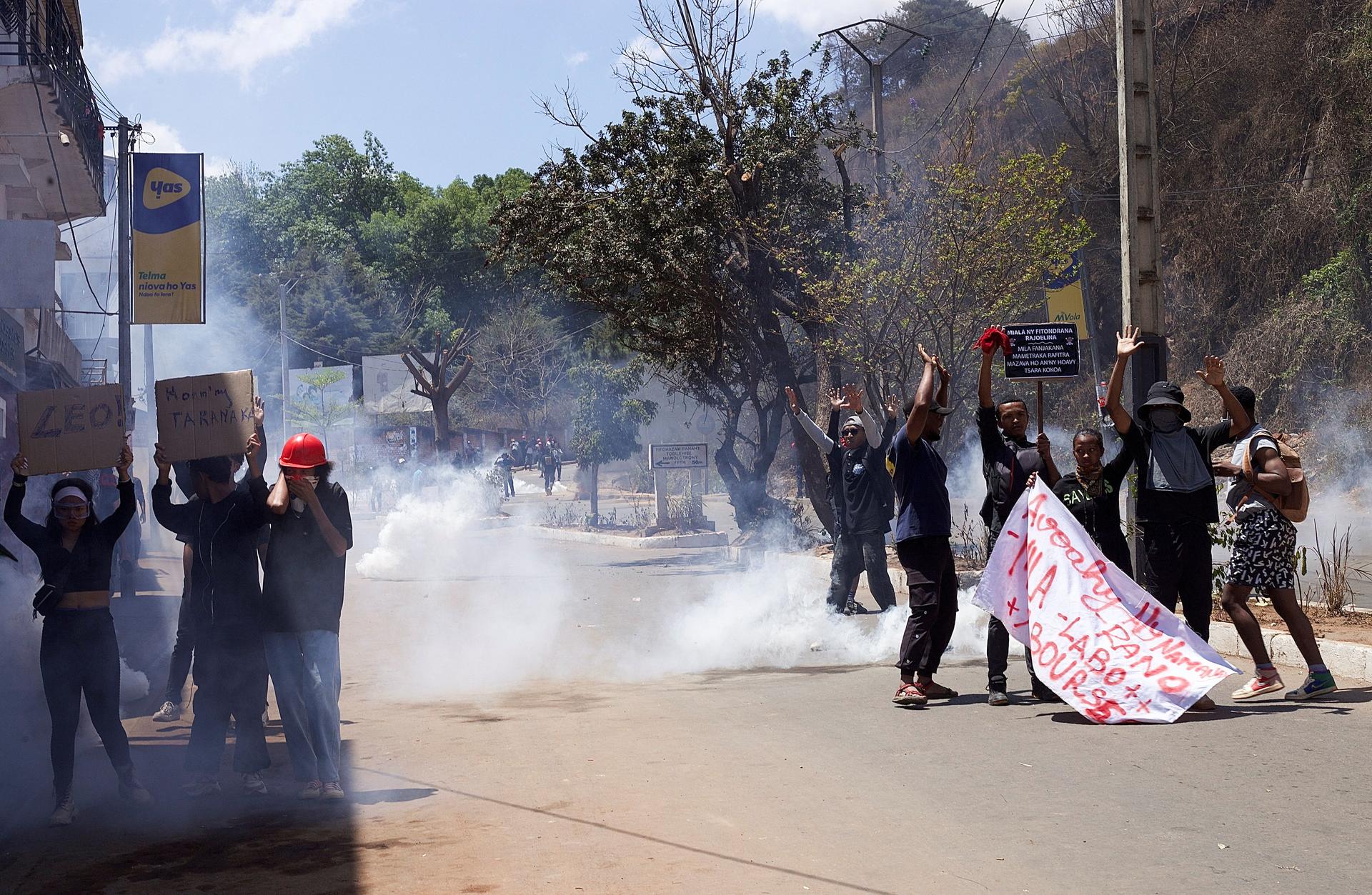
Hello! This week, "Gen Z" protesters in Madagascar are taking to the streets to protest frequent power outages and water shortages. The demonstrators are denouncing the government and demanding restoration of reliable water and electricity across the country. Madagascan President Andry Rajoelina said he was dissolving the government following the youth-led protests in which the United Nations says at least 22 people have been killed and more than 100 injured. But it's not just Madagascar that's seen youth protests over resources or anti-corruption this week. Over in Morocco, youth-led protests organised by a group calling itself "GenZ 212" spread across several cities this week, where demonstrators have called for improvements to the public health and education systems. Peru's Gen Z are protesting the country's pension system, but the demonstrations were also fueled by longstanding anger against President Dina Boluarte and Congress. Madagascar, Morocco and Peru join the likes of Indonesia, Nepal and the Philippines in the wave of youth protests this year. But those nations also have two other things in common. Also on my radar today: |
|
|
Protesters react as police use tear gas at a demonstration against power outages and water shortages, near the University of Antananarivo, Madagascar. REUTERS/Zo Andrianjafy |
Floods, quakes and protests |
So far, most of the countries experiencing protests have had a major extreme weather event over the past year. Peru experienced heavy rains in February that left towns in ruin; Madagascar was hit by a major cyclone in March; a deadly flood swept across Nepal's Bhote Koshi River as the Philippines was battered by torrential rains in July; and the Philippines is currently reeling from the aftermath of Super Typhoon Ragasa and storm Bualoi. Earlier this month, Indonesia experienced floods on the island of Bali which killed at least nine and affected 600 people. Although Morocco did not experience an extreme weather event in 2025, the north African nation suffered from fatal floods last year and suffered from a catastrophic earthquake that killed nearly 3,000 people in 2023. Earlier this month, on the second anniversary of the quake, dozens of survivors staged a protest in front of Morocco's parliament in Rabat, calling on the government to take reconstruction aid as seriously as World Cup projects. Protesting over funds used for disaster prevention and recovery was also seen in the Philippines where youth demonstrators took to the streets over mismanaged funds assigned to flood control projects. |
|
|
Inequality and climate change |
The demonstrations around the Global South come as hundreds of environmental and human rights groups have urged the COP30 global climate summit in Brazil this November to confront the historical roots of the climate crisis, and put reparations on the agenda. The letter argues that historical crimes, such as enslavement and colonialism, created global inequalities in resource access, drove asymmetrical contributions to emissions, increased vulnerability to disasters, and continue to exclude many from climate decision-making. Why is that letter relevant to the protests? Most of the countries mentioned in today's newsletter experiencing protests and extreme weather events were also subjected to colonialism. Madagascar and Morocco were colonized by France, while Indonesia was subject to Dutch colonization. Peru and the Philippines both experienced Spanish colonization. The Philippines was also colonized by the United States and Japan. The letter said that it would be significant for Brazil, which received more enslaved people than any other country and today has the largest population of African descendants outside Africa, to take the lead on this call. Leaders of developing countries also say rich nations must provide resources to cope with climate change, a crisis they created. |
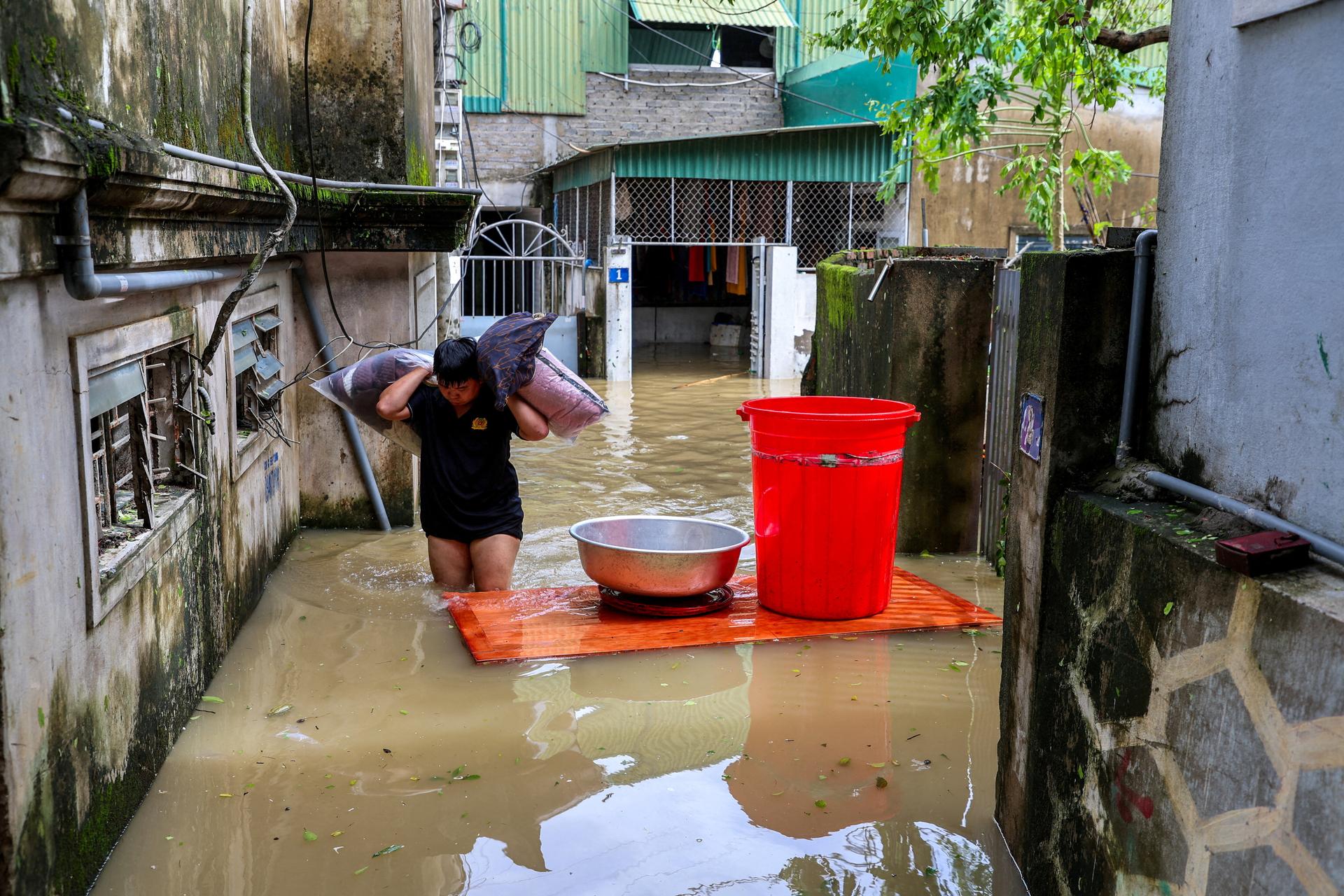
A man wades through a flooded area as he carries his belongings after Typhoon Bualoi made landfall in Nghe An province, Vietnam. REUTERS/Thinh Nguyen |
- Typhoon Bualoi: Vietnam experienced its most devastating storm this year, bringing heavy rains that killed 26 people, with 22 still missing, state media said. The downpours came a day after Typhoon Bualoi made landfall in northern central Vietnam, bringing huge sea swells, strong winds and rainfall which exceeded 300 mm (12 inches) in several parts of Vietnam over 24 hours.
- Reuters Gaza investigation: The Israeli military had said they targeted a Hamas "cloth-covered camera" in an August strike that killed five journalists. But the cloth shown in the screenshot was not put there by Hamas. It was a prayer rug belonging to Hussam al-Masri, a Reuters journalist who was killed in the attack, a Reuters investigation of the incident found. His death is among some 200 journalist killings by Israel that it has yet to fully explain. Click here for the full investigation.
- Afghanistan water crisis: With climate change increasing the frequency of droughts and erratic rainfall in Afghanistan, aid agencies say Kabul is among the most water-stressed cities in Asia, with shortages fuelling disease, malnutrition and school dropouts. Click here for the full Reuters report.
- Malaysia steel: Malaysia is planning a 10-year roadmap for its steel industry that aims to manage overcapacity, restructure licensing and prepare for decarbonization with a goal of achieving a "fully green" sector by 2050, trade minister Tengku Zafrul Aziz said. Click here to read more about the green revamp.
- Total renewables rollback: TotalEnergies plans to divest from all renewable power holdings except those in the United States, Brazil and Europe, gas, renewables and power president Stephane Michel said. This comes as Total raised $950 million from the sale of a 50% stake in a U.S. solar portfolio to investment company KKR.
- FBI racial justice firings: The FBI has fired a group of its agents photographed kneeling on the street in an attempt to de-escalate tensions during a racial justice protest in Washington in 2020 in the aftermath of George Floyd's killing by police in Minneapolis, three people familiar with the matter said.
|
|
|
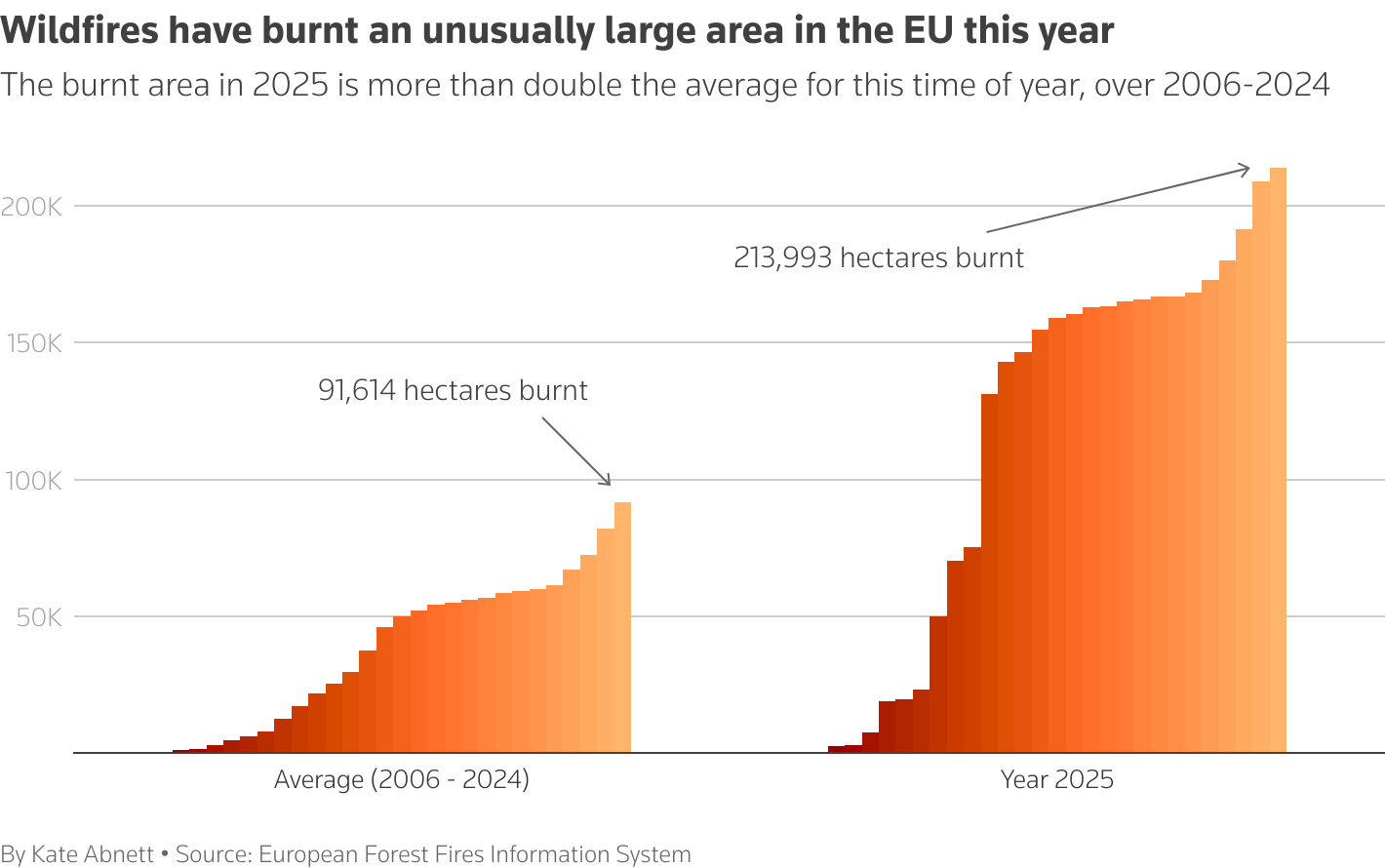
Climate change and environmental degradation pose a direct threat to the natural resources that Europe needs for its economic security, the EU's European Environment Agency said. Europe is the world's fastest-warming continent and is experiencing worsening droughts and other extreme weather events. Take Spain for example. With hotter and drier weather stoking larger and more destructive fires, experts and locals alike are calling for fire breaks and other forestry management methods and incentives to be urgently implemented to avoid a repeat in years to come. During a record heatwave in August, wildfires killed four people, encroached on cities and towns and charred 330,000 hectares, an area twice the size of London. |
|
|
Sustainable Switch was edited by Mark Potter. |
|
|
Sustainable Switch is sent three times a week. Think your friend or colleague should know about us? Forward this newsletter to them. They can also sign up here. Want to stop receiving this email? Unsubscribe here. To manage which newsletters you're signed up for, click here. This email includes limited tracking for Reuters to understand whether you've engaged with its contents. For more information on how we process your personal information and your rights, please see our Privacy Statement. Terms & Conditions |
|
|
|






0 comentários:
Postar um comentário