| Welcome, Weekenders! In this newsletter: |
| |
| Welcome, Weekenders! In this newsletter: |
| • The Big Read: Mira Murati's enigma machine |
| • Artificial Intelligence: Nvidia's AI stimulus plan |
| • Plus, our Recommendations: "Desk Set," "Mission Accomplished" and "It's Only Drowning" |
| |
| When you've worked in an industry for a while, you learn its rhythm. For years, tech and business journalism had one. Big private tech companies would announce major new fundings every two years or so. They'd unveil new products at big annual developer conferences. |
| There were IPO cycles. Earnings season. And then there were the sorts of secret rhythms you just pick up with experience—big management changes, for example, have a tendency to happen in early summer. |
| All that has gone out the window. |
| OpenAI now seems like it announces a major financing or infrastructure deal every 18 days—not 18 months. Tech companies release major new products weekly, not annually, and within days, hundreds of millions of people are using them. Investment records are being shattered so fast that within a week, we can no longer fit two data points, months apart, on the same chart. |
| Almost every week, some tech leader tells me how the new cycle of deals, launches and fundings has upended their world. How products get launched, communicated and built is changing faster than ever. How do our processes—and our brains—adapt? |
| As I look to the end of the year and the planning for next, I find myself obsessed with the topic of what has to change about this for my business and the rest of the news industry. What do you have to do differently to work at AI speed—while maintaining both your sanity and your edge? |
| I'll save the announcement about what we have cooking for a later date. But I am curious how tech and business leaders are adapting. The temptation, of course, is to try to turn to AI, to try to automate more, track more and stay above water. |
| I suspect that will only be a piece of the puzzle. The answer also lies in the advice I got from my team when I posed the question. One of our editors didn't hesitate. The answer for how to operate in a world that moves at a faster and faster pace is "decisiveness," he said. |
| He's right. Times change and much about how we work may too. |
| But one of the best things all of us can do is to make and communicate clear decisions on the roads we choose—especially as we come across new forks in the road faster than ever. |
| |
|
|
 |
|
| A lot of buzzy startups attract employees and investors based on little more than the pedigrees of their founders. Mira Murati is raising this quality to a new level with her AI startup Thinking Machines Lab. As Stephanie Palazzolo writes in her colorful Big Read on Murati this week, the CEO of Thinky—the nickname staffers have given to the company—has managed to wrangle a star-studded group of investors by sharing the barest of details about the products the company plans to make. |
| The loyalty that Thinky's employees have to Murati has also attracted investors. When she left OpenAI, where Murati had a storied career as its chief technology officer, 20 OpenAI staffers initially followed her over to Thinking Machines. Now the only thing left for Murati is to ship some products.—Nick Wingfield |
| |
|
 |
|
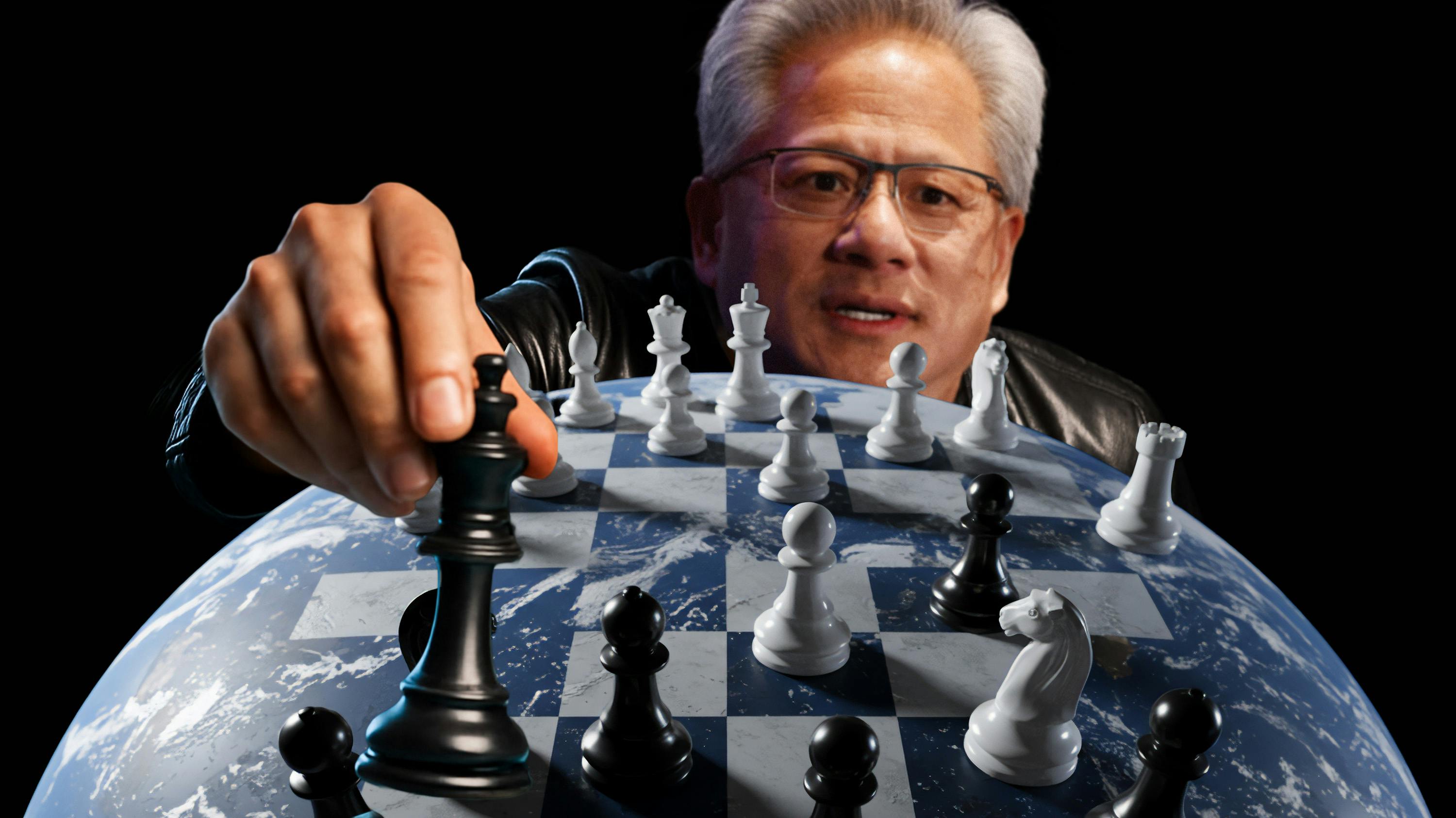
| What do you do when you're Nvidia's Jensen Huang and your booming chip business is spinning off mountains of cash? You start pouring it into AI startups, naturally. Huang has been on a multiyear spending binge of such investments, which has intensified over the last couple of months. The doozy of them all was this week's announcement of Nvidia's letter of intent to put $100 billion into OpenAI, which will help it build 10 gigawatts worth of data centers in the coming years. |
| All of this deal-making is turning Nvidia into a kind of government overseeing the AI economy, as Anissa, Wayne, Qianer and I write in our story on Nvidia. At times, the company's investments serve as a kind of stimulus program. At others, it resembles foreign aid. Nvidia even performs a kind of central bank function in some deals. Give our story a read!—N.W. |
| Jessica E. Lessin is the founder and CEO of The Information. Reach her at jessica@theinformation.com. |
| |
 |
| Watching: "Desk Set" (Available for rental on Amazon, Apple and other streaming services) |
| It might seem strange to be recommending a 1957 drama starring Katharine Hepburn and Spencer Tracy, but trust me, this film is worth watching. The movie centers on a TV broadcasting company's reference library at a moment when mainframe computers are coming in. Tracy plays a computer consultant, checking out the reference department (run by Hepburn), for installation of a room-sized computer. You can imagine the issues that arise as the department's workers fret about what this means for their jobs. But what makes the movie so surprising for a viewer today is that the computer, once installed, operates exactly like an AI chatbot of 2025. As explained by Tracy, it has ingested all the material in the library's books. Questions from network staffers are typed into the computer and it responds with the answer—just like ChatGPT. There really is nothing new under the sun.—Martin Peers |
| Listening: "Mission Accomplished" (The Ringer) |
| For the past couple summers, The Ringer's twice-weekly movie podcast,"The Big Picture," gave its hosts some much deserved time off in August by turning over its feed to some special programming from Brian Rafferty, a contributor to the Spotify-owned network and a veteran of places like GQ, The New York Times and New York magazine. Last year, he examined Vietnam War films, and this year, he looked back on the 2000s movies that increasingly seem to define the decade, presenting a five-episode series titled "Mission Accomplished" after the fateful (and, uh, infamous) Dubya line that itself defines much of the era. |
| Rafferty's project is light yet insightful, with interviews from director Adam McKay and others—the kind of curated commentary that actually should go on a Blu-ray. Throughout, he gives some engaging perspective on the more obvious choices, like "W" and "The Hurt Locker," and manages some unexpected juxtaposition: I hadn't, for instance, really seen much of a connection between "Bring It On" and "Donnie Darko."—Abram Brown |
| Reading: "It's Only Drowning" by David Litt |
| I related a lot to what David Litt describes in "It's Only Drowning," especially to the ennui that can hit a person hard in the time between quarter-life exuberance and mid-life crisis. Of course, what made the book so enjoyable was that Litt coped with his unsettled news in a manner entirely alien to me: He decided to learn to surf. |
| Broadly, "It's Only Drowning" is his chronicle of that pursuit. It is conversational and confessional and funny, a totally different kind of fish than "Barbarian Days," the Pulitzer Prize-winning memoir by William Finnegan. Yes, they're both books about surfing—but only in the same sense that "Marley and Me" and, say, "Old Yeller" are both books about dogs. |
| "It's Only Drowning" does chart another pursuit by Litt: his attempt to befriend his brother-in-law, Matt, who coined the book's titular turn of phrase. The two are very different. Litt is a politico and a former Obama speechwriter who listens to NPR and Sondheim; Matt is a handyman who enjoys Joe Rogan and death metal. (Needless to say, their politics differ sharply, too.) And while Litt is a novice surfer, Matt is a gifted one, who, as Litt describes it, can cut through the water with a balletic grace. Initially, Litt hopes spending time in the surf will let them find more common ground back on dry land—a desire for reconciliation that feels relatable, too. Instead, he has to settle for reaching what feels more like a swath of neutral ground, which "was not perfect, or complete, or sufficient," he acknowledges. "But in a world on fire, few things are."—A.B. |




0 comentários:
Postar um comentário