

Your Favorite Magazine Should Start Making TequilaBarry Diller's radical reinvention playbook vs. The New York Times' methodical success
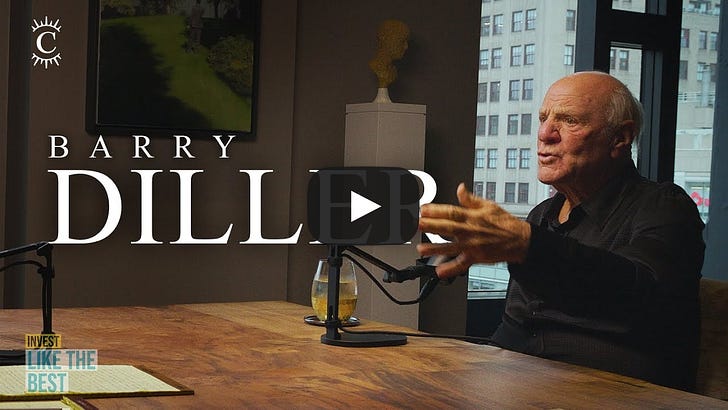 At the end of his recent interview with the “Invest Like The Best”, IAC Chairman Barry Diller was asked about its DotDash Meredith business—recently renamed People, Inc. After discussing how the business was navigating the loss of Google traffic, he shared a question he recently asked the creative leaders at People, Inc’s portfolio of brands: “Don’t you have to invert your business?” Meaning, media companies like People, Inc. (or Hollywood studios) still have value. But they face two choices:
To survive, editorial expertise must expand beyond traditional publishing into product creation and brand licensing. In my conversations with various folks in the media industry over the past few weeks, the first outcome seems inevitable. Google is disappearing as a source of traffic, and consumers are increasingly relying on AI platforms like ChatGPT or summaries from Google’s Gemini instead of visiting media sites. The technology companies are inevitable winners and large legacy media companies will “go the way of the dodo”. Diller rejects this cynicism. Two years ago, The New York Times (NYT) Vice Chair David Perpich expressed a similar optimism to The Wall Street Journal: Newspapers are “more than about news”. They are “a bundle of information” that can be split into separate products and reaggregated into a bundle. Since 2008, NYT management has built online DTC models that, first, capture inelastic demand—Games, Cooking, Shopping (Wirecutter) and sports coverage (The Athletic); and, second “constantly find the widest possible audience” for its work, as CEO Meredith Kopit Levien recently told Puck’s “The Grill Room”. Diller envisions this in-house fragmentation strategy going further. Where NYT fragmented its content bundle into digital products, he envisions People Inc.’s editorial brands—an “incredible gold mine of content, of ideas and of subject areas”—becoming physical products, entertainment properties, and consumer goods. In other words, if fragmentation is inevitable and audiences love your content, why not do it yourself while the experts are still in-house? Not Disruption TheoryThis echoes Clayton Christensen’s “Innovator’s Dilemma”: Established companies must disrupt themselves before others disrupt them. This theory has been the popular paradigm for explaining the internet’s impact on legacy media. However, Diller’s argument is more Marshall McLuhan than Christensen: He is not talking about disruption theory. Rather, the interactive medium of the internet has made it easier to start any kind of business than anytime in history. So why shouldn’t People, Inc. start now? Past essays related to today’s analysis:
Subscribe to The Medium from PARQOR to unlock the rest.Become a paying subscriber of The Medium from PARQOR to get access to this post and other subscriber-only content. A subscription gets you:
|
Your Favorite Magazine Should Start Making Tequila




Assinar:
Postar comentários (Atom)
0 comentários:
Postar um comentário