A look at the day ahead in European and global markets |
|
|
By Wayne Cole, Chief Correspondent, Treasury |
|
|
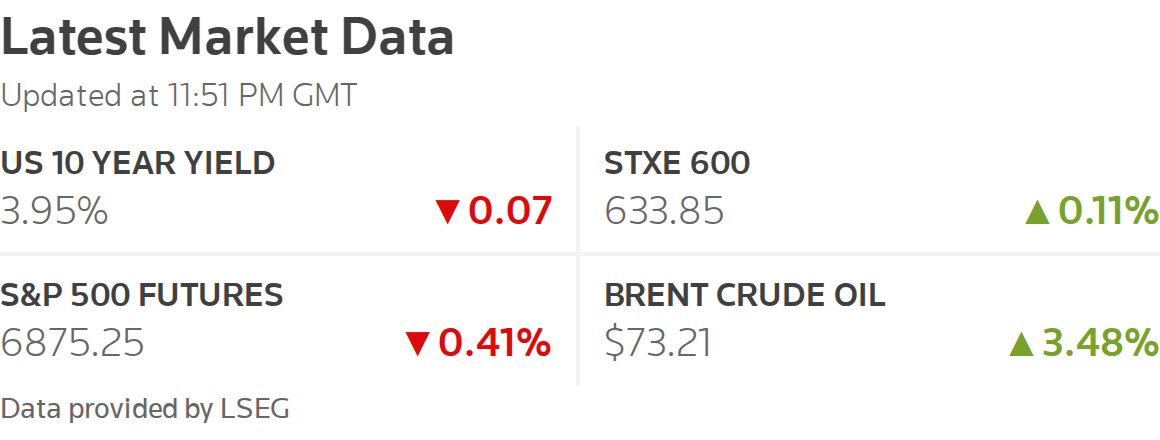
Thursday's new headlines have been dominated by a ceasefire agreement between Israel and Hamas that is touted as a first step to ending the two-year conflict and the ultimate rebuilding of war-torn Gaza. Much could still go wrong, but the easing of geopolitical risk was enough to see oil prices slip 0.6% or so. In equity markets, the AI effect was still dominant as tech shares lifted the Nikkei back to near record peaks, while Taiwan climbed 1.2% to an all-time high. |
|
|
People work at the trading floor of the Euronext stock exchange in the La Defense business district in Paris, France, March 10, 2025. REUTERS/Benoit Tessier |
Chinese blue chips returned from holidays with gains of 1.7%, reaching levels last seen in early 2022. Analysts cautioned early reads on holiday spending were "underwhelming", though the data is very patchy. Beijing continued playing hardball with rare earth minerals, tightening export controls on processing technology, while barring unauthorised overseas cooperation and underlining its intention to limit exports to overseas defence and semiconductor users. The minerals have been a flash point in trade talks with the United States and the new restrictions might not be taken well by the White House. Futures for S&P 500 and Nasdaq were steady after hitting more record highs overnight, led by chip stocks. Analysts at JPMorgan noted estimates for the looming Q3 reporting season see earnings growth in the tech sector of 20.9%, up from 15.9% back in June. Some 81% of stocks in the tech sector have seen estimates increase, led by Nvidia and Apple. Earnings overall are expected to grow 8%, with revenue up 6.3%. |
|
|
Currencies have been calmer as the U.S. dollar digests a chunky 3.6% gain on the yen so far this week. It's holding around 152.50, having briefly tested 153.00 overnight. It's fast approaching levels that usually draw howls of complaints from the finance ministry, though it was notable that an economist advising the policy circle of Japan's likely new premier had touted the benefits of a weaker currency. The euro was parked at $1.1650, having just survived a test of $1.1600 support after some dire industrial data from Germany. Markets are now waiting to see if French President Macron can name a prime minister who will last more than a few days in the search for a budget deal. Markets will again keenly feel the loss of U.S. economic data, in the knowledge the longer the government shutdown lasts the more likely future releases will get pushed back too. |
|
|
Key developments that could influence markets on Thursday: |
- German trade data for August
- Minutes of the last ECB meeting. Appearances include ECB President Lagarde, board members Cipollone and Lane, Bank of Spain governor Escriva
- Fed appearances include Barr, Musalem, Bowman, Kashkari and some pre-recorded welcome remarks by chair Powell to a banking conference
|
|
|
Opinions expressed are those of the author. They do not reflect the views of Reuters News, which, under the Trust Principles, is committed to integrity, independence, and freedom from bias. |
|
|
Morning Bid is sent every weekday morning. Think your friend or colleague should know about us? Forward this newsletter to them. They can also sign up here. Want to stop receiving this email? Unsubscribe here. To manage which newsletters you're signed up for, click here. This email includes limited tracking for Reuters to understand whether you've engaged with its contents. For more information on how we process your personal information and your rights, please see our Privacy Statement. Terms & Conditions |
|
|
|







0 comentários:
Postar um comentário