Hello! Climate targets are coming under fire as governments around the world deprioritize the fight against rising greenhouse gas emissions with a little over a week to go until the United Nations COP30 climate summit in Brazil. For a bit of background, this year's COP30 will be held from November 10 to 21 in the port city of Belem in Brazil's lower Amazon region. Please note that Sustainable Switch will not be providing a daily newsletter during COP30. Now back to the climate rollbacks. The latest pledges by governments will cause emissions to start to fall in the next 10 years, but not nearly fast enough to prevent worsening climate change and extreme weather, the U.N. said. Against that backdrop, the European Union is negotiating proposals to give industries a more "flexible path" to meeting climate goals, while billionaire Bill Gates has called on world leaders to adapt to extreme weather and focus on improving health outcomes rather than temperature reduction targets. Let's start with the analysis by the U.N. climate change secretariat (UNFCCC) head Simon Stiell. Also on my radar today: |
|
|
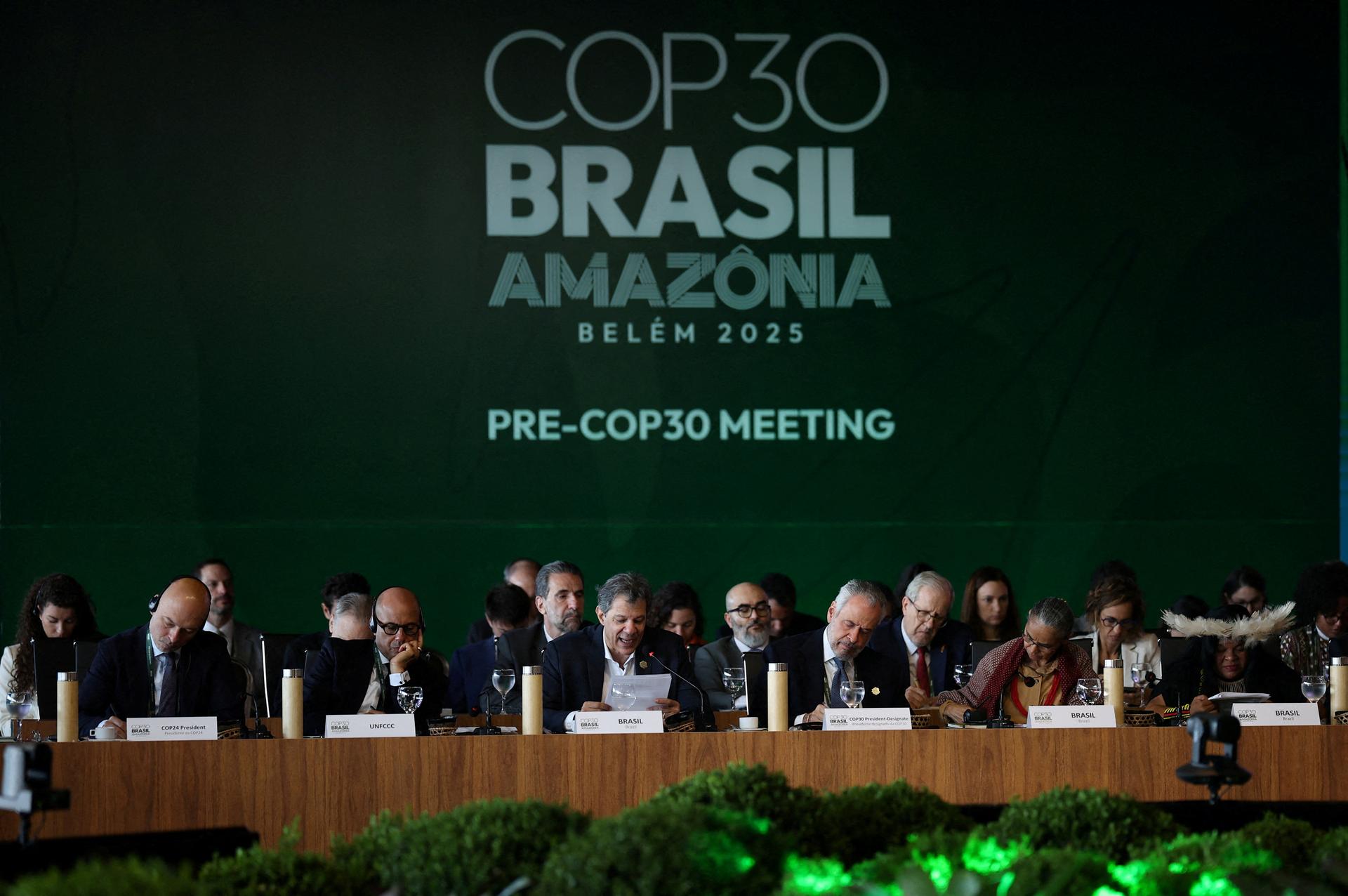
Brazil's COP30 delegates gather alongside Simon Stiell, executive secretary of UNFCCC ahead of the COP30 Climate Summit, in Brasilia, Brazil. REUTERS/Mateus Bonomi |
Not cutting emissions fast enough |
The UNFCCC suggested that, if countries' plans for tackling climate change are carried out, the yearly amount of planet-warming gases added to the atmosphere would decrease 10% by 2035, from 2019 levels. But the projected 10% cut is far short of the 60% emissions drop needed by 2035 to limit global warming to 1.5 degrees Celsius above pre-industrial temperatures – the threshold beyond which scientists say would unleash far more severe impacts. The world has spent the last decade working towards the goals of the Paris Agreement, aiming to limit global warming to well below 2 degrees Celsius above the pre-industrial average by mid-century, something that remains well off track. That shortfall adds pressure ahead of COP30 for countries to step up their efforts – even as the United States rolls back climate policies under President Donald Trump. "Humanity is now clearly bending the emissions curve downwards for the first time, although still not nearly fast enough," Stiell said. |
|
|
What about the EU and others? |
European Union countries are negotiating proposals to give industries a more flexible path to meeting climate goals, a draft EU document showed, as the bloc attempts to win support from member countries for a new 2040 emissions-cutting target. Months of negotiations have so far not yielded a deal, as some governments have pushed back on green measures, and raised concerns over how to finance the low-carbon transition alongside priorities like defence and revitalising industries. A draft EU compromise proposal, seen by Reuters, showed countries have drafted plans that would allow the EU to review the 2040 target every two years – potentially allowing Brussels to weaken the goal in future. Meanwhile, billionaire investor and philanthropist Bill Gates called for a shift in focus toward improving human welfare, noting on his personal blog that while climate change was serious, it was "not civilization-ending." He wrote that rather than focus on temperature as the best measure of progress, climate resilience would be better built by strengthening health and prosperity. He said direct deaths from natural disasters have fallen 90% over the last century to between 40,000 and 50,000 annually, largely due to better warning systems and more resilient infrastructure. U.N. Secretary-General Antonio Guterres and the World Meteorological Organization urged countries last week to implement disaster warning systems to protect people against extreme weather. |
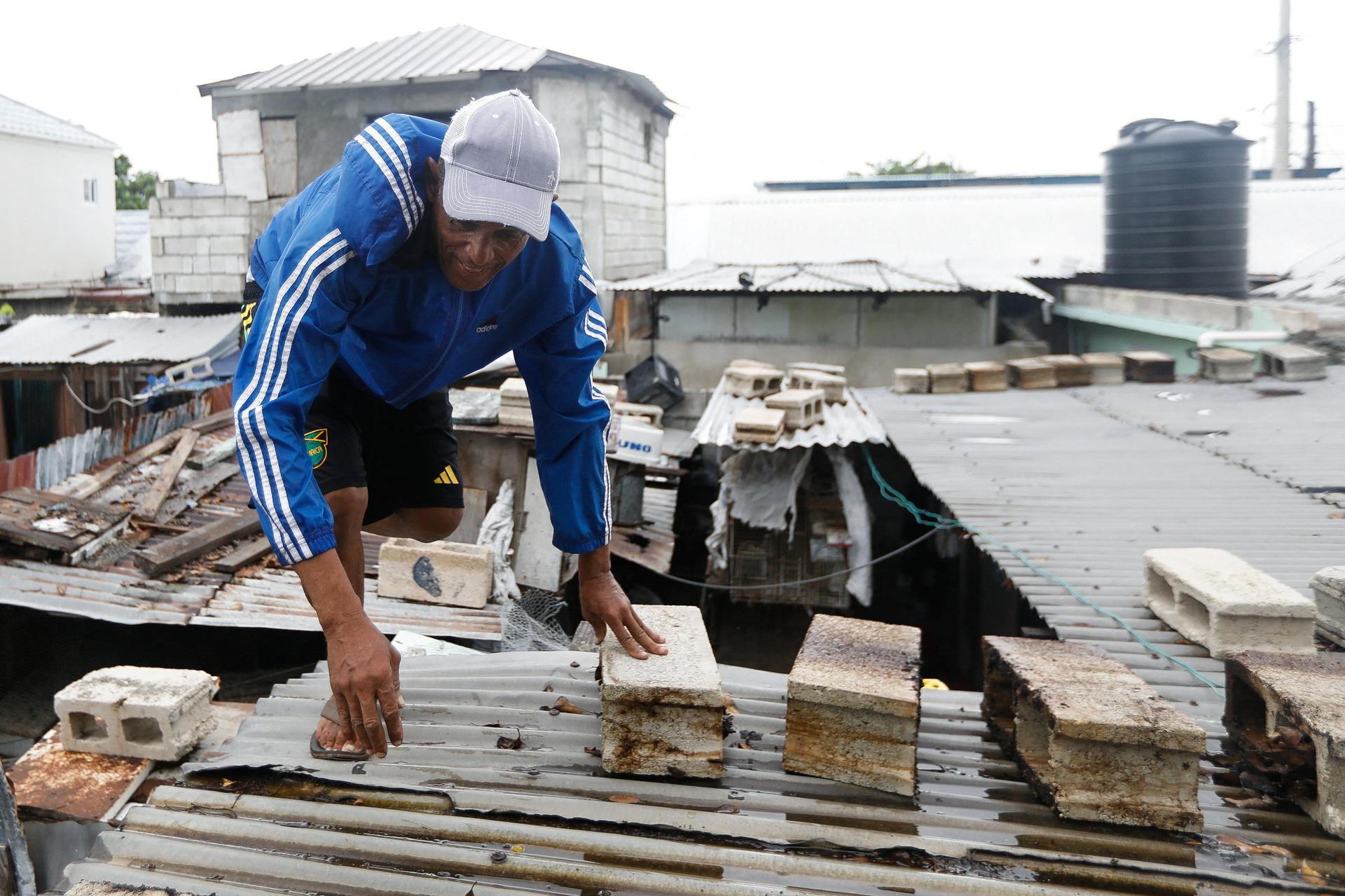
Alfred Veitch places concrete blocks on top of his chicken coop, in preparation for the arrival of Hurricane Melissa, in Port Royal, Jamaica. REUTERS/Octavio Jones |
- Hurricane Melissa: Jamaica is bracing for "the storm of the century", according to a World Meteorological Organization (WMO) tropical cyclone specialist, Anne-Claire Fontan. Hurricane Melissa brought wind gusts exceeding 300 km (186 miles) per hour, flash floods, and landslides, marking the worst storm to hit the island this century. The storm is expected to cross eastern Cuba tonight and move over the Bahamas and Turks and Caicos by Wednesday.
- Sudan humanitarian crisis: Sudan's paramilitary Rapid Support Forces are battling final resistance in al-Fashir after an 18-month siege. The RSF claims to be helping civilians leave, but those who have escaped report robberies, kidnappings, assaults, and killings by its fighters. A U.N.-mandated mission said the RSF had committed multiple crimes against humanity in the al-Fashir siege. The army has also been accused of war crimes. U.N. Secretary-General António Guterres said outside interference in Sudan is undermining the prospects for peace.
- India air pollution: Authorities in the Indian capital territory of Delhi have turned to seeding clouds to induce artificial rain and bring down pollution levels in the city that has been battling poor air for days, Environment Minister Manjinder Singh Sirsa said. The city's air quality remained in the 'very poor' category on Tuesday afternoon, with a reading of 304, according to the Central Pollution Control Board, which considers an air quality index of 0 to 50 to be 'good'.
- West Bank violence: Activists and farmers in the West Bank say Israeli settler violence has intensified since the Hamas-led attacks that prompted the war in Gaza two years ago. They say settlers target olive trees because Palestinians see them as a symbol of their connection to the land. There was a 13% rise in settler attacks in the first two weeks of the 2025 harvest compared to the same period in 2024, said Ajith Sunghay, head of the U.N. Human Rights Office in the Occupied Palestinian Territory.
- Leaked U.S. racist political texts: Three separate controversies involving leaked text messages from private online group chats have rocked U.S. political circles this month, revealing racial slurs, praise for Nazis, and threats of political violence. Experts in online culture and political discourse say the leaks of the text messages are noteworthy because they revealed the unfiltered – and to many shocking – views of political figures. The posts have also deepened concern among civil society groups and political language experts that violent rhetoric and racist hate speech are becoming normalized in America. Click here for the full story.
|
|
|
Friends of the Earth's head of policy, Mike Childs, shares his thoughts on Bill Gates' climate change pivot: "It would be dangerous folly to think the world can simply adapt to rising temperatures. "The best way to protect lives and safeguard our future is to prevent dangerous tipping points being crossed that will make adaptation impossible and could even lead to runaway climate change – such as the loss of the Amazon forest, melting ice sheets and collapse of critical ocean currents. "Each fraction of a degree of warming heightens risks – intensifying weather extremes, straining ecosystems, and threatening food supplies. "Climate change is already battering the planet with record-breaking heatwaves, fires, floods and storms – and it's usually the less well-off, who have done least to cause this crisis, who suffer the most. "Even with better warning systems saving lives, climate change is still linked to many thousands of deaths each year – alongside soaring economic costs. "The world must act faster – cutting emissions and adapting to the extreme weather impacts already underway. It's not a choice between the two. "Wealthier nations must also provide significant support – finance, technology and early warning systems – to help developing countries deal with a crisis they didn't create." |
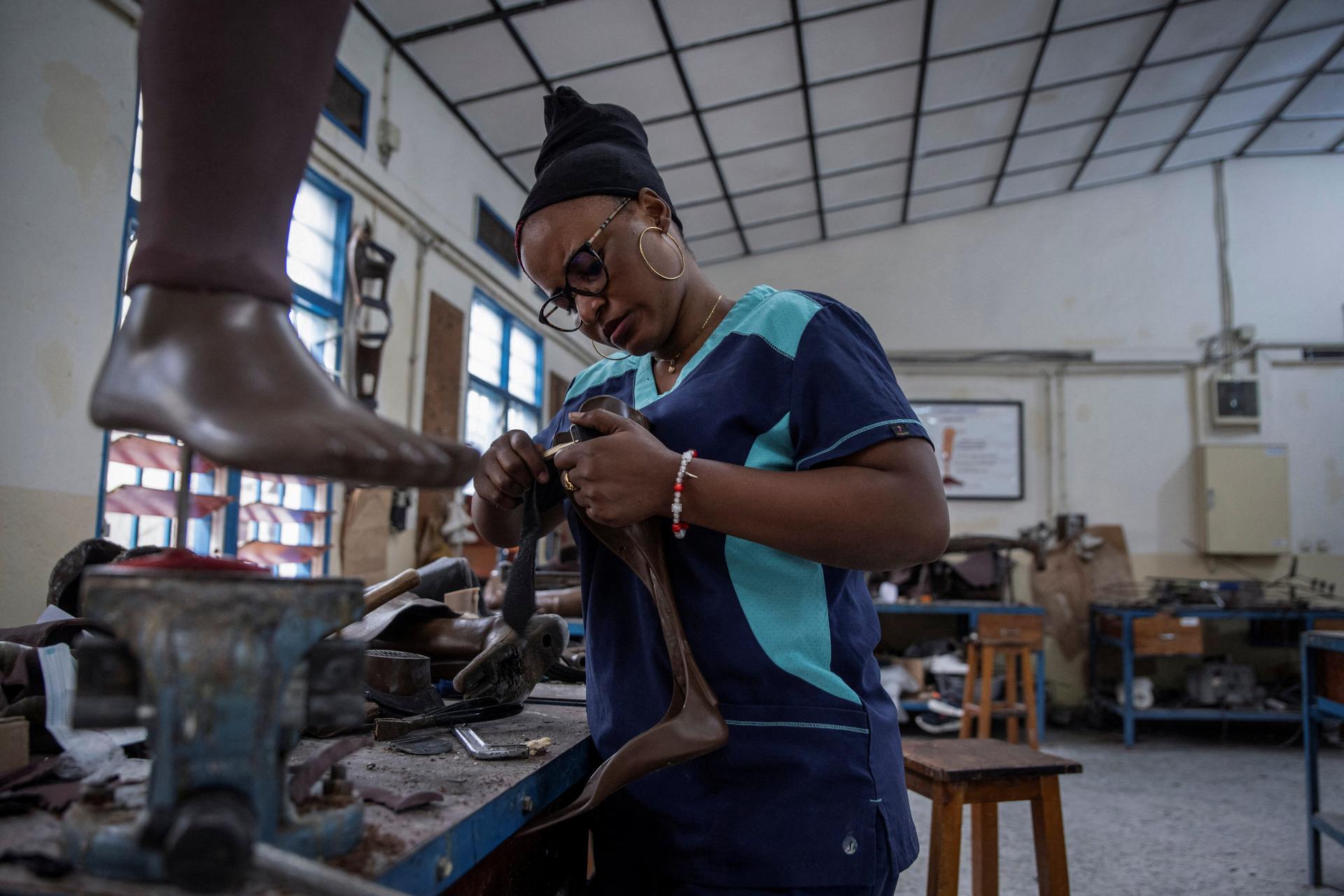
Ortho-prosthetist Wivine Kavira Mukata works on orthoses for a patient at the Shirika la Umoja center, in Goma, eastern Democratic Republic of Congo. REUTERS/Arlette Bashizi |
Today's spotlight is on Wivine Kavira Mukata, an ortho-prosthetist who's restoring amputees' confidence and personal independence in Congo. In the courtyard of the Shirika la Umoja centre, which was founded more than 60 years ago and became an official partner of the International Committee of the Red Cross in 2014, amputees spent a recent morning trying out crutches and wheelchairs between physical therapy sessions. Mukata has been there daily working on prosthetic limbs and other devices and helping patients along a journey she began herself more than a decade ago. Click here for the full Reuters special report. |
|
|
Sustainable Switch was edited by Emelia Sithole-Matarise. |
|
|
Sustainable Switch is sent three times a week. Think your friend or colleague should know about us? Forward this newsletter to them. They can also sign up here. Want to stop receiving this email? Unsubscribe here. To manage which newsletters you're signed up for, click here. This email includes limited tracking for Reuters to understand whether you've engaged with its contents. For more information on how we process your personal information and your rights, please see our Privacy Statement. Terms & Conditions |
|
|
|






0 comentários:
Postar um comentário