Hello! Once again, sustainability cuts are making headlines in today's newsletter – feels like déjà vu. Lawmaker groups holding a majority in the European Parliament agreed on a deal to make deeper cuts to the European Union's corporate sustainability due diligence directive (CSDDD), lawmakers and officials told Reuters. The CSDDD was adopted last year and requires companies to fix human rights and environmental issues within their supply chains, or face fines of 5% of global turnover. The change in Europe is happening as the U.S. government is considering cancelling billions of dollars in funding for clean energy programs, including awards for auto manufacturing and carbon capture, according to a list of targeted projects seen by Reuters. The rollbacks also come as food group Nestle said it had withdrawn from a global alliance for cutting methane emissions that aims to reduce the impact of dairy farming on global warming. Let's get into the CSDDD cuts first. Also on my radar today: |
|
|
The centre-right EPP group struck a deal with socialist and liberal groups to water down CSDDD. EPP President Manfred Weber in Valencia, Spain. REUTERS/Eva Manez |
A key change would be to only apply the rules to companies with 5,000 or more employees and at least 1.5 billion euros ($1.74 billion) in turnover, Jorgen Warborn, the European People's Party lawmaker leading the negotiations, told Reuters. Currently, CSDDD covers companies with 1,000 or more employees and above 450 million euros in turnover. The centre-right EPP group – the biggest lawmaker group in the European Parliament – struck a deal with socialist and liberal lawmakers to pare back the law, Warborn said. It has become one of the most politically contested parts of Europe's green agenda, and Brussels is now negotiating changes to simplify the rules for European companies, after pushback from Germany and France – as well as the United States and Qatar, and companies including Exxon Mobil. Over in the U.S., clean energy projects on the list to be defunded include two major direct air capture hubs that received billion-dollar awards from former President Joe Biden's administration, including one that involves oil company Occidental. Last week, the Department of Energy announced plans to cancel $7.56 billion in financing for hundreds of energy projects it said would not provide sufficient returns to taxpayers. White House budget director Russell Vought said in a post on X last week that the administration would terminate nearly $8 billion in climate-related funding in 16 Democratic-led states, including California and New York. |
|
|
Climate alliances under threat |
As for corporate climate culls, Nestle has withdrawn from the Dairy Methane Action Alliance which was launched in December 2023 to publicly measure and disclose methane emissions from their dairy supply chains and publish plans to reduce those emissions over time. Members include Danone, Kraft Heinz and Starbucks. Nestle did not say why it was pulling out of the alliance but said it would continue working towards reducing greenhouse gas emissions, including methane, throughout its supply chains and was sticking to its net zero commitment by 2050. The move is the latest blow to a corporate alliance seeking to limit the impact of global warming, and comes as U.S. President Donald Trump dismantles a range of climate protection initiatives. Several major banks, for example, have left the sector's main group leading efforts to cut carbon emissions. |
Al Jazeera reporter Nour Abu Rokba among Palestinian emergency personnel celebrating after news of the first phase of a Gaza ceasefire deal, Gaza City. REUTERS/Ebrahim Hajjaj |
- Ceasefire deal: Palestinians and the families of Israeli hostages broke into celebrations on Thursday after news of a pact between Israel and Hamas to end the war in Gaza and return home all the Israeli hostages, both living and dead. Click here for a Reuters explainer on the deal.
- Madagascar Gen Z protest: Youth protesters in Madagascar rejected an offer to join President Andry Rajoelina's "national dialogue" with various groups, accusing his government of repression after weeks of demonstrations that started on September 25 in the African island nation. Although the demonstrations were initially sparked by water and electricity shortages, demands have now expanded to include calls for Rajoelina to leave office, apologize to the nation, and dissolve the senate and the election commission.
- Deadly rain hits Himachal Pradesh: Heavy rainfall has caused widespread flooding and landslides across India's Himalayan region this week. A landslide struck a private bus in India's mountainous state of Himachal Pradesh which killed 15 people, with one child still missing, officials and police said.
- U.S. conversion therapy case: A Christian licensed counsellor Kaley Chiles is challenging a law banning psychotherapists from conducting "conversion therapy" to change a minor's sexual orientation or gender identity on free speech grounds. Colorado's law prohibits licensed mental healthcare providers from seeking to change a minor's sexual orientation or gender identity according to a predetermined outcome. But the U.S. Supreme Court – which has a 6-3 conservative majority – appeared sympathetic towards Chiles' argument.
- Italy burqa ban: Italy's conservative ruling party, Brothers of Italy, put forward legislation to ban the burqa and niqab in public spaces. The bill would prohibit garments covering the face in all public places, schools, universities, shops, and offices nationwide. France was the first European country to introduce a blanket ban on wearing burqas in public in 2011. The European Court of Human Rights has also consistently upheld these bans.
|
|
|
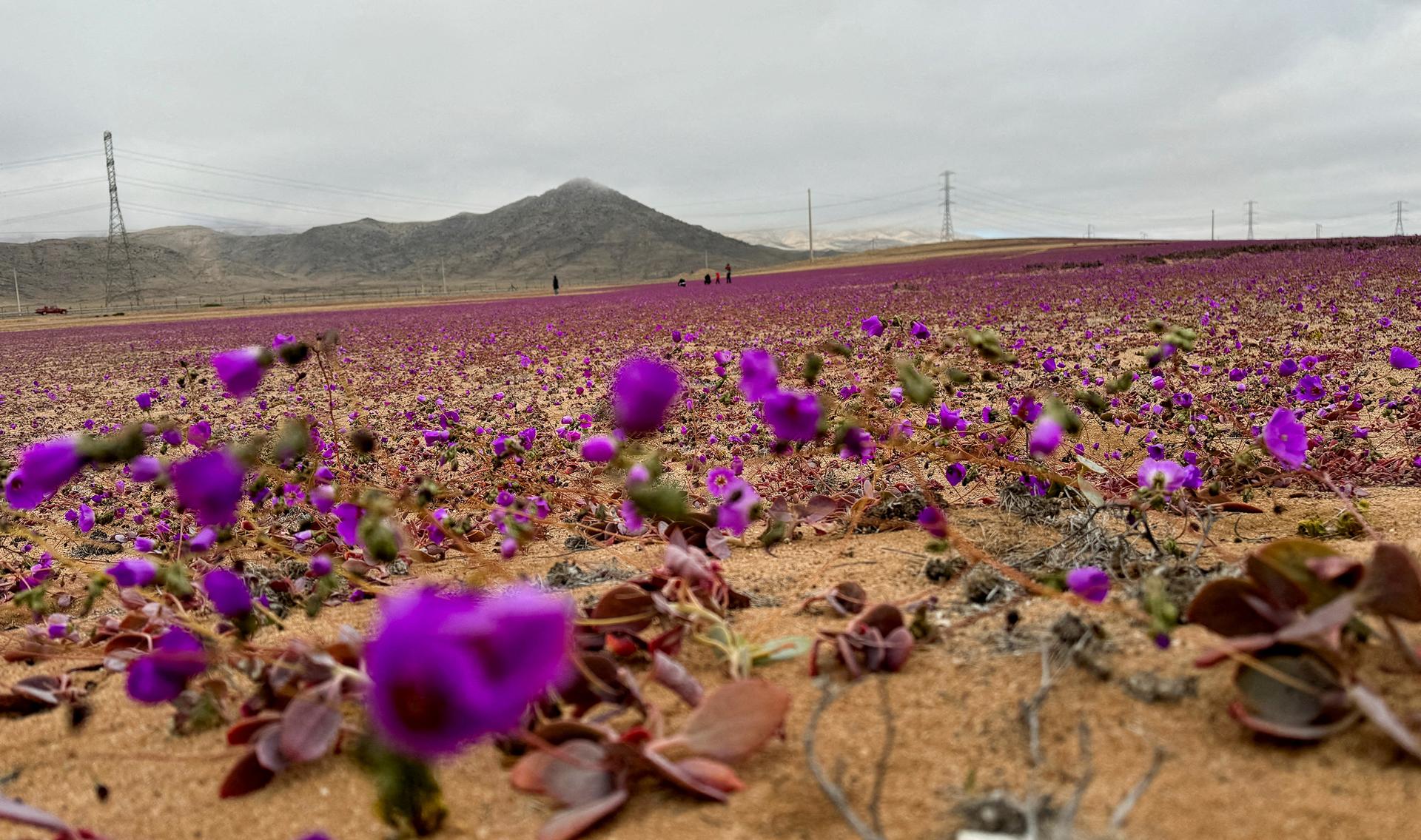
Atacama desert prior to the spring phenomenon known as 'Desierto Florido' (Bloomed desert), near Copiapo, Atacama region, Chile. REUTERS/Rodrigo Gutierrez |
A special, fuchsia-colored flower in Chile is helping scientists unlock the key to water scarcity survival in today's spotlight. The Cistanthe longiscapa, known locally as "pata de guanaco," blooms during rare rainfall events in the Atacama desert, creating a mosaic of colors known as the flowering desert phenomenon. Now a team at Chile's Andres Bello University is conducting genetic sequencing experiments to uncover the traits that allow the flower to survive water scarcity and extreme temperature swings in one of the planet's harshest environments. Their goal is to transfer drought-tolerant characteristics to other crops. |
|
|
Sustainable Switch was edited by Elaine Hardcastle. |
|
|
Sustainable Switch is sent three times a week. Think your friend or colleague should know about us? Forward this newsletter to them. They can also sign up here. Want to stop receiving this email? Unsubscribe here. To manage which newsletters you're signed up for, click here. This email includes limited tracking for Reuters to understand whether you've engaged with its contents. For more information on how we process your personal information and your rights, please see our Privacy Statement. Terms & Conditions |
|
|
|








0 comentários:
Postar um comentário