| |  | Oct 08, 2025 | | | | | | Happy Wednesday! Stocks fall Tuesday after The Information's report on Oracle's AI cloud margins. Nvidia CEO Jensen Huang, in response to the report, says Oracle's AI cloud business will be "wonderfully profitable" in the long run. Anthropic plans to open an office in India.
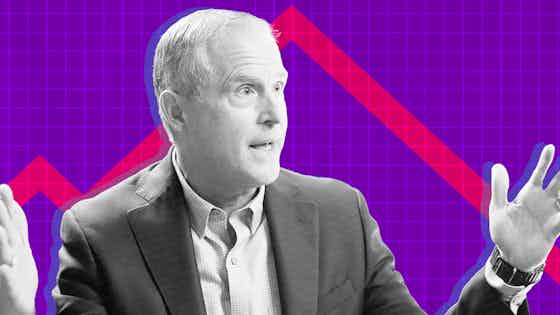
| | | | Major stock indices dipped more than half a percent and shares of artificial intelligence cloud providers Oracle, Nebius and CoreWeave fell 3% to 5% following The Information's report on challenges Oracle faces generating a profit from renting out Nvidia chip servers. Nvidia shares also sank into the red after trading up 2% before the report. According to the report, internal Oracle documents showed that renting out Nvidia chips to AI developers such as OpenAI generated a gross profit margin of 16% on average over the past year or so, lower than analysts had estimated and lower than many nontech businesses. The report showed Oracle is losing considerable sums on the newest Nvidia hardware, underscoring the lag between when new chips come online and when customers use them en masse. | | | | Nvidia CEO Jensen Huang said Tuesday that Oracle, one of its largest customers, is going to be "wonderfully profitable" from renting out Nvidia artificial intelligence chips to cloud customers. Huang's comments, made during an interview with Jim Cramer on CNBC's Investing Club, were in response to The Information, which reported Tuesday that Oracle's gross margin from the Nvidia-powered cloud business was around 16% in recent quarters. "When you first ramp up a new technology, there's every possibility that you might not make money in the beginning, but over the life of the system, they'll be wonderfully profitable," Huang said. The Information reported that in the three months that ended in August, Oracle lost nearly $100 million from rentals of Nvidia's Blackwell chips, which arrived this year. That's partly because there is a period between when Oracle gets its data centers ready for customers and when customers start using and paying for them. | | | | Anthropic, the startup known for its Claude AI models, is accelerating international expansion with a plan to open an office in India by next year, the second in Asia after Tokyo. Anthropic CEO Dario Amodei is visiting India this week to meet with public officials and enterprise partners, the company said in a blog post on Wednesday. India ranks second only after the U.S. in terms of Claude usage, predominantly in technical and computer programming-related tasks, the company said. The India office, to be located in the tech hub of Bangalaru, will focus on education, healthcare and agriculture. It added that the build out could accelerate growth in India's information technology industry. Anthropic last month hired Chris Ciauri, a former Google Cloud executive, to lead its international expansion. The company and its rival OpenAI are racing to sell to customers outside the U.S. OpenAI, which already has offices in Tokyo, Singapore and Seoul in the Asia Pacific region, said in August it would open Delhi and Sydney offices. | | | | Dell doubled its forecast annual revenue growth rate, to between 7% and 9%, and doubling its earnings growth rate to at least 15%, as it cashes in on the demand for AI chip-powered servers. Dell shares were trading up 2.7% on Tuesday morning. Dell is one of a few server makers that package Nvidia AI chips and sell them to cloud providers and other businesses, as Nvidia generally doesn't sell its chips to customers directly. At an investor presentation on Tuesday, Dell executives talked about the huge increase in capital expenditures underway in the past year or two as big tech companies invest in new servers and data centers for AI development. Those changes, executives said, worked in Dell's favor. Dell showed the impact of increased demand for AI servers in its fiscal 2025, ending Jan. 31, when servers and networking revenue rose 54% after decliing in fiscal 2023. But the impact was diluted by flat revenue from its storage business, which in fiscal 2024 was about the same size as servers and networking. Meanwhile, the division which sells laptops, displays, keyboards and other consumer hardware showed a slight dip in revenue. Long term, Dell is projecting the consumer hardware group will grow revenue just 2-3% a year while the segment which sells servers and storage will grow 11% to 14%. | | | | Soaring debt levels at companies funding the artificial intelligence boom have passed notable benchmarks, Goldman Sachs and JPMorgan Chase both said this week, marking a note of caution as tech companies increasingly turn to the credit markets to support the costs of developing AI. AI-related companies have issued a record $141 billion of debt this year, more than the entire technology, media and telecommunications industry issued in 2024, according to Goldman Sachs research. That includes $25.8 billion in total debt issued by Oracle, which is rapidly building computing capacity for OpenAI. "While not yet a cause for alarm, given both the high cashflow generation and low leverage among large tech companies, the shifting funding mix of capex beyond cash is worth monitoring," Goldman Sachs analysts wrote. Separately, JPMorgan this week said investment grade debt issued by AI-related companies had risen to $1.2 trillion, making that grouping of companies a bigger component of the broader investment grade index than U.S. banks. JPMorgan analysts said large tech companies are still relatively cash rich, but debt levels at traditional utilities tied to the AI boom are elevated by high-grade credit standards. | | | | Tesla announced a downgraded version of its Model Y sports utility vehicle on Tuesday that will sell for $40,000 in the U.S., $5,000 less than the cheapest version of the existing Model Y. The new model represents a bid by Tesla to juice sales following the expiration of a $7,500 U.S. tax credit for electric vehicles which effectively raised the costs of buying a Tesla. The new edition of the Model Y, called the Standard edition, will have a range of 321 miles, compared to a 357 mile range for the pricier Premium edition. The Model Y Standard also has fewer premium touches than the Premium version, including fewer premium interior finishes, a less-expensive sound system, and seats that are heated exclusively in the front rather than the entire vehicle. Tesla also announced a cheaper version of its Model 3 sedan on Tuesday, priced at $37,000, which is $5,500 less than the Premium version. In 2024, Musk abandoned plans for Tesla to make a $25,000 SUV, The Information previously reported, opting instead to focus on more futuristic bets like the robotaxi and Optimus humanoid robot. | | | | Semiconductor giant Qualcomm announced Tuesday that it will acquire Arduino, the Italian electronics company known for its affordable circuit boards that are popular with hobbyists. The price of the deal was not announced. The companies also announced the Uno Q, a new circuit board that includes a Qualcomm Dragonwing chip. The Uno Q is intended to power AI vision and sound software, such as for smart home devices or industrial robots, according to Qualcomm. It is currently available for pre-orders for $44. The Uno Q will use Arduino's new open source App Lab software, which allows developers to program the circuit boards, including to customize AI models for tasks such as classifying images or recognizing sounds | | | | Intercontinental Exchange, the owner of the New York Stock Exchange, will invest up to $2 billion in Polymarket, the prediction market that is aiming to return to the U.S. The investment values Polymarket at $8 billion before the new money and gives it the backing of one of the world's biggest exchange operators. Polymarket allows people to bet on everything from elections to the length of the government shutdown. ICE said it will distribute Polymarket's data, which can serve as sentiment indicators on events for its clients. Polymarket has been seeking to raise capital, The Information reported last month. Polymarket raised funds at a valuation over $1 billion earlier in the summer. The boost in valuation came after Polymarket said last month that regulators had given it the go-ahead to serve U.S.-based users. The agency had barred it from accepting U.S.-based trades three years ago, saying it was running an unregistered derivatives exchange. | | | | CoreWeave CEO Michael Intrator said Tuesday that the cloud provider will not change its $9 billion bid for Core Scientific ahead of a shareholder vote scheduled for October 30. Two Seas Capital said last month it would vote against the deal and urged other shareholders to do so. The hedge fund, which owns more than 6% of Core Scientific, said the offer was "extremely low" and exposes shareholders to CoreWeave's "highly volatile stock." Shares of Core Scientific fell 8% Tuesday on Intrator's comments. CoreWeave's proposed all-stock takeover of Core Scientific would eliminate $10 billion leasing cost for the cloud provider as it leases computing power from the data center landlord. Intrator said the two companies will continue to partner, whether the deal goes through or not. | | | Popular articles By Anissa Gardizy, Anita Ramaswamy and Cory Weinberg
By Valida Pau, Cory Weinberg, Katie Roof and Kevin McLaughlin
| | | | | Opportunities Empower your teams to stay ahead of market trends with the most trusted tech journalism.
Learn more
Reach The Information's influential audience with your message. Connect with our team | | | | | |












0 comentários:
Postar um comentário