You can replace this text by going to "Layout" and then "Page Elements" section. Edit " About "
Pague com LPs do Mister Colibri
Quer comprar celular,Tablet,pen drive, GPS e muito outros produtos e ainda podendo pagar tudo em LPs ?Pois saiba que isso é possível,basta você visitar o site downloadstotal.com e realizar a sua compra com toda tranquilidade e segurança!!!
Thanks for reading The Briefing, our nightly column where we break down the day's news. If you like what you see, I encourage you to subscribe to our reporting here.
Greetings!
If there is a bubble in artificial intelligence, much of the blame can be placed on Wall Street, not Silicon Valley.
Financial markets are as frothy as they can be, and the appetite for risk appears to be insatiable. That's why Sam Altman has been able to get otherwise rational companies and investors to fund his audacious growth plans. On Tuesday, we got the latest evidence of a financial bubble when Wall Street's giants posted numbers bankers dream about.
Goldman Sachs' dealmakers and traders are on track for their best year ever. At BlackRock, assets under management rose nearly $1 trillion in just one quarter to $13.5 trillion. Some of this is due to the AI boom, as nothing happens in isolation. BlackRock runs lots of index funds, and the big market indices are more concentrated than ever in names like Nvidia and Microsoft that are deeply embedded in AI. Index funds account for more than half of the fund market.
Still, big drivers in finance are pumping more air into AI. The bond market, which has grown increasingly important to the tech industry, is going full speed ahead. The difference between the yields offered by safe government bonds and those of corporate and junk bonds, which have a higher risk of default, is among the smallest in years. That means investors need to go elsewhere to get higher yields. How about some CoreWeave debt that yields 8.5%? Never mind that the data center company occupies one of the riskiest niches in the AI buildout.
Private debt managers have roughly $3 trillion in assets, a 50% rise in five years, and need to justify their existence by producing better returns than bonds. That often means making riskier loans.
There are other telltale signs of exuberance on Wall Street. One of the best strategies for companies to boost their stock prices this year was to jettison their old business models and buy up as much crypto as possible, often borrowing money to do so. Chipmakers that sign deals with AI companies also get a boost, even though the buyers of the chips have no clear ability to pay for them.
Then there's the pressure to put money to work. Globally, roughly $2.5 trillion of dry powder is sitting in private equity firms. That explains the record $55 billion buyout of Electronic Arts. Big-ticket buyouts have long been a sign that a market cycle has topped out.
We could go on. The AI bubble couldn't have happened if markets were dismal. Altman, Elon Musk and the other AI executives sucking up cash would be talking much smaller numbers if investors were worried about risk.
AI's cash needs and the frothy markets were made for each other. It's hard to believe either can exist without its partner.
Google and WPP Break Ground—Again
Here's a tip for businesses promoting themselves: You can't use the same flowery language twice. On Tuesday, Google and WPP issued a press release about an extension of an AI-related marketing effort they first unveiled last year. (Details are here). The headline was: "WPP and Google Forge Groundbreaking Partnership to Redefine Marketing With AI."
That's strikingly similar to the statement the two companies put out in April last year, headlined "WPP and Google Cloud Forge Groundbreaking New Collaboration to Lead Generative AI–Driven Marketing Into Its Next Chapter."
How many times can two companies "forge" something "groundbreaking" in the same field? In the future, Google should use its Gemini AI chatbot to come up with more original language in its press releases.—Martin Peers
In Other News
• Walmart said Tuesday it would soon start selling products through ChatGPT's Instant Checkout feature, making it the first major retailer to strike an e-commerce partnership with the AI firm.
• Oracle said Tuesday it will be the first cloud provider to offer a large cluster of Advanced Micro Devices' next-generation AI server chips next fall.
• Goldman Sachs reported strong earnings and said it was on track for a record year in its investment banking and markets division. At the same time, it warned employees of potential job cuts amid a push to use AI to overhaul the bank's operations in areas such as lending, regulatory reporting and supplier management.
• Salesforce CEO and co-founder Marc Benioff, speaking at the company's annual Dreamforce conference, announced expansions of existing partnerships with OpenAI and Anthropic aimed at making it easier for customers to build agents using those startups' models (more here).
• OpenAI CEO Sam Altman said Tuesday that the company plans to relax restrictions for adult users of its chatbot. It will fully roll out age gating, or age verification features, by December, at which point verified adults can interact with more mature content, including erotica, Altman said in a post on X.
Today in The Information's TITV
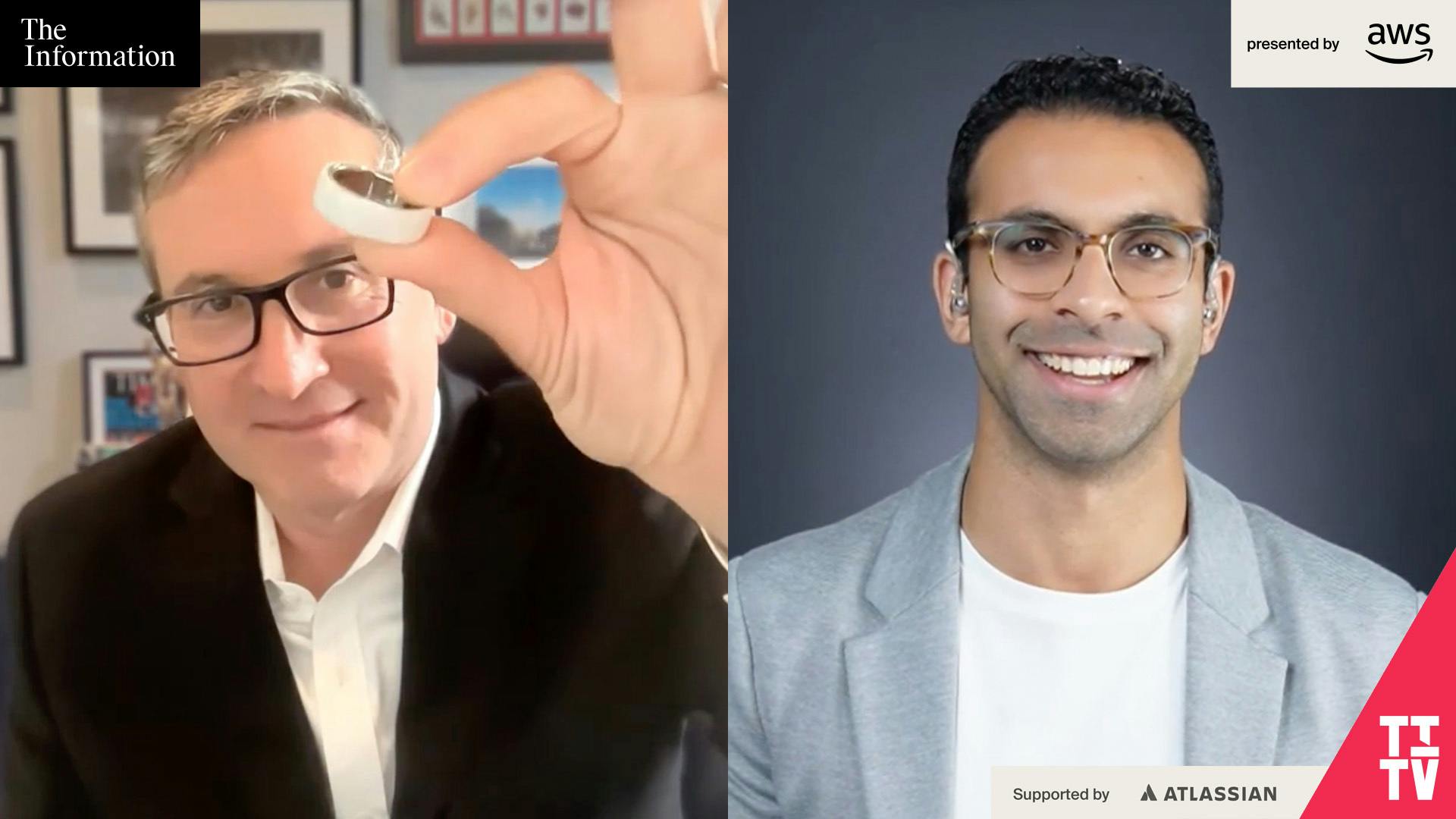
Check out today's episode of TITV in which Tom Hale, CEO of Oura, talks about how he plans to integrate AI while preserving margins.
Recommended Newsletter
Dealmaker was named the "Best in Business" newsletter for its insightful coverage of private technology and the AI hype cycle. Start receiving the newsletter here.
The rules are changing, fast. AI, volatile markets, and political uncertainty are reshaping business. Join the boldest women at The Information's WTF 2025 Summit in Napa Valley. Limited tickets remain.






0 comentários:
Postar um comentário