| |  | Oct 27, 2025 | | | | | Supported by |  | | | | | | Welcome back! The U.S. Treasury Secretary said President Donald Trump and China's Xi Jinping could "consummate" a TikTok deal this week. Google is investigating a data breach by a contractor. And SoftBank's board okayed the $22.5 billion remaining of its OpenAI investment.
| | | | Treasury Secretary Scott Bessent said Sunday that President Donald Trump and China's leader, Xi Jinping, could this week "consummate" a long-anticipated deal to keep TikTok operating in the U.S., as the leaders prepare to meet Thursday in South Korea. President Trump recently signed an executive order approving the proposed deal, which involves selling some of TikTok's U.S. business to a new joint-venture company for $14 billion. Speaking on CBS News' Face the Nation Sunday, Bessent said a final deal had been reached and "as of today, all the details are ironed out, and that will be for the two leaders to consummate that transaction on Thursday in Korea." But details of the deal itself remain scarce. It's unclear who the final line up of investors will include, for example, and what parts of TikTok's U.S. business will be overseen by the new venture. | | | | Google is investigating a security breach involving a contractor who took nearly 2,000 screenshots and sensitive internal files related to the Google Play store, The Information reported. The contractor, working in the Philippines for Accenture, sent the images to an unidentified outsider via WhatsApp and Telegram between July and September. The copied material included software code and information on developer accounts and fraud review processes, which could potentially help someone upload malicious apps by understanding how the app store suspends them. Google confirmed the information could inform developers about trust and safety guidelines but stated it's not a "master key" to bypass security. Google launched its investigation in September, leading to the contractor's admission of being paid for sending the files and subsequent termination. The company stated there's no indication of compromised Google or user security. | | | | SoftBank is set to complete its $30 billion investment in OpenAI, after its board approved a $22.5 billion second installment on the deal, The Information reported. The remainder of its investment is contingent on OpenAI's corporate restructuring, which would pave the way for a public offering and transform it into a public benefit corporation. The SoftBank investment is part of a larger $41 billion financing round, which valued OpenAI at $260 billion. The new funds are critical for OpenAI's escalating compute expenses, projected at $16 billion this year and $40 billion next year, with an additional $100 billion budgeted through 2030 for research breakthroughs. An OpenAI IPO is still distant due to its current non-profit structure, established in 2015. Early investors and employees hold rights to future profits rather than equity. | | | | Artificial intelligence chip startup SambaNova Systems is exploring a sale after it was unable to complete a fundraising round, The Information reported. The Palo Alto, Calif., company, last valued at $5 billion in 2021, has faced sales growth challenges against competitors like Nvidia. As a result, the startup hired an investment bank to represent in a potential sale. The company could decide not to move forward with the plan though. Acquisitions of smaller chip startups are increasing this year, with Meta acquiring Rivos and Advanced Micro Devices hiring staff from Untether AI. SambaNova, founded in 2017, designs custom AI chips to rival Nvidia's GPUs and has raised over $1.1 billion in funding. CEO Rodrigo Liang claims their technology outperforms Nvidia GPUs at a tenth of the power. A spokesperson for SambaNova stated the company evaluates strategic opportunities but did not comment on sale talks. | | | | OpenAI is developing artificial intelligence to allow people to generate music using text and audio prompts, The Information reported. The startup is collaborating with Juilliard School students to annotate music scores, which can be used as training data for the music generating tool. The company is discussing AI that can add guitar to vocal tracks or create music for videos, potentially aiding advertising agencies in generating jingles and brainstorming lyrics. This move positions OpenAI to compete with Google, which launched its music-making model, Lyria, in May. OpenAI could face potential copyright lawsuits over the tool from music labels like Universal Music Group and Sony, which have sued other AI music generators. The startup has already taken some steps to stay out of hot water with the music industry, such as by summarizing copyrighted lyrics. | | | | Chinese artificial intelligence startup MiniMax launched a new open-source large language model on Monday whose performance is ranked the highest among such models on some leaderboards. The new model, M2, is particularly suitable for AI agents and coding, according to the company. On the AI model leaderboard compiled by Artificial Analysis, M2 is ranked No. 5 in terms of "intelligence," above open-source rivals such as Alibaba and DeepSeek, and only trails behind proprietary models from OpenAI, xAI and Anthropic. Shanghai-based MiniMax, best known for its Hailuo AI video generation model and Talkie AI roleplay chat app, is trying to increase its market presence in large language models that power AI agents and coding tools. Such effort comes at a time when the startup, valued at $4 billion in a fundraising earlier this year, is preparing for an initial public offering in Hong Kong. MiniMax, founded in 2021, is led by CEO and cofounder Yan Junjie, a former executive of Chinese AI software firm SenseTime. Its backers include tech giants Alibaba Group and Tencent Holdings, as well as Chinese venture capital firms such as HongShan and Yunqi Partners. | | | | Andreessen Horowitz general partner Anjney Midha is launching AMP, a new venture to provide "compute and capital to frontier AI teams." Midha, The Information reported. Midha, who previously helped Andreessen startups access Nvidia GPUs, will remain a part-time venture partner, retaining board seats on companies like Mistral and Black Forest Labs. Midha's new venture highlights the increasing demand for compute power among AI startups. At Andreessen, he led Oxygen, a group that managed thousands of Nvidia chips for rent to startups, which helped the firm secure competitive investments. Andreessen is one of the few VC firms that rent or buy GPUs to then rent to their backed startups, a practice some firms avoid due to management overhead and hardware depreciation concerns. The firm's program began with plans for over 20,000 chips and has since expanded to multiple private clusters. | | | | The U.S. National Highway Safety Administration says it has contacted Tesla to gather more information about a new setting on its driver assistance software that makes its vehicles move faster and more aggressively. Tesla added the setting, called "Mad Max," in an update for users of its "Full Self-Driving" software earlier this month. In a note to users accompanying the update, Tesla said the setting "comes with higher speeds and more frequent lane changes" than other settings. Videos posted by drivers on social media purport to show the software driving well above speed limits, such as going 65 miles per hour in a 45 mile per hour zone. A NHTSA spokesperson said in a statement on Friday that the agency had contacted Tesla and noted that "the human behind the wheel is fully responsible for driving the vehicle and complying with all traffic safety laws." The news comes after the NHTSA opened an investigation into Tesla's FSD software earlier in October prior to the release of the "Mad Max" update. The agency, which is part of the U.S. Department of Transportation, said at the time that it had identified 58 reports of vehicles using the software running red lights and violating other traffic laws. The Washington Post first reported the NHTSA's most recent request for information. Tesla did not respond to a request for comment. | | | | JPMorgan hired veteran technology banker Kevin Brunner from Bank of America as a global chair of investment banking and mergers and acquisitions, according to a memo viewed by The Information. Brunner spent all his career at Bank of America and was most recently chair of global M&A. He advised on large deals such as Google's $32 billion acquisition of cybersecurity startup Wiz and Broadcom on its $69 billion acquisition of VMware. JPMorgan has been hiring from rivals to boost its technology banking practice. In May, it hired four senior bankers from Goldman Sachs, Bank of America and Lazard. A spokesperson for JPMorgan confirmed the content of the memo. A spokesperson for Bank of America declined to comment. | | | | | Popular articles By Aaron Tilley and Wayne Ma
By Kalley Huang, Erin Woo and Stephanie Palazzolo
| | | | | Opportunities Empower your teams to stay ahead of market trends with the most trusted tech journalism.
Learn more
Reach The Information's influential audience with your message. Connect with our team | | | | | |












0 comentários:
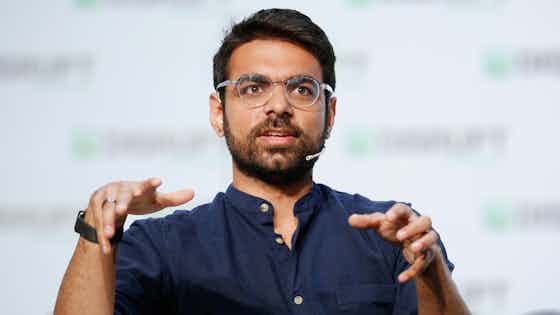
Postar um comentário