At the heart of today's political crisis lies a deep sense of exclusion. Decisions about our lives, our communities and our planet are too often made behind closed doors by officials who are too often disconnected from our lived experiences. Many people feel that politics happens to them, not with them. Everyone deserves a voice. Only through deeper democracy and true inclusion can we move fast enough and put justice at the heart of the climate transition.
Countless governments and communities around the world have already shown what this looks like in practice. In 2020, the OECD published 'Catching the Deliberative Wave', a report documenting how citizen deliberation has helped tackle some of the hardest challenges we face. But it barely scratched the surface, overlooking many of the deep participatory traditions across the Global South.
In Brazil, participatory budgeting gives millions a direct say in how public funds are spent, building trust in governments. In Indonesia, the practice of Gotong Royong (mutual cooperation) and Bali's Subak irrigation cooperatives have sustained social and ecological harmony for centuries. Across Kenya, Uganda, and Tanzania, the Baraza system brings communities together to hold leaders to account in public forums. And today, youth-led initiatives are connecting local solutions to global climate goals through the Mutirão das Juventudes, a platform that maps projects from young people around the world and ensures voices feed into the broader COP30 Agenda.
These approaches share a deeper understanding of politics, one not built on competition or consensus alone, but on mutual respect and deep listening. When people truly hear one another across differences, new possibilities emerge. For example, the Citizens' Assembly on abortion in Ireland mobilised participants who began with opposing views (anti-abortion and pro-choice) and ended up expressing profound respect, even affection, for one another. That process paved the way for historic legislation protecting women's rights.
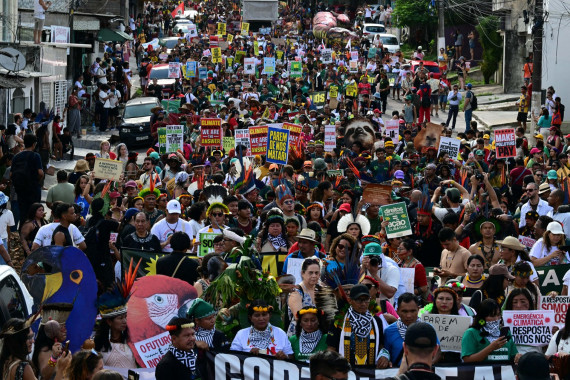
COP30, the people's COP, is our opportunity to bring this spirit to the global stage. It must be remembered for launching a new kind of politics, one that deliberately brings together those who disagree, not to win arguments, but to understand each other's realities and constraints, in order to build together a transition that works not only for the greater good but also for each one of us.
This is exactly the goal of the Citizens' Track, just launched by the COP30 Presidency to connect thousands of local community assemblies worldwide to a permanent Global Citizens' Assembly. The first track cycle aims to engage over 100,000 participants in 30 countries, with the initial findings to be presented next year at the Bonn Climate Conference.


0 comentários:
Postar um comentário