You can replace this text by going to "Layout" and then "Page Elements" section. Edit " About "
Pague com LPs do Mister Colibri
Quer comprar celular,Tablet,pen drive, GPS e muito outros produtos e ainda podendo pagar tudo em LPs ?Pois saiba que isso é possível,basta você visitar o site downloadstotal.com e realizar a sua compra com toda tranquilidade e segurança!!!
Thanks for reading The Briefing, our nightly column where we break down the day's news. If you like what you see, I encourage you to subscribe to our reporting here.
Greetings!
Next time you contemplate the much-hyped IPO of a brand-name company, ask yourself this question: Are its glory days behind it? One of the disadvantages for public investors of snapping up newly public tech firms—particularly those that have taken their time going public—is that very often they have already peaked. Take Instacart, which reported third-quarter earnings Monday morning. Revenue grew 10%, which is hardly inspiring, but it's par for the course for the grocery-delivery firm over the past year or so.
In fact, while Instacart has reported growth as high as 15% in the two years since it went public, its average quarterly growth rate has been 10.6%. Stepping back a bit, since taking off during the pandemic, Instacart's growth has cooled sharply—from 39% in 2022, to 19% in 2023, to 10% so far this year. This is a company that's going nowhere fast—and so is its stock price. Instacart sold shares in the IPO at $30, and the stock has lately traded around $36 to $38. And if not for Instacart's steady share repurchases over the past couple of years, the stock price performance could have been much worse.
Instacart isn't particularly unusual. If you look beyond the headlines of the home-run IPOs—nowadays mostly AI- and crypto-related businesses—you'll see a bunch of underperformers that should offer a cautionary tale for public market investors. (For more on that trend, see here.) Take Airbnb, which reported last Thursday. It's a cash-printing machine but its topline is growing very slowly. Its revenue expanded just 10% in the third quarter, roughly the growth rate for the first nine months of this year, which is down from its 12% growth rate in 2024 and 18% in 2023. Airbnb's stock price has understandably also stalled. Its current price of around $120 is where it was in the spring of 2022.
In the tech business media, a lot of attention is paid to the imperatives driving companies to go public, namely the desire of early investors and employees to cash out early. That's understandable. But it's worth thinking about the gullible folks who end up saddled with the stock after the smart money bails. While many tech IPOs have proved to be home runs—from Google, Meta Platforms and Amazon down to Reddit—there are also plenty of duds that never amount to anything and arguably should never have gone public in the first place.
Tesla's xAI Funding Vote
When Tesla's general counsel Brandon Ehrhart announced the outcome of the shareholder proposal for Tesla to invest in Elon Musk's AI startup xAI last Thursday at the annual meeting, he said, "While we have received more votes in favor than we did against, there was a significant number of abstentions," and as a result the board would consider next steps.
That's one interpretation of the outcome. Tesla on Friday disclosed the vote totals in a securities filing, revealing that shareholders owning 1.058 billion shares voted for the resolution, while those owning 916 million voted against it. Holders of another 473 million abstained. Tesla noted in a securities filing that "our bylaws generally consider abstention as votes against," which meant the proposal failed.
That's significant. While Tesla had $41.6 billion in cash at the end of September, it will likely need all of that for itself. Musk at the meeting said that Tesla needed so many chips for its robots and robotaxis it might have to build its own chip fabrication facility, and that it would have to spend "tens of billions" to train the AI in its robot. Shareholders presumably know this and don't want Tesla bailing out another Musk company.
In Other News
• A senior researcher from DeepSeek warned about the potentially negative impact of AI on human work and society, in one of the company's few public appearances since its breakout success, according to Reuters.
• Grab Holdings, the biggest ride-hailing and food-delivery company in Southeast Asia, said Monday that it has agreed to invest in Vay Technology, a Germany-based startup developing technology that allows remote drivers to control electric vehicles from afar.
• Two longtime vehicle manufacturing leaders at Tesla said separately on Sunday that they're leaving the company. More details here.
• AI cloud firm CoreWeave more than doubled revenue to $1.36 billion in the third quarter, but its red ink ballooned. CoreWeave burned about $1.6 billion in cash compared with $574 million a year earlier.
• The Ellison family's Paramount Skydance reported flat revenue in the third quarter, when the results were adjusted for the timing of Skydance's Paramount acquisition in August. The company forecast growth of between 1% and 4% in the fourth quarter and a similar level for next year, as declines in its TV business offset growth in streaming.
Today on The Information's TITV
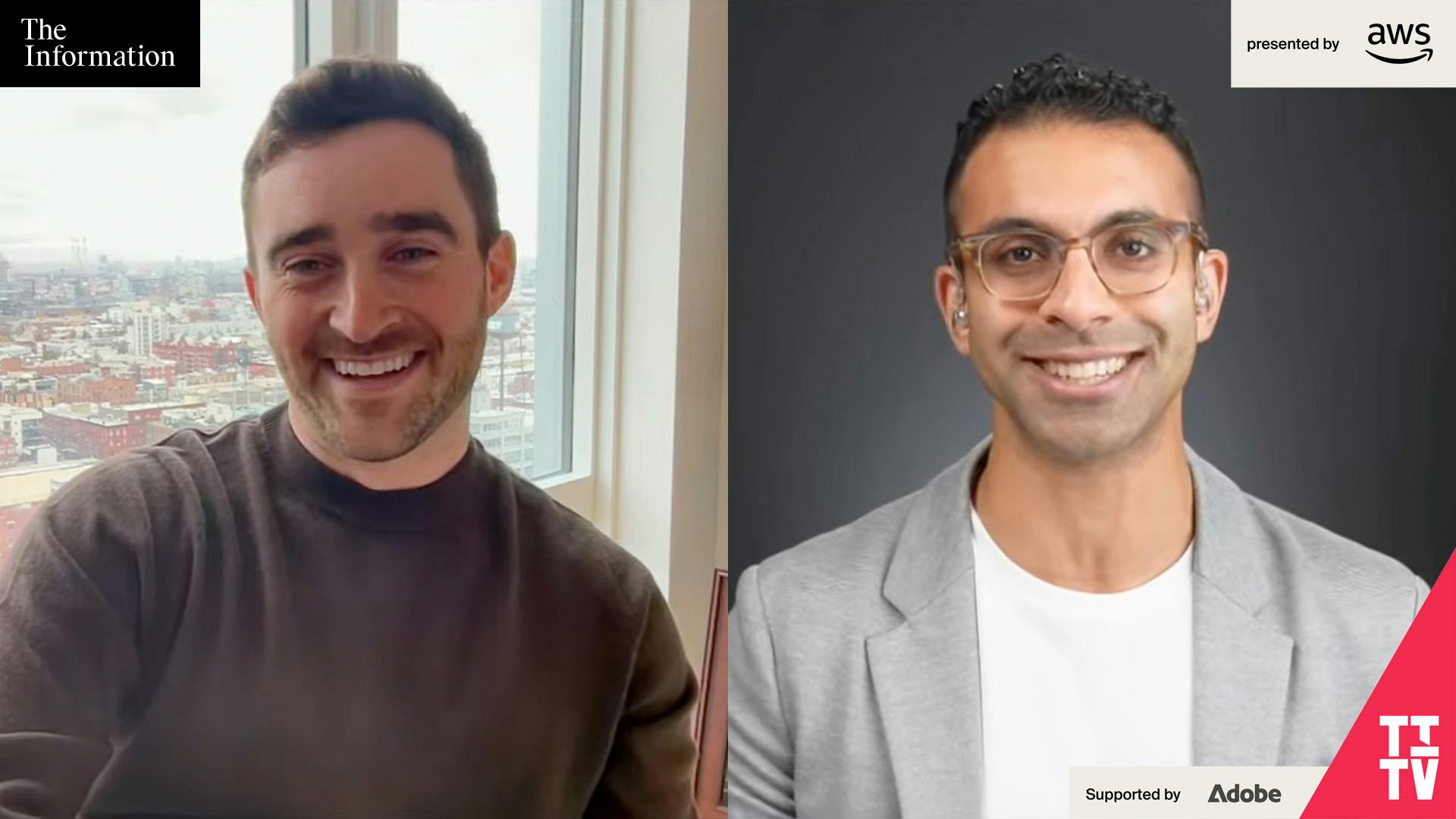
Check out our latest episode of TITV in which Akash speaks with the CEO of creator commerce company ShopMy about the company's big upcoming launch.
Recommended Newsletter
AI Agenda by Stephanie Palazzolo separates hype from reality and explains how AI is transforming industries. The 4x/week newsletter details the innovation and disruption happening in AI, from the AI startup funding frenzy to the major technological breakthroughs that will set the agenda for decades to come. Sign up today.
Don't miss The Information's Kevin McLaughlin, Atlassian's Chief People Officer Avani Prabhakar, and V Squared AI's Chief Executive Officer Vin Shashishta as they discuss some of the ways companies are trying to get more employees on board with using AI, including some examples of their unique approaches to the challenge.







0 comentários:
Postar um comentário