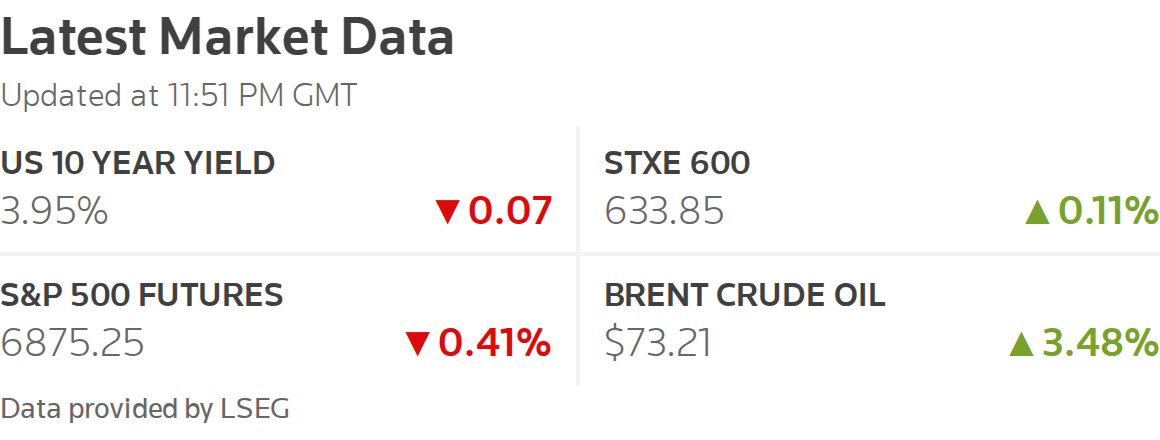
A look at the day ahead in European and global markets |
|
|
By Wayne Cole, Chief Correspondent, Treasury |
|
|
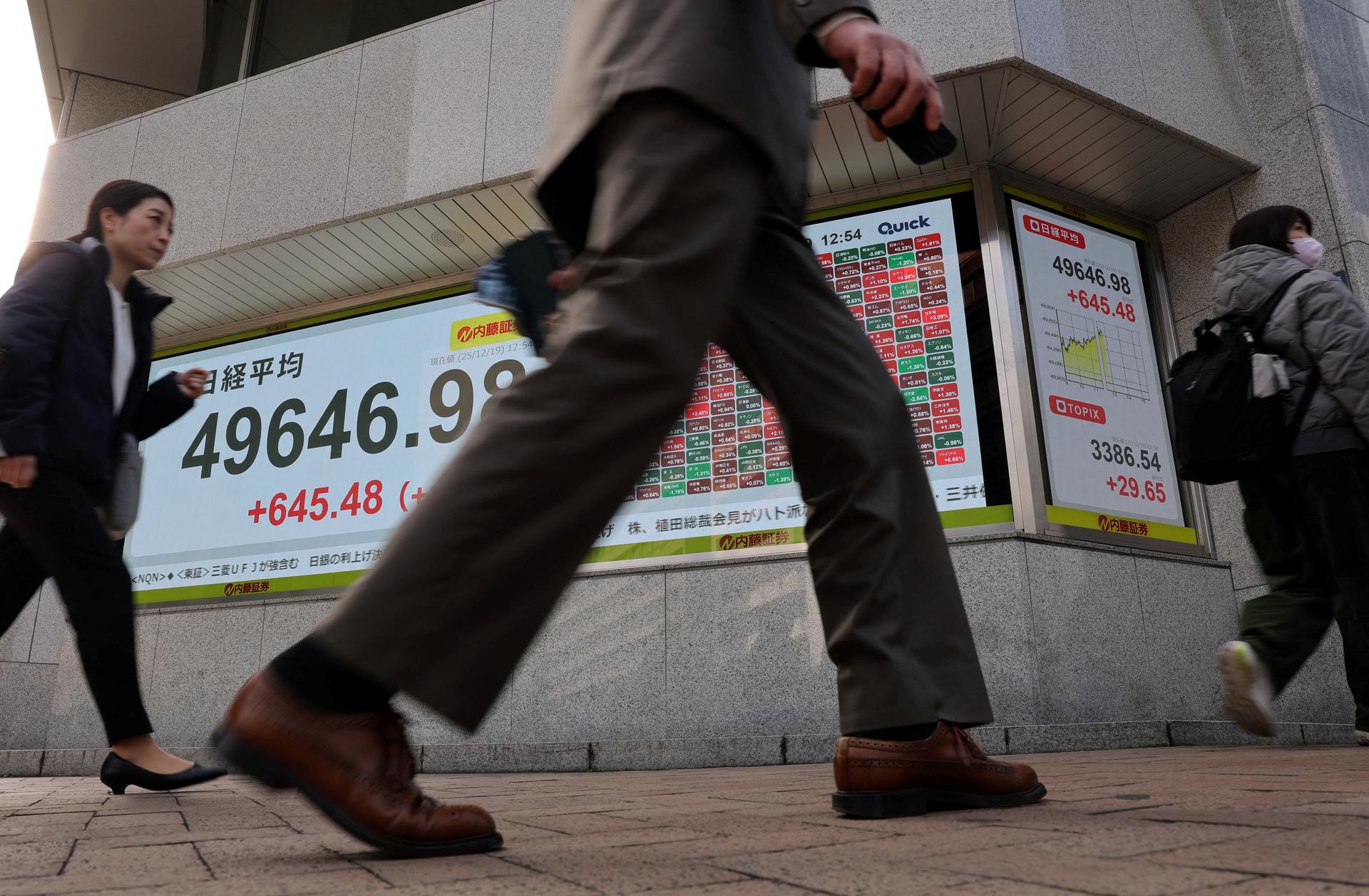
It's taken 30 years, but Japanese savers can finally get 0.75% for their money - just don't spend it all at once. The Bank of Japan did what everyone expected, because it had been telegraphed by the bank itself, and raised rates a quarter point to 0.75%. .The knee-jerk reaction in markets was to sell yen on the fact and the dollar popped as high as 156.19, later steadying at 156.00. The Nikkei held early gains of 1.2%, made largely on the back of a rally on Wall Street where stellar results from Micron Technology reenergised tech. |
|
|
Policymakers sound more confident |
Passersby walk in front of a screen displaying Japan's Nikkei share average after the Bank of Japan announced to raise interest rates outside a brokerage in Tokyo, Japan December 19, 2025. REUTERS/Issei Kato |
That's not to say the BOJ was in any way dovish. It again noted real rates were at "significantly" low levels even after the hike, and pledged to continue tightening should the economy and inflation pan out as forecast. Policymakers also sounded more confident that firms would continue to raise wages, sustaining inflation around its 2% target, a cycle it has spent decades trying to foster. The bond market seemed to take them at their word and 10-year yields climbed 5 basis points to 2.015%, levels not seen since August 1999 when Christina Aguilera's "Genie in a Bottle" was at No. 1. Investors are now waiting for BOJ Governor Ueda to give his post-meeting media conference, where his comments have moved markets in the past. One focus will be his thoughts on the terminal rate. He's long stated that neutral was in a wide range of 1.0% to 2.5%, but markets have only been pricing in one more hike to the bottom of that band. Were Ueda to hint at anything higher, that could help the yen while hammering bonds. |
|
| Otherwise, Thursday's U.S. CPI report could be a candidate for damned lies and statistics. No serious economist believes inflation really slowed to 2.7% in November from 3.0% in September (October having been lost to the shutdown). Some of the downward bias came because the Bureau of Labor Statistics could only collect prices from mid-November, just in time to catch the Black Friday sale events. The BLS' methodology for dealing with the lack of October data also put a downward bias on rent and owner's equivalent rent, which will linger for some time to come. Indeed, the impact might not be reversed until the April edition of the CPI is released, so the annual readings will stay suspect. Just what Fed policymakers needed. |
Graphics are produced by Reuters. |
|
|
Key developments that could influence markets on Friday: |
- Speakers include ECB's Kocher, Lane and Cipollone
- EU flash consumer confidence; German GfK Consumer Sentiment, German and French producer prices; UK retail sales
- US University of Michigan consumer sentiment, existing home sales
|
Graphics are produced by Reuters. |
|
|
Opinions expressed are those of the author. They do not reflect the views of Reuters News, which, under the Trust Principles, is committed to integrity, independence, and freedom from bias. |
|
|
Morning Bid is sent every weekday morning. Think your friend or colleague should know about us? Forward this newsletter to them. They can also sign up here. Want to stop receiving this email? Unsubscribe here. To manage which newsletters you're signed up for, click here. This email includes limited tracking for Reuters to understand whether you've engaged with its contents. For more information on how we process your personal information and your rights, please see our Privacy Statement. Terms & Conditions |
|
|
|






0 comentários:
Postar um comentário