Saturday, December 27, 2025 |
|
|
If Christmas Day is the performance, then this weekend is the aftermath. The curtain call, the soft crash back into routine, the moment you realise your fridge is still hosting a crowded house party. Somewhere between Boxing Day grazing and the first proper weekday in sight, you're left with the real seasonal puzzle: what, exactly, are you meant to do with the limp parsley, the half-tray of roasties, the last brave slice of turkey and that chunk of Christmas cake you can't quite face in its original form?
This is where our leftover special earns its keep. The joy of our roundup isn't just that it's practical (though it very much is), it's that it treats leftovers like an ingredient – not a punishment. There's a comforting logic to the post-Christmas menu: curry for when you want warmth and zero admin; pies for when you're ready to potter; noodles and salads for when your body politely requests a vegetable. You've got Jon Watts turning fridge-cold turkey into a weeknight curry that tastes like you planned ahead, Tim Siadatan making the case for a "mighty Christmas ragu" (heavy on the meat, light on the veg and unapologetically rich), and Skye McAlpine leaning into the festive chaos with a panettone grilled cheese that sounds wrong until it sounds inevitable. Add in sausage rolls built from whatever's lurking at the back of the fridge, a gravy-dunked toastie for peak sofa dining, and even Prue Leith's Christmas cake ice cream – proof that leftovers can still feel like a treat, not a compromise.
If you're feeling slightly more virtuous (or simply staring down a bin bag you'd rather not fill), Karen Gray's guide to fermenting leftovers offers a different kind of reset: one that starts with the bits you'd usually discard. The stats are grim enough to sober you up faster than an early-morning Buck's Fizz, but the point here isn't guilt – it's imagination. Sprout outer leaves, radish tops, broccoli stalks: the "waste" becomes kimchi, pickles, pao chai, even treacle-like syrups. The thread running through it all is a change in mindset: fresh isn't the only way to eat, and a jar on the counter can be as useful as a freezer drawer. It's thrift, yes, but it's also flavour, gut health and a tiny act of rebellion against the seasonal excess-to-landfill pipeline.
Speaking of the week between Christmas and New Year, when you've got time to actually read a recipe properly, Lauren Taylor's pick of the cookbooks you might've missed this year lands like a welcome nudge. Beyond the headline-grabbers, 2025 had plenty of quietly brilliant releases: Mariella Frostrup and Belles Berry's menopause "reboot" approach in MENOlicious (think blood-sugar balance, phytoestrogens and meals that don't feel like penance), Remi Idowu's Sugar and Spice, which treats Ghanaian and Nigerian flavours and proper puddings as equals, and Emily English's Live to Eat, built around protein-forward, fibre-smart comfort that still looks like something you'd actually want for lunch. If your New Year mood is "small upgrades, not a total personality transplant", this is your lane.
And then, when you want a palate cleanser from all the shiny newness, there's comfort in going back to the source. Alison Niven's glimpse inside Gloagburn Farm's kitchen is all bustle and warmth: stews on the aga, shortbread for the tractor, a family business built the hard way, over decades, with good ingredients and stubborn standards. The recipes feel like they belong to this in-between week: twice-baked cheddar soufflés you can prep ahead, smoked haddock tart for lingering lunches, potato scones designed for leftover mash and a generous slick of butter.
Finally, Stephen Harris – Michelin-starred chef, former financial consultant and not especially interested in the word "nostalgia" – makes the case for remaking the food you loved as a child so it tastes the way it should. His cream of mushroom soup is the antidote to the tin; his baked potato fish pie is clever, handheld comfort; his pear, walnut and Roquefort salad is the reminder that even in winter, something sharp and beautiful can still cut through. Consider it permission to stop eating on autopilot and start eating like you mean it again.
| |
|
'I'm a working mum – but I still need to use food banks for our Christmas dinner' |
|
|
In the last year, 23 per cent of working parents have used a food support service. Edith, 58, a teaching assistant and single mother in south London, is one of them. She tells Radhika Sanghani how the spiralling cost of living means she has relied on food banks for the last two years
|
Inever thought I'd need food banks. I've worked full time as a teaching assistant in a primary school for 18 years. I've raised four adult children in their twenties and thirties, without ever going on benefits or needing charitable support. Even when my husband and I divorced 15 years ago, and my youngest son was only one, I got by just fine.
But in recent years, things have changed. Everything is more expensive than it used to be. My rent has gone up, all the bills and council tax have gone up, but my salary – around £1,300 a month after taxes – has barely increased. Once my direct debits for the bills and rent come out on the day I get paid, I'm only left with a few hundred pounds for the rest of the month. It's just not enough.
It wasn't an easy decision to go to food banks. I went for the first time two years ago. When I got to my local food bank in Peckham, I felt really sad. I was also ashamed. I didn't want anyone to see me. But when I saw how many people were there, including many working parents like myself, I stopped feeling so shy. There were so many of us, normal people, just trying to make ends meet.
I came home with vegetables, potatoes, chicken, tomatoes – it was everything I'd normally buy, but it saved me money that I can use for something else. I can't afford the luxuries of eating out and going to the cinema like I used to, and I hardly buy new clothes, but the money I don't spend on groceries can be used to buy something essential for my 16-year-old son for school, or put aside for emergency expenses.
Food banks have made a big difference to my life these last two years. They've become part of my weekly routine and have made a really positive impact on my family. I no longer feel ashamed. Food banks exist for people to use if they're struggling. And with inflation and constantly rising prices, so many of us are finding it hard that it no longer feels like a stigma.
In the last year, 23 per cent of working parents used a food support service in the past year, according to charity The Felix Project. That figure could mean around 1,725,000 parents nationally are using food banks now...
Read the full article here
|
| |
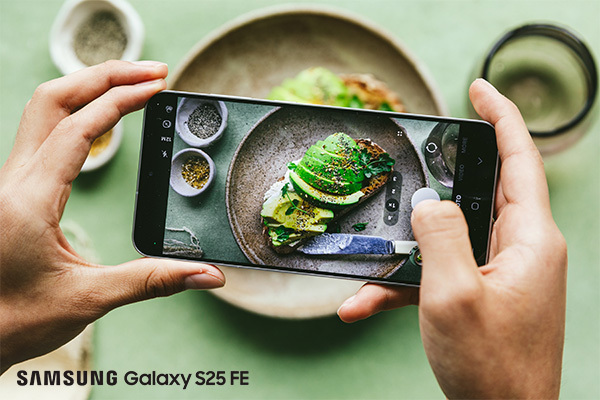
Next-level your food photography with the Samsung Galaxy S25 FE |
|
|
| With a versatile four-camera set up and image-boosting AI tech, the Samsung Galaxy S25FE can effortlessly elevate your food snaps. For expert tips and to watch Independent TV series Mini Masterclasses, following creators using the device, click here. |
|
|
Don't forget to complete your registration |
You haven't completed your registration with The Independent. It's free, quick, and helps support our journalism while tailoring your experience.
Register now to enjoy benefits including access to limited Premium articles, The Independent app, more than 20 newsletters and commenting on independent.co.uk.
Complete your registration today to unlock access.
|
|
|
| More tasty recipes inside |
Enjoy endless inspiration with recipes, interviews and more in your latest Indy/Eats food and drink magazine, one of your Independent Premium subscription benefits |
|
|
"At The Independent, we've always believed journalism should do more than describe the world – it should try to improve it.
This Christmas, we're asking for your help again as we launch our new campaign with the charity Missing People – the SafeCall appeal.
Every year, more than 70,000 children in the UK are reported missing. The misery that follows – for the child, for the family, for the community – is often hidden. Too many of these young people have nowhere to turn when they need help most. SafeCall will change that. Our goal is to raise £165,000 to help Missing People launch this new, free service – designed with the input of young people themselves – offering round-the-clock support, advice and a route to safety."
|
|
|
| Live to Eat by Emily English |
Emily English's Live to Eat is the nutritionist's antidote to joyless 'healthy' cooking: more than 80 recipes built for real life, balancing protein, fibre and flavour without the punishment. Expect breakfasts that actually fill you up, speedy lunches, weeknight dinners and proper puddings, all designed to keep blood sugar steady and cravings quiet. An instant No 1 Sunday Times bestseller too.
|
|
|
Choosing The Independent as one of your preferred sources ensures that you'll see our coverage more prominently displayed in your searches. That way, you can be sure you're accessing the latest headlines from a trusted source. |
|
|
Join the conversation and follow us |
|
|
Download the free Independent app |
|
|
Please do not reply directly to this email You are currently registered to receive The Independent's IndyEats newsletter. To unsubscribe from The Independent's IndyEats newsletter, or to manage your email preferences please click here. This e-mail was sent by Independent Digital News and Media Ltd, 14-18 Finsbury Square, London EC2A 1AH. Registered in England and Wales with company number 07320345
Read our privacy policy and cookie policy
| |
|
|














0 comentários:
Postar um comentário