You can replace this text by going to "Layout" and then "Page Elements" section. Edit " About "
Pague com LPs do Mister Colibri
Quer comprar celular,Tablet,pen drive, GPS e muito outros produtos e ainda podendo pagar tudo em LPs ?Pois saiba que isso é possível,basta você visitar o site downloadstotal.com e realizar a sua compra com toda tranquilidade e segurança!!!
Thanks for reading The Briefing, our nightly column where we break down the day's news. If you like what you see, I encourage you to subscribe to our reporting here.
Greetings!
We're heading into our last full working week of the year, so the news flow is likely to start quieting down. (Be on the lookout for ServiceNow's next big acquisition, however). One story that's likely to chug along through the holidays is the battle between Netflix and the Ellison family's Paramount Skydance for Warner Bros. Discovery. There's sure to be fireworks this week, if for no other reason than the board of WBD's promise to respond to Paramount's hostile offer by week's end.
Wall Street seems to be expecting a development of a different kind: WBD shares closed on Friday at $29.98, two cents below Paramount's $30-a-share offer and a few dollars higher than Netflix's $27.75 cash and stock offer, which WBD has accepted. That implies traders expect someone to raise their bid. Logically that should be Netflix, whose bid is lower than Paramount's (largely because Netflix is not buying the whole company). But for the streaming firm to go higher would require taking on significantly more debt, making an already-risky deal even riskier. Maybe the companies should compromise: How about if Netflix and Paramount split WBD between them?
One possibility would be that Netflix takes the Warner studio and Paramount takes the HBO Max streaming service and WBD's cable channels. That deal would be far more sensible for all concerned and might even resolve the antitrust issues that hover over either takeover.
After all, Netflix doesn't need HBO Max. Its global leadership in streaming is assured—it had more than 300 million global subscribers at the end of 2024, when it last reported the number, well ahead of WBD's 128 million at the end of September. What Netflix would get value out of is the Warner studio, with its film library. Imagine—Netflix might finally be able to stream some programs that don't appear to have been written by an AI chatbot that's ingested every TV show ever made.
As for Paramount, it already has a film studio. It needs more scale in streaming, as its Paramount+ only has about 79 million subscribers. HBO Max would give it that. Paramount CEO David Ellison estimated last Monday that, after eliminating overlap between subscribers of both HBO Max and Paramount+, the combination of the two would give it 200 million subscribers. That puts it in the same ballpark as Disney. Moreover, Paramount would likely derive more value from its TV channels by combining them with WBD's, as that would allow cost cutting in programming and staff. (This would also satisfy President Donald Trump, who wants WBD's CNN to change hands as part of the deal, not that this should be a consideration for anyone.)
And as each company would be taking a smaller chunk of WBD than it now proposes, each can take on less debt. This outcome would be a win-win for everyone involved. If common sense applied, the companies would be looking for such a compromise. Unfortunately, we'll likely have to wait a while before the combatants are ready to negotiate.
Wealthfront's IPO Not so Rich
Friday saw the first day of trading in Wealthfront, an automated investor adviser, whose initial public offering was likely one of the last of the year. But investors weren't too excited. Wealthfront stock closed up just 19 cents from the IPO price of $14, which is a bit of a downer by the standards of first-day pops.
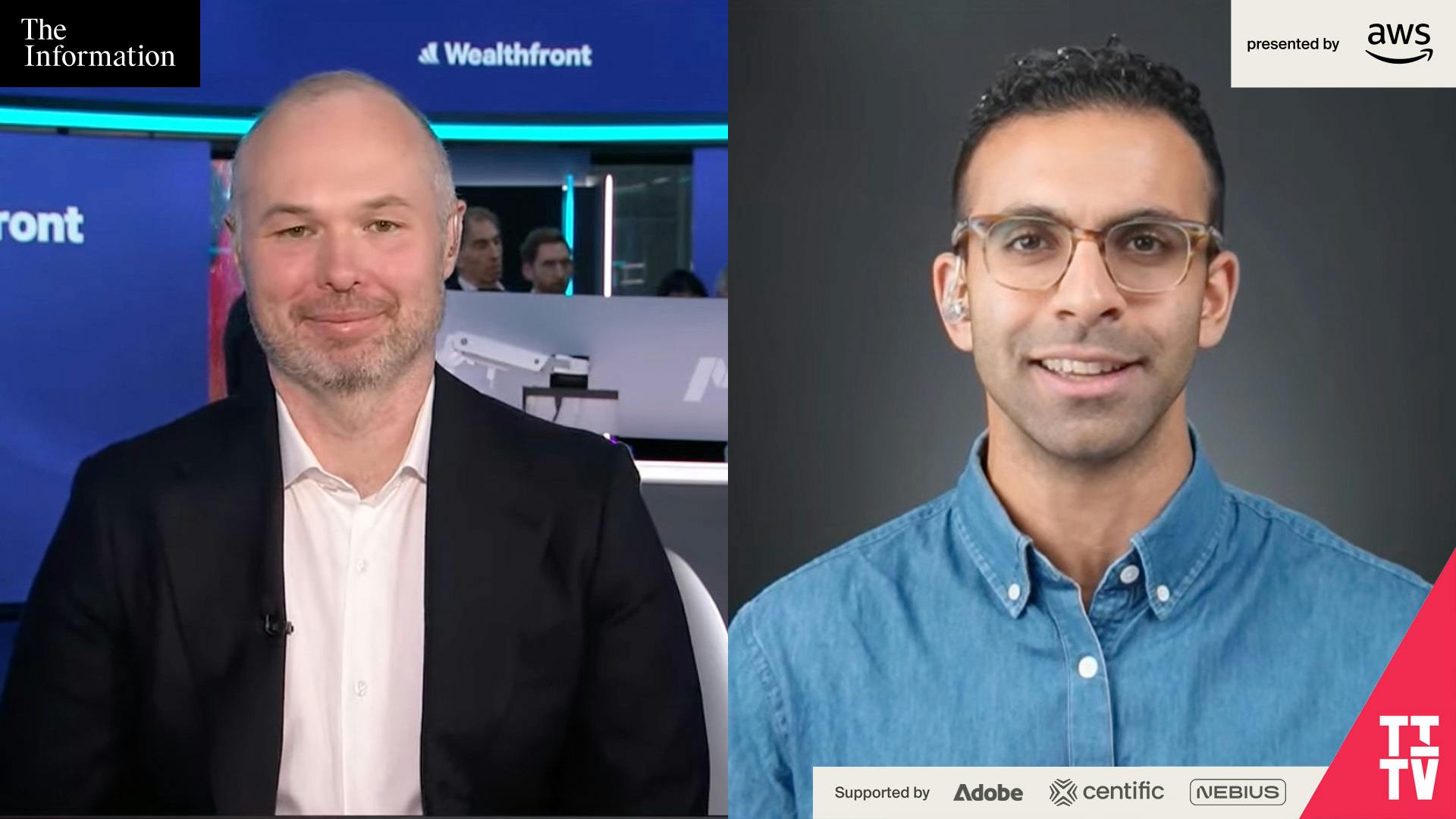
Wealthfront executives and shareholders can comfort themselves that the stock at least stayed above the IPO price, although we wouldn't be surprised if it falls below that this week. That reception continues a clear trend: Many venture-backed companies going public this year didn't do well, unless they had a clear AI angle. (Check out Friday's TITV for an interview with Wealthfront's CEO, David Fortunato).
We're thinking of StubHub, now trading 40% below its IPO price; Klarna, down 22%; Navan, down 42%; and Chime, down 3%. Sure, the AI-related stocks such as CoreWeave are still in the black, although even CoreWeave has lost a lot of ground. The young cloud operator went public at $40 a share, reached a height of $183 in the summer and on Friday closed at $78.59. Friday's trading was surely influenced by news from another young data center developer, Fermi, that it had lost a tenant for its AI server campus. Fermi's stock price fell 34% on Friday.
In Other News
• Oracle has delayed the completion of some of the data centers it is developing for OpenAI to 2028 from 2027, according to a Bloomberg report. The news sent Oracle shares down 5% Friday.
• Beijing is considering pouring as much as $70 billion into its semiconductor industry in what would be the world's largest state-backed chip support program, Bloomberg reported, citing people familiar with the matter.
• Exor, the Agnelli family's holding company, rejected an offer from stablecoin issuer Tether for its 65% stake in Italian soccer team Juventus, saying it had "no intention of selling any of its shares in Juventus."
• Revenue at Elon Musk's social media service X jumped 17% to $752 million during the third quarter, though the site is still bringing in significantly less cash than when Musk acquired it, Bloomberg reported on Friday.
• SpaceX chief financial officer Bret Johnsen confirmed to the company's staff that it was preparing for an IPO next year, the Wall Street Journal reported.
• OpenAI ended a policy that required new hires to work for six months before their equity compensation vested, the Wall Street Journal reported,an effort to make the AI firm a more appealing place to work.
Friday on The Information's TITV
Check out our latest episode of TITV in which we speak with the CEO of Wealthfront about the company's IPO on Friday.
Recommended Newsletter
Start your day with Applied AI, the newsletter from The Information that uncovers how leading businesses are leveraging AI to automate tasks across the board. Subscribe now for free to get it delivered straight to your inbox twice a week.







0 comentários:
Postar um comentário