Its population includes an Indigenous community with a close relationship with nature and the land, who "live in ways that are not only organised around capitalist markets and profits", said Danish trade unionist, writer, campaigner and Red-Green Alliance member Bjarke Friborg. "Many people still hunt and fish, share food within families and communities, and plan their time around seasons, weather and ice conditions. When you depend directly on nature like that, it shapes how you think about work, time and what really matters."
While Friborg is clear that the "Indigenous people have been subject to colonisation and domination from Denmark," he warned against "how the US has treated its native populations. Greenlanders know this, too, and they are not encouraged." Greenland's Inuit people, he added, fear what a US annexation would mean for their wellbeing and safety.
Former deputy PM Frederiksen is a member of Greenland's historically unionist Democrats Party, which has in recent years shifted its stance to support independence in the long term, as part of a gradual process that starts with increased self-determination. He pointed out that Greenlanders, like residents in Denmark, are entitled to free healthcare, receive payments to support their education, and a generous welfare system – which he fears could all be lost under US control.
"Look at Alaska, look at Puerto Rico," he said, adding: "Our people are incredibly anxious. We are anxious about our country, our families, our own lives. We are anxious about all the connections we have. And it's all just because a bully wants our country for his own 'psychological welfare.'"
These anxieties have also led politicians on the island to put aside their differences, said Frederiksen. "Greenland's political parties, at this time, realised they have to stand up together. You couldn't imagine that three, four months before that they should work together. And I was so proud, because I think it was a very, very strong signal to send to all the world that we don't want to be a part of the United States."
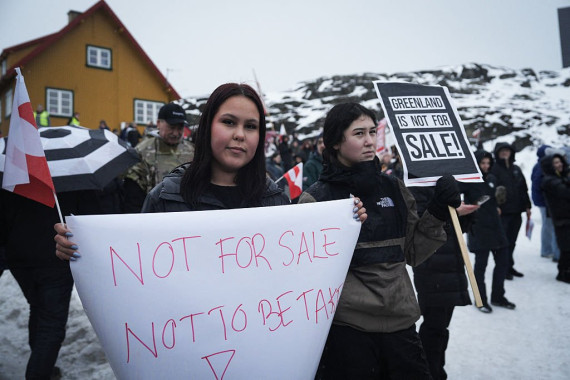
The signal was particularly loud and clear when 30,000 people marched in Copenhagen. Anders Franssen, one of the co-founders of the Hands Off Greenland campaign group, told openDemocracy he knew he had to do something after Trump's vice president, J D Vance, visited Greenland in March last year.
"We all know what that visit meant," Franssen told openDemocracy. "It meant they were going to try to convert the Greenlandic people to look more positively on Trump and the Trump administration. "I called up the police, and I said, I'm going [to organise] a demonstration. He said, 'How many people are gonna show?' I said, it's going to be me, then two cops, it'll be three of us. We ended up being 3,500."
Since then, the Hands Off Greenland protests have grown in size and number, with several large marches held in Danish cities and Greenland's capital, Nuuk...
You can read the rest of this article here.



0 comentários:
Postar um comentário