A different kind of fellowship
MTM's Fellowship Program flips the traditional research model on its head. Fellows are not research assistants or 'field contacts'. They are investigators, researchers, journalists, technologists, artists, and organisers with lived experience of displacement – experts in their own right, people with lived experience of migration who are funded, supported, and trusted to lead inquiry into the technologies shaping their worlds.
Over the past three years, fellows have documented spyware attacks against journalists-on-the-move, biometric surveillance in refugee camps, algorithmic profiling at borders, digital harms faced by LGBTQI+ communities in displacement, and the quiet ways people resist and survive technological control. This work is deeply contextual. It is rooted in specific places like refugee camps, border zones, cities, and online platforms, and in everyday realities often invisible to policymakers and technologists. It is also collaborative: fellows learn from one another across regions, sharing strategies, tools, and care.
Supporting this work requires more than research funding. It means investing in digital security, psychosocial support, translation, and trust. It means accepting that knowledge production is slow, relational, and sometimes messy, especially when it is done with the explicit recognition that people with lived experience are the true experts on what is happening in their lives and communities.
Our goal at the MTM is not blind benevolence. Rather, we strive to integrate the expertise of our colleagues-on-the-move into broader debates on the future use of technology, especially because lived experience is hardly ever taken into account by stakeholders in the field, especially those developing and deploying technologies in the Global North.
The Nairobi gathering
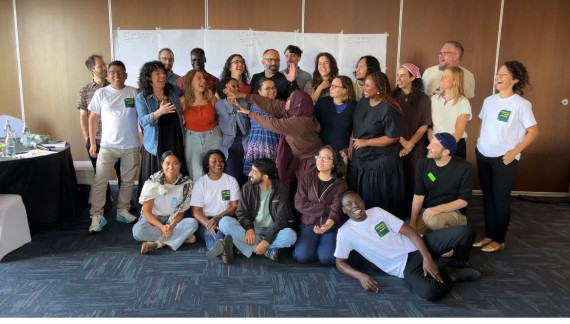
After nearly a year of planning, the Nairobi gathering was the first time many of these collaborators met in person. Our fellows were joined by an invited group of stakeholders from the Global North working on border tech, and over two days, participants shared work, reflected on failures and successes, and named the emotional toll of researching harm while living inside it.
Importantly, the gathering was not a conference designed to extract insights for reports destined for distant audiences. It was a co-learning space, shaped by fellows themselves, that centred collective care, accountability, and future-building (we were also joined by some surprise spouses and two babies – a real look to the future!)
Participants spoke openly about the risks they face: transnational surveillance, online harassment, criminalisation, and burnout. They also spoke about joy, solidarity, and the power of being in a room where lived experience was not treated as anecdotal, but as expertise.
That shift, from being studied to being heard, is political – and powerful, too.
Towards a manifesto
One of the most significant outcomes of the gathering is the MTM Manifesto, a living document drafted by the MTM fellows. It is not a fixed policy document or a set of technical recommendations. Instead, it is a living articulation of values and principles for how technology in migration contexts should be imagined, governed, and resisted, written by those most affected.
The core text is published as the base for a more experience-inclusive debate on technology and how it affects all of us. The public is also invited to leave comments and make suggestions, which will gradually be transformed into amendments to the manifesto.
While the current narratives around migration frequently foster a mentality of 'them vs us', we instead aim at an open, inclusive, constructive, and holistic approach. Discussing the impacts of technology and formulating future guidelines functions as a connecting agent and allows us to also look at migration from different angles...
You can read the rest of this article here.


0 comentários:
Postar um comentário