| |  | Feb 18, 2026 | | | | | Supported by |  | | | | | | Happy Wednesday! Meta Platforms and Nvidia sign a strategic partnership. OpenAI can shift some of its revenue-sharing payments to Microsoft to later years under a renegotiated partnership. Thrive Capital raises $10 billion in new funds.
| | | | Meta Platforms and Nvidia on Tuesday announced a multi-year strategic partnership, in which Meta will use millions of Nvidia chips across its own data centers and through cloud providers. Terms of the deal were not disclosed. Meta, a longtime Nvidia customer, already puts Nvidia GPUs in its own data centers and rents them from cloud providers such as Oracle. But the new partnership, which involves multiple Nvidia technologies, including its forthcoming Vera Rubin chips and in-house networking technology, indicates that the companies will be working more closely together. The companies also said their engineering teams will work together to "co-design" Meta's AI models. Meta has explored using rival AI chips. The Information reported in November that Meta was in talks with Google about spending billions of dollars to use TPUs in Meta's data centers in 2027, as well as to rent Google chips from Google Cloud this year. It's not clear whether the new deal will affect the TPU talks. A spokesperson for Meta said they had "nothing to share" and did not respond to a question about whether the talks were still ongoing. Nvidia said Meta would continue using Nvidia's Grace central processing units and consider a "large-scale deployment" of the forthcoming Vera CPUs in 2027. (CPUs are traditional data center chips used to run non-AI workloads). | | | | OpenAI can shift some of its revenue-sharing payments to Microsoft to later years under the terms of the pair's recently renegotiated partnership last fall, The Information reported Tuesday. This should reduce the impact of the payments on OpenAI's cash flow. Last fall, OpenAI and Microsoft agreed to continue an arrangement in which OpenAI pays 20% of its revenue to Microsoft till 2032 in exchange for allowing OpenAI to work with other compute providers without giving Microsoft the option first, along with other conditions. As part of their original partnership agreement, Microsoft was entitled to 20% of the startup's revenue through 2030. OpenAI can make some of those payments in years later than when it generates the revenue. OpenAI expected to lose $9 billion in cash last year and $17 billion in cash this year, The Information previously reported. The company doesn't expect to become cash flow positive till 2030, when it expects to generate $38 billion in cash. OpenAI projects paying more than $13 billion in total in revenue share, mostly to Microsoft, this year and next year. | | | | Thrive Capital said it has raised $10 billion in new funds, including $1 billion for early stage investments and $9 billion for growth stage. The New York-based firm is referring to these funds as "Thrive X," double the $5 billion Thrive closed in August 2024, for its funds labeled "Thrive IX." Founded by Josh Kushner in 2010, Thrive has been making large bets in companies including OpenAI, Stripe and SpaceX. | | | | Anthropic paid about $1.3 million in revenue share in 2024 to cloud providers for reselling Anthropic's AI models, The Information reported on Tuesday. That figure is expected to rise to about $360 million last year, $1.9 billion this year and $6.4 billion next year, according to The Information's analysis of Anthropic's forecasts. That's an increase from Anthropic's past summer projections, when it expected to generate $1.6 billion this year and about $4.4 billion next year. By another measure, Anthropic shares about 50% of its gross profits to Amazon for any sales of Anthropic's models Amazon sells. Google typically takes a cut between 20% and 30% of net revenue, after subtracting infrastructure costs, from resale of its partners' software. It's not clear what that portion is for Microsoft, which became Anthropic's cloud provider in November. | | | | Palo Alto Networks on Tuesday announced plans to acquire Israeli cybersecurity startup Koi, a deal meant to strengthen Palo Alto's cybersecurity tools amid new threats posed by the advancement of agentic AI. Palo Alto didn't give a price but Calcalist reported the company is paying $400 million. Koi sells a tool meant to guard against AI agents containing malware. Palo Alto will integrate the tool into its security platforms. "AI agents and tools are the ultimate insiders. They have full access to your systems and data, but operate entirely outside the view of traditional security controls," said Palo Alto's chief technology officer, Lee Klarich, in a statement. "By acquiring Koi, we will be closing this gap and setting a new standard for endpoint security." The news marks the latest in a series of acquisitions by the $131 billion company, including a blockbuster, $25 billion deal to purchase another Israeli startup, CyberArk, in July of 2025 as well as smaller-scale purchases of firms Protect AI and Talon. Palo Alto shares dropped following the announcement as investors await the company's second quarter earnings results slated for release after the bell. The stock has fallen victim to a broad decline in software equities as Wall Street questions the impact of AI on the sector. | | | | Activist investor Starboard Value said it would nominate a new slate of directors to the board of Tripadvisor, arguing that the travel booking and review site hasn't moved quickly enough to address the threat posed by AI chatbots and incorporate more generative AI into its site and app. Starboard started building a stake in Tripadvisor last summer, and said in a letter released Tuesday its stake is now more than 9%. The firm said that while its conversations with Tripadvisor's management had been friendly, the company has been "massively late and incredibly slow to develop and launch a compelling AI-enabled version of Tripadvisor." Tripadvisor struck a partnership with OpenAI in October to make its app available through ChatGPT. Tripadvisor currently has a market cap of around $1.1 billion, and the company's shares are down more than 40% in the past six months. Shares rose more than 6.5% in premarket trading Tuesday morning following the release of Starboard's letter. | | | | Gemini Space Station, the crypto exchange co-founded by Cameron and Tyler Winklevoss, said Tuesday that three of its senior executives were leaving the company. The departures follow a steep decline in its stock from its September IPO. Chief operating officer Marshall Beard, chief financial officer Dan Chen, and chief legal officer Tyler Meade are all leaving the company, effective immediately, the company said in a filing. Beard also resigned from Gemini's board of directors. The board appointed Danijela Stojanovic, who joined Gemini in 2025, as the company's interim chief financial officer and Kate Freedman, who joined in 2024, as interim general council. Gemini won't look for a successor chief operating officer, and Cameron Winklevoss will take on many of the position's responsibilities, including "revenue-generating responsibilities," according to the filing. Analysts polled by S&P Global Market Intelligence expect sales to rise 12% in the fourth quarter, down from 51% in the third quarter. The company's stock fell nearly 15% Tuesday, to $6.49 a share. It has fallen 80% since its IPO. | | | | ServiceNow CEO Bill McDermott and other senior executives from the software provider have agreed to cancel pre-scheduled stock sales, and McDermott plans to purchase $3 million in ServiceNow stock later this month, according to a regulatory filing. The moves could reassure investors that ServiceNow is on solid ground despite a broad enterprise software market selloff that has seen its shares drop more than 25% since the start of the year. They come a few weeks after ServiceNow took another step to shore up investor confidence by announcing a plan to buy back $5 billion in stock. McDermott is one of the first enterprise software CEOs to cancel pre-scheduled stock trades this year, raising the question of whether other industry counterparts might follow suit. Some investors fear that AI could decimate the traditional per-seat software licensing model and let companies slash software budgets by building their own features and applications. | | | | Benchmark on Tuesday said it had hired Jack Altman, the founder of early-stage firm Alt Capital and HR software company Lattice, as its fifth general partner. Benchmark—known for backing Uber and Snap in its early years—has kept its fund sizes relatively small and continued to operate as an equal partnership, even as its Silicon Valley competitors have raised multi-billion dollar funds and hired dozens of partners. It's undergone a shift in its top ranks. Last year, two of its partners stepped back or left the firm, and it brought on a former Kleiner Perkins partner Everett Randle in October. Altman joins Randle as well as long-time general partners Chetan Puttagunta, Eric Vishria and Peter Fenton. "We have always believed that our firm's strength lies in its equal partnership: a small, focused group of individuals who operate with the same authority, responsibility, and singular mission to support entrepreneurs from the earliest stages," the firm said in a post on X. Altman said he is keeping his board seats from Alt Capital and that his team members—partners Bala Chandrasekaran and Vivek Katara as well as head of operations Nate Collins—are all joining Benchmark with him. | | | | Atlassian, which sells software that developers and other teams inside companies use to track projects, has frozen hiring for engineers and similar roles, the Australian Financial Review reported. The hiring freeze comes amid a broad selloff in enterprise software stocks driven by fears that companies could use AI to reduce their spending on traditional business applications, or replace them entirely. Atlassian has been one of the hardest-hit providers in this segment, as its shares have dropped 47% since the start of the year and are down 74% over the past 12 months. "We made the decision to temporarily pause some hiring in early February. This allows us to take a beat, and look at how we allocate and prioritise against our most critical work," an Atlassian spokesperson said in a statement via email. The company plans to continue hiring for "key roles" in AI and sales, the spokesperson added. In an interview with The Information's TITV last September, Mike Cannon-Brookes, CEO and co-founder of Atlassian, downplayed the potential threat from AI and said he believes AI will actually give a boost to the company's business over time. | | | | | Popular articles
By Aaron Holmes and Kevin McLaughlin
By Jessica E. Lessin, Rocket Drew and Stephanie Palazzolo
By Katie Roof, Valida Pau and Cory Weinberg
| | | | | Opportunities Empower your teams to stay ahead of market trends with the most trusted tech journalism.
Learn more
Reach The Information's influential audience with your message. Connect with our team | | | | | |




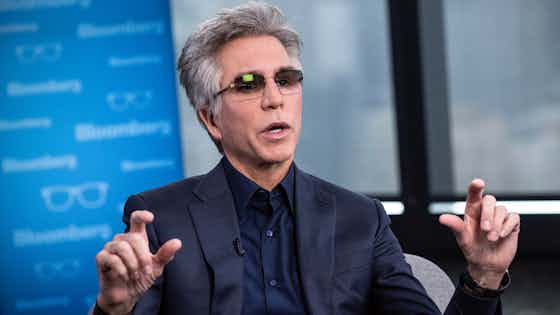









0 comentários:
Postar um comentário