You can replace this text by going to "Layout" and then "Page Elements" section. Edit " About "
Pague com LPs do Mister Colibri
Quer comprar celular,Tablet,pen drive, GPS e muito outros produtos e ainda podendo pagar tudo em LPs ?Pois saiba que isso é possível,basta você visitar o site downloadstotal.com e realizar a sua compra com toda tranquilidade e segurança!!!
Thanks for reading The Briefing, our nightly column where we break down the day's news. If you like what you see, I encourage you to subscribe to our reporting here.
Greetings!
Talk about symbolic. This week's annual conference for bankers and investors who play in the arcane world of asset securitization—selling debt backed by mortgages and other cash streams—was disrupted when an exhibit hall at the convention in Las Vegas caught fire on Monday night. I'm not kidding. You could say the blaze was a physical manifestation of the financial risks associated with the topic on attendees' minds: data centers.
I'm at the convention—which is continuing despite the fire, although many people had to relocate to different conference halls. And I've met quite a few people who've been attending versions of this conference for decades, since before the 2008 financial crisis, when the event was featured in Michael Lewis' "The Big Short." For young folks who may not recall that book—later turned into a film—it was about the bubble in mortgage-backed securities that led to the 2008 financial crisis. None of the veterans who remember those days are eager for a repeat, so they're asking extra questions about data center deals, making sure they don't miss any risks.
Those questions include the following: What are the circumstances under which tenants—in this case, cloud providers—can walk away from a data center? And where exactly is the demand for AI coming from? The growth of the market for securitized data center debt is forcing even the most risk-averse investors, such as insurers, to take a look. Bank of America expects securitizations of digital infrastructure assets—including data centers, fiber and cell towers—to increase 50% this year to $60 billion, according to a report released on the eve of the conference.
It doesn't hurt that data center securitizations tend to offer richer yields than debt backed by contracts such as residential mortgages. As with any new, fast-growing investment, there's a feeling in the air that if you can't find a way to participate, you risk getting left behind.
Bankers are now pondering what else in the AI data center complex they could securitize and sell. They're talking to companies and ratings agencies about selling debt backed by AI chips and power generators hooked up to the massive computing facilities. If the ratings agencies can find a way to evaluate these deals, the thinking goes, that would widen the investor pool at a time when the funding needs for AI are growing rapidly.
The worry is that it would also spread the associated risks to a wider swath of everyday savers, something that should give the industry pause. Already there are signs investors are hitting the limit of how much data center debt they can purchase. Aashh Parekh, a portfolio manager at $1.4 trillion in assets money manager Nuveen, offered a stark warning Monday to a packed room of people attending a data center–focused panel: "If you just keep buying it," he said, "it can take over your entire portfolio."
Ellisons Inch Closer to Warner Triumph
Larry Ellison and his son David are thisclose to winning the takeover battle for Warner Bros. Discovery. The board of the iconic but faded entertainment giant said on Tuesday that a revised offer from Ellison-controlled Paramount Skydance "could reasonably be expected" to be deemed superior to Netflix's offer. To be sure, we're not there yet: WBD said it will talk some more with Paramount before it makes a final decision. Then Netflix will have four days to respond.
Still, this is the first time since the bidding began last fall that Paramount appeared to be in the lead. You might have tuned out weeks or months ago, but to recap: WBD agreed in early December to sell its Max streaming operations and Warner Bros. film studio to Netflix for $72 billion. Paramount had already made several offers to buy all of WBD, including its slowly decaying cable channels, culminating in a $108 billion bid, including assumption of debt.
But WBD's board rebuffed that bid for a bunch of reasons, mostly related to uncertainty about Paramount's financing. Paramount has now resolved those questions and increased its bid a tad. At the same time, there are real questions about Netflix's ability to get antitrust approval. The Ellisons are close to President Donald Trump, who simultaneously seems displeased with Netflix.
The big question is how Netflix would respond if WBD were to switch to a Paramount deal. Netflix's offer, which involves taking on a massive $50 billion in debt, hasn't been popular with its shareholders. As of Monday, the company's stock had dropped 39% since October, when its executives appeared to dismiss speculation that it might bid. On Tuesday, however, its shares rose 2.7%.
The smartest thing would be for Netflix to walk away. But the lure of owning an iconic film studio appears to have taken hold at the video streamer, once a disruptor and now a virtual incumbent in Hollywood.—Martin Peers
In Other News
• Meta Platforms struck a deal to buy enough of AMD's AI chips to power 6 gigawatts of data center capacity over several years, the companies announced Tuesday. In exchange, Meta stands to get 10% of AMD, currently worth $34 billion, if it buys all of the chips covered by the deal.
• Payments fintech Stripe is considering a whole or partial acquisition of struggling rival PayPal, according to Bloomberg.
• A California federal judge dismissed a lawsuit filed by Elon Musk's xAI that accused archrival OpenAI of stealing trade secrets by poaching employees.
• TurboTax and QuickBooks maker Intuit announced a partnership with Anthropic on Tuesday to bring custom AI agents to businesses and consumers on Intuit's service beginning this spring.
• Adept cofounder David Luan, who has been a vice president of autonomy and the AGI San Francisco Lab at Amazon for less than two years, is leaving the tech giant, Luan said on Tuesday. Luan had joined Amazon in 2024 when Amazon licensed the startup's technology and hired some of its employees.
•Secretary of War Pete Hegseth threatened on Tuesday to invoke the Defense Production Act to force Anthropic to let the Pentagon use its AI models for "any lawful use," if Anthropic does not agree to those terms voluntarily by Friday, according to a person familiar with a meeting attended by Hegseth and Anthropic CEO Dario Amodei.
Today on The Information's TITV
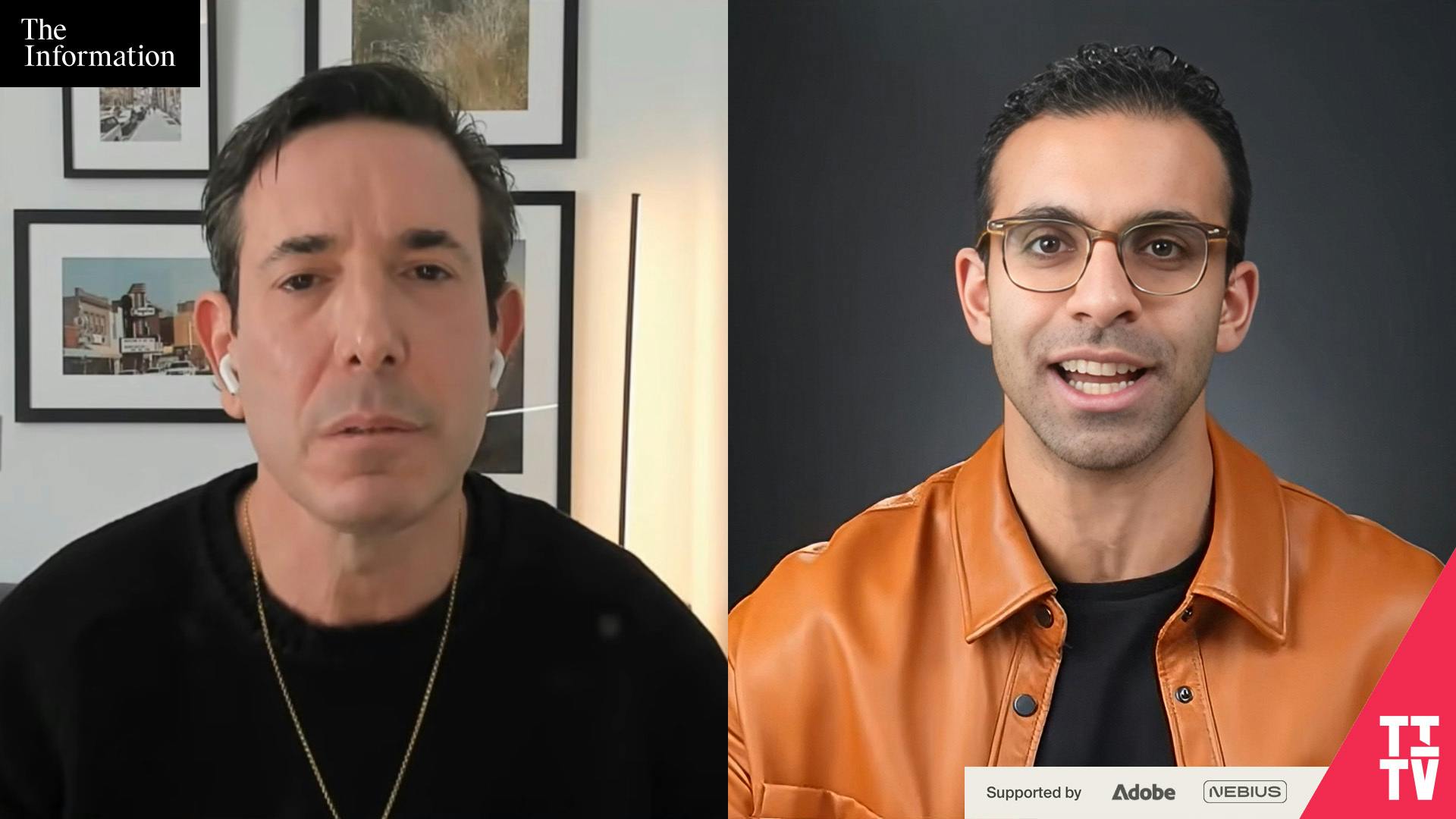
Check out our latest episode of TITV in which we speak with Bradley Tusk about why hyperscalers may be approaching data center build-outs the wrong way.
Recommended Newsletter
Start your day with Applied AI, the newsletter from The Information that uncovers how leading businesses are leveraging AI to automate tasks across the board. Subscribe now for free to get it delivered straight to your inbox twice a week.
Play with the pros. Join The Information for two intimate days of tennis and conversation, featuring on-court time with Madison Keys and Darren Cahill and discussions on tech leadership and innovation. Request an invite today.
Join The Information at the New York Stock Exchange on Monday, April 27, to hear from top executives and investors on how the rapid buildout of AI is reshaping tech, finance, and capital markets









0 comentários:
Postar um comentário