

235 ☼ The Camera as a Social Shield: Robert Rauschenberg on Why We PhotographWORKSHOP ANNOUNCEMENT!!
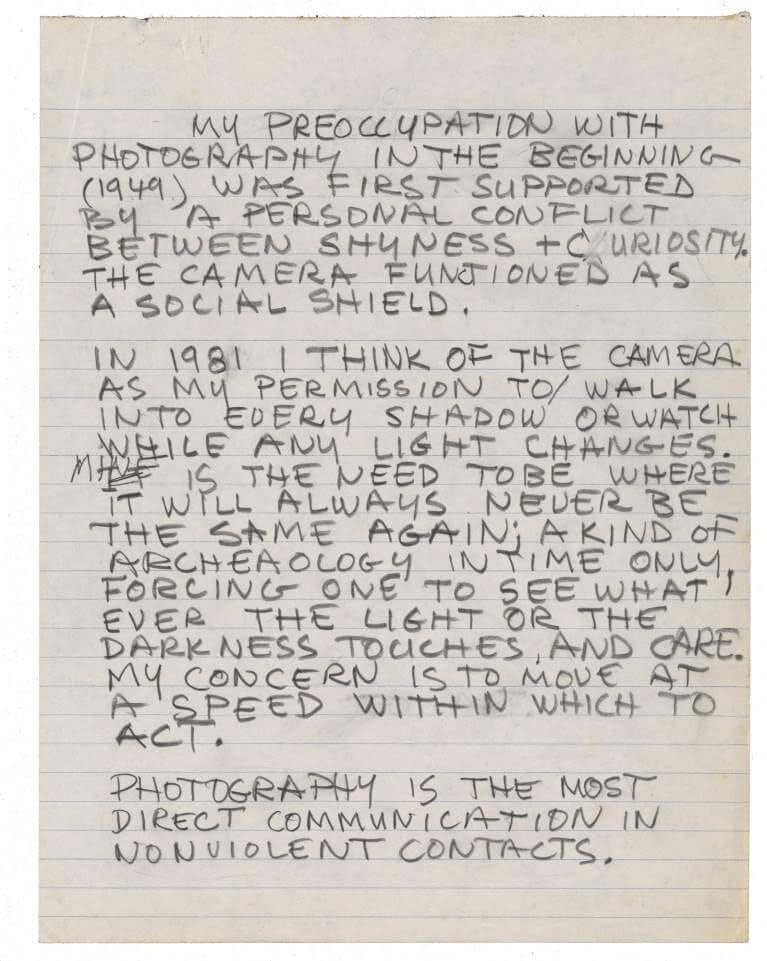
Also in this issue: Introducing a new in-person photography workshop, in collaboration with Shane Taylor of Framelines. More info below. Dear friends, A few weeks ago a friend sent me a photo of a handwritten note by artist Robert Rauschenberg. It’s from 1981, written on lined paper in thick pencil, and I loved it. I sat with it and mulled it over in the context of my own practice as a photographer.
Most people know Rauschenberg as a painter, sculptor, and he is considered one of the most influential artists of the twentieth century. What you may not realize is that he was also a deeply committed photographer. In this note, he tries to explain why. He writes that his interest in photography began in 1949, and that it was “first supported by a personal conflict between shyness and curiosity.” Oh boy, do I relate to that! He then puts it even more practically by writing: The camera functioned as a social shield. I’ve never seen anyone put it so simply and so honestly! I relate, again! I don’t think most people who know me would describe me as a shy person. I talk to strangers, I host events, I get on stage to do comedy. But there is a version of me, maybe the truest version, that is still quite uncomfortable at parties or in various social settings. But when I have a camera on me, everything changes. I even bring it to parties sometimes when I know I am low on social interaction energy, because I can always feel like myself and have fun when I’m taking pictures.
When I’m holding a camera, I have permission to look. To really look, in a way that would be uncomfortable without a camera. I can stand on a street corner and stare at the people walking by, out of curiosity and appreciation, and instead of being a weirdo, I’m a photographer. I can walk into a room full of people I don’t know and start a conversation, because I’m there to document something. The camera turns my curiosity into purpose. It takes the part of you that wants to observe everything and gives it a job title. Rauschenberg understood this in 1949. And by 1981, when he wrote this note, his relationship with the camera had evolved. He writes that he no longer thinks of the camera as a shield but as "my permission to walk into every shadow or watch while any light changes." The defensive concept had become something more open and proactive. Not hiding behind the camera, but using it to move toward things. To me, that shift from shield to permission slip is one of the most important things that can happen in a photographer’s development. And I think most of us go through some version of it. My friend Shane Taylor, who runs Framelines Magazine, and I have talked about this a lot. Over time we've both noticed that so many photographers are introverts. The camera draws in quiet, observant people. But being a solitary person makes it so much harder to push your craft and get feedback. Without that, it’s hard to figure out what your work is actually about. Both of us, independently, started building things to help with that. Shane co-founded Framelines to publish a print magazine, make videos, and started hosting photo walks. I built Process and started doing the same. Now we're teaming up to host our FIRST PHOTOGRAPHY WORKSHOP together in London this May. It's called Voice & Vision, a full day at The Photographer's Gallery focused on helping you figure out what you're trying to say with your photography, and building a concrete plan to go do it. More details below.
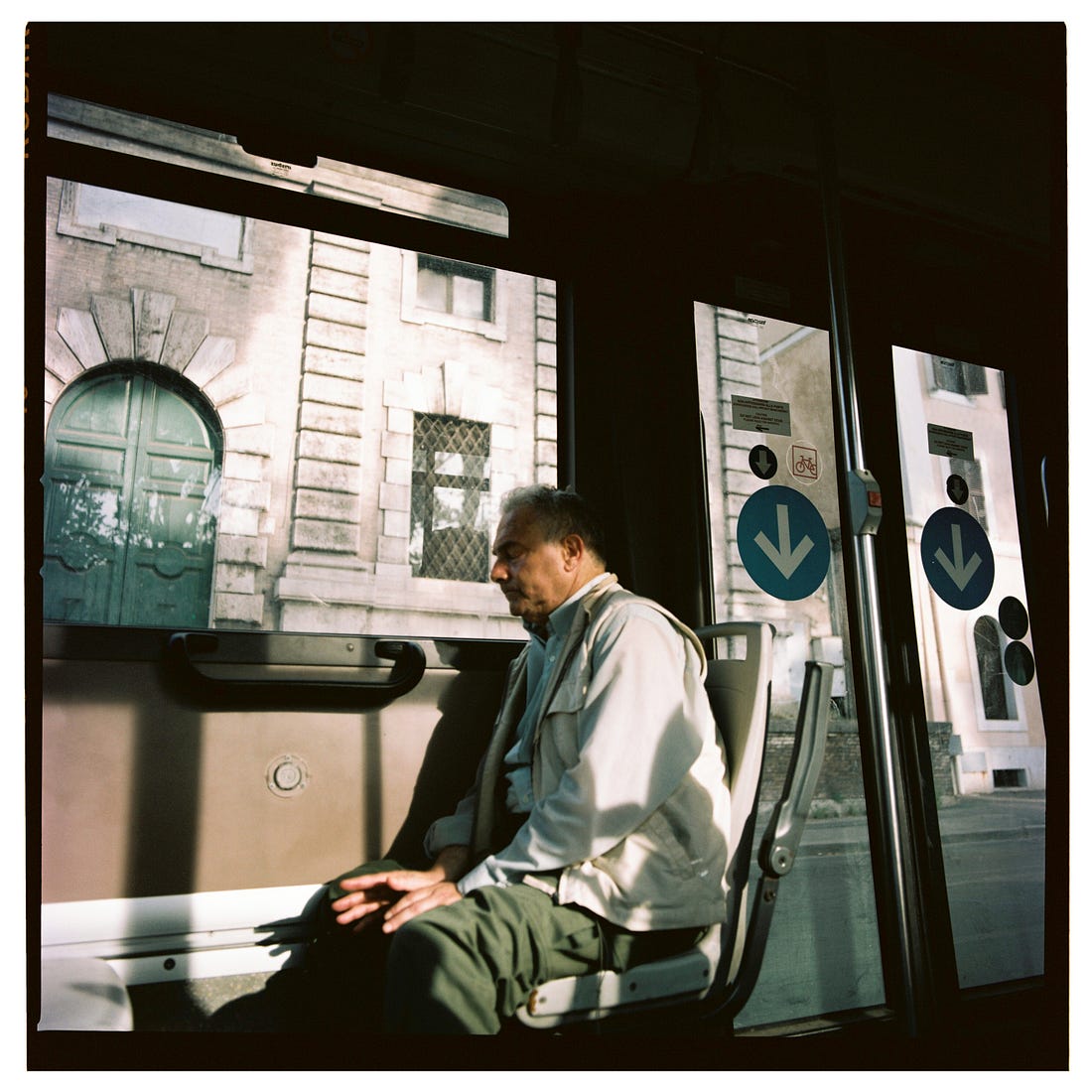
But back to Rauschenberg's note, because there's another line I keep coming back to. He describes photography as: “a kind of archaeology in time only, forcing one to see whatever the light or the darkness touches, and care.” Archaeology is usually about digging into the past, about uncovering things that have already happened. But Rauschenberg talks about photography as an archaeology of the present, excavating the moment as it happens. In other words: When we take a photo, the moment we documented is already past and gone. This is the tension that makes photography so addictive to me. Every moment is unrepeatable. The light on that building will never look exactly like that again. The expression on that person’s face exists for a moment and then it’s over. When you’re tuned into that it creates an urgency that’s almost physical. I love that feeling.
Rauschenberg wrote this note forty-four years ago today. He was describing a practice he’d been engaged in for over thirty years at that point. But when I read it, it feels like it could have been written yesterday by any one of us trying to figure out why we keep picking up a camera. It goes to show that the fundamental questions of photography don’t change. The platforms and the conversation and the gear all change. But the question of why you make pictures, what you’re looking for, what you’re hiding from, what you’re trying to say? All of those stay the same.
If you’re someone who started taking photos because you were curious about the world but unsure how to engage with it, you’re in good company. Welcome to the club. Rauschenberg was right there with us, trying to explain it to himself on a sheet of lined paper. The camera is a social shield. And then it becomes a permission slip. And then, if you stick with it long enough, it becomes something else entirely. It becomes a way of caring about and understanding the world. That’s what our workshop is about, and Shane and I are so excited to welcome you to it in May. Scroll down for more info. If this letter did something for you, I’d really appreciate it if you shared it with a friend. ❤️ See you next week! Possibly some preview images of a portrait shoot I have this week with someone whose work I admire very much. Talk soon, Wesley NEW: Voice & Vision Workshop with Shane Taylor, London, May 23 & 24Shane of Framelines and I are co-hosting a one-day workshop at The Photographer’s Gallery. It’s for photographers who care about their work and could use help with the questions:
Whether you have a body of work but no clear through-line, or you’ve been putting off a long-term project, or you want honest feedback on your photographic direction, this day is built for that. It doesn’t matter where you are in your practice or how technically adept you are. What matters is that you care about photography and want to do something meaningful with it. Morning teaching sessions, communal lunch, afternoon shooting on the streets together. 15 people max per day. €275/£250. Two dates to choose from. For all the details and to book your spot: developworkshops.com Process Photo Club members: You get €75 off this workshop (27% off). Email me at hello@wesley.co and I'll send you a discounted booking link. To become a member, check out the PPC perks page or click below. This Week’s Camera + ToolsCamera: Hasselblad 500cm, Pentax Espio Mini, Leica M6 Process is supported by MPB.com, my go-to for buying, selling, or trading used gear. Everything comes with a 12-month warranty.
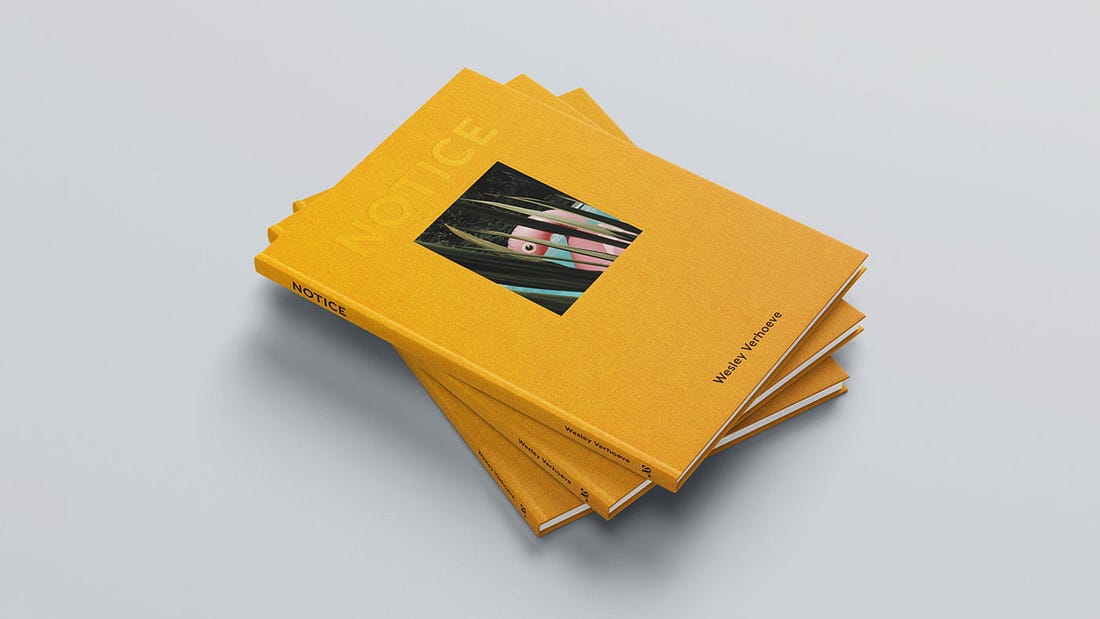
Lab: All my film is developed with love by Carmencita Film Lab. Use code “PROCESS“ for a free upgrade. A Few Ways To Support This WorkIf Process adds something to your week, here's how to help keep it going: grab a copy of my photo book NOTICE Journal Volume One or the Process Workbook series. Every physical order includes a limited edition Creatives In/AMS preview zine, a surprise, and stickers.
Process Photo Club members get 40% off NOTICE and 100% off all four Workbooks. Not a member yet? Join here. 🗃️ Browse the Process Archive. You're currently a free subscriber to Process ☼ On Photography, by Wesley Verhoeve. For the full experience, upgrade your subscription.
|
235 ☼ The Camera as a Social Shield: Robert Rauschenberg on Why We Photograph





Assinar:
Postar comentários (Atom)
0 comentários:
Postar um comentário