Hello, The last few newsletters have focused on the Middle East conflict and its global effects on energy production and consumption. Today's newsletter turns to the social and governance aspects as Iran targets Gulf energy facilities after Israel struck its key gas field. International law forbids states from attacking civilian energy infrastructure. Firstly, we will take a look at the diplomatic note sent by Gulf states urging the United Nations Human Rights Council in Geneva to act over Iran's strikes on civilians and energy infrastructure across the Middle East. Then we'll take a look at the workers on the ground such as delivery drivers in Lebanon who are navigating various risks as Israel expands its strikes into Beirut. In Tehran, rescue workers dig bodies from the rubble, and the city's streets feel emptier days before the Persian new year and Muslim Eid al-Fitr holidays. Before we turn to the conflict, here are a few tech and governance stories that are also on my radar: |
|
|
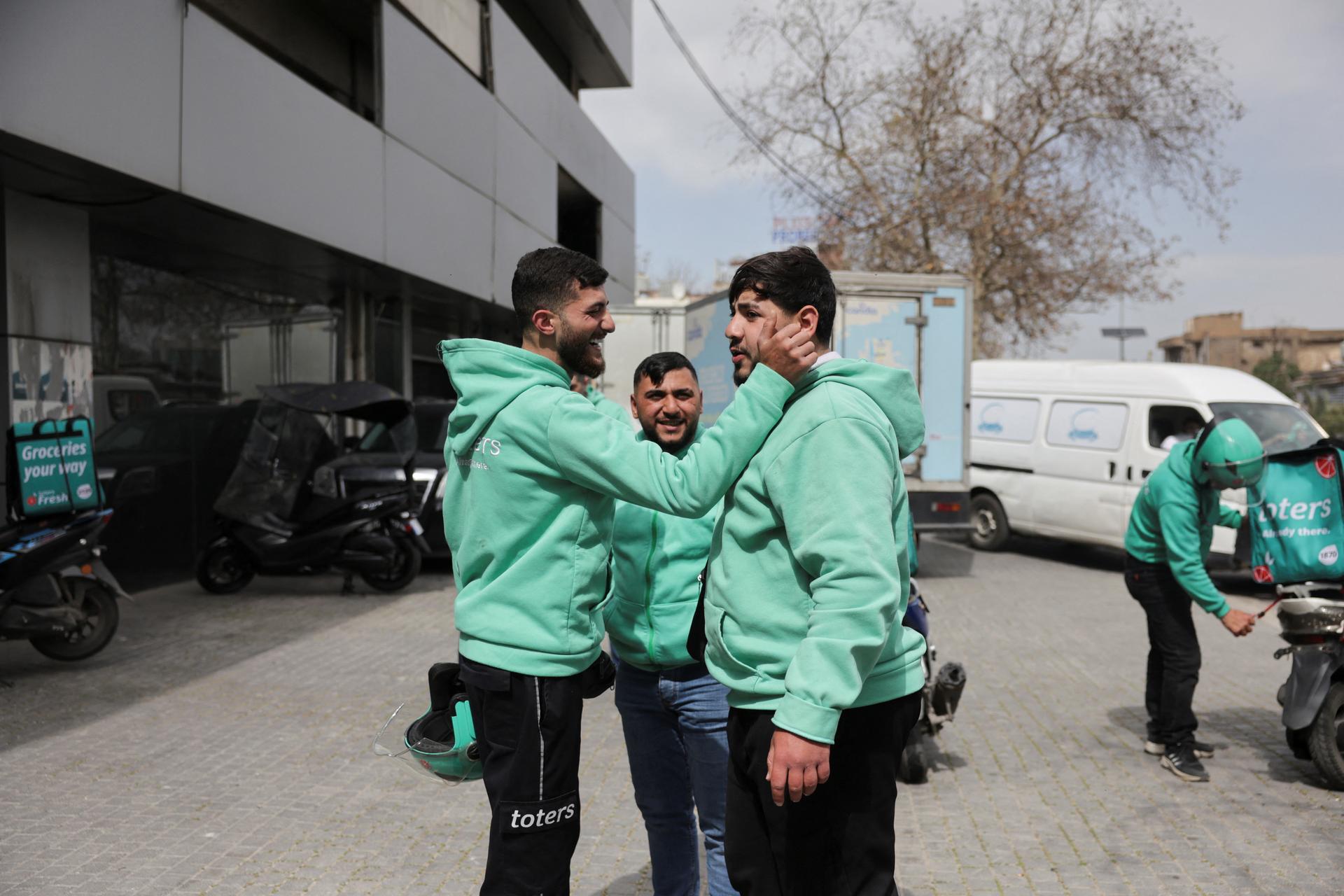
Hamza Hareb, who works as a delivery driver for the Toters delivery app, laughs as he stands outside a delivery center with other Toters drivers in Beirut, Lebanon. REUTERS/Emilie Madi |
Severe human rights implications |
This week, Gulf states have requested an urgent debate at the U.N. Human Rights Council over Iran's strikes on civilians and energy infrastructure across the Middle East, according to documents seen by Reuters. The diplomatic note describes the ballistic missile and drone strikes on Bahrain, Jordan, Kuwait, Oman, Qatar, Saudi Arabia and the United Arab Emirates as a "situation of serious concern for international peace and security," with severe human rights implications. The expanding U.S.-Israeli war on Iran, which has entered its third week, sparked large-scale Iranian drone and missile strikes on energy and civilian infrastructure in Gulf countries in retaliation against Israeli attacks on its gas facilities. Iran's closure of the Strait of Hormuz and attacks on energy facilities across the region has spiked energy prices and fuelled fears of a rise in inflation globally. The draft resolution proposed by the Gulf states strongly condemns and calls for Iran to immediately stop strikes on civilian infrastructure and commercial vessels in the Strait of Hormuz, and also seeks reparations for civilian, infrastructure and environmental damage. |
|
|
In Lebanon, residents of the capital are staying home in fear after Israel expanded its air campaign to new parts of Beirut in recent days, hitting apartments and downing entire buildings in strikes it says are targeting Hezbollah. Sheltering at home has left some turning to delivery apps for dinner, and drivers are navigating a maze of risks to bring meals to the door. "Of course, we are afraid. That is ever-present," said Hamza Hareb, one of 3,000 couriers in Beirut who work for Toters, among Lebanon's most popular delivery apps. Like most gig workers, Toters drivers are paid per delivery. For many, the job is an economic lifeline in the heavily indebted country, which is suffering from years of economic crisis and political instability following a financial collapse in 2019. "You don't know when the strikes will come, so we have adapted to everything," Hareb said. Israel sometimes issues evacuation warnings before striking, telling residents to leave the area. But three of Wednesday's four strikes on Beirut came without notice. The United Nations human rights office said on Tuesday some of the strikes may amount to war crimes. "Right now they're increasingly striking without warning, and of course this is instilling a sense of fear among us (since) we spend most of our time out in the street," Hareb told Reuters. Israeli strikes have killed nearly 1,000 people and displaced another million across Lebanon, according to Lebanese authorities. "Whether you are displaced or not displaced, you need to earn money," Mahmoud al-Benne, 34, said. "You have responsibilities. We are in a state of war, but at the end of the day we want to work." The strikes come during the holy month of Ramadan, and families forced to evacuate their homes due to the air strikes are still trying to observe customs. In Iran, where officials say 1,300 people have been killed in U.S. and Israeli airstrikes, families are burying their dead and rescue workers are braving the risk of secondary attacks to pull bodies from the rubble. Click here for a story on how the effects of war in Iran have hit the usually teeming alleys of Tehran's grand bazaar, shutting many of the shops and driving up prices for Iranians already suffering from years of sanctions that have throttled the economy.
|
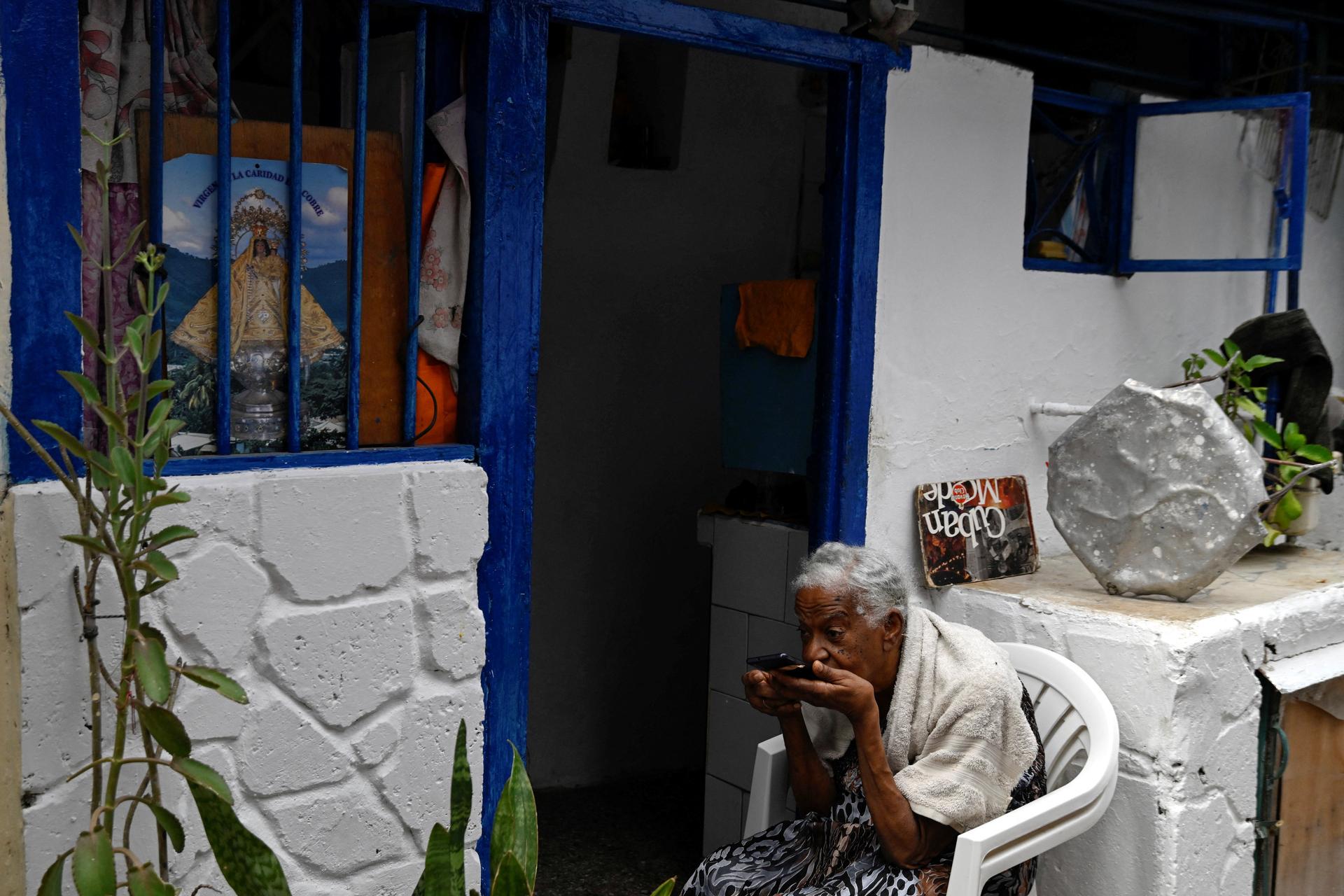
Cristina Brown, 80, chats via WhatsApp with her friends after Cuba's President Miguel Diaz-Canel said Cuba has opened talks with the US. Havana, Cuba. REUTERS/Norlys Perez |
- Cuba energy and governance concerns: Reuters reporters spoke to Cuban residents including Marianela Alvarez, a 50-year-old state worker, who was taken aback by Trump's suggestion on Monday that he could "do anything I want with Cuba." Washington has imposed an oil blockade on the Caribbean island after having captured Venezuelan President Nicolas Maduro, Havana's greatest benefactor. "I wish Trump would understand, he should leave us in peace," Alvarez said. Click here for the full Reuters report.
- EU energy: European Union leaders will attempt to find quick fixes to curb the jump in energy prices triggered by the U.S.-Israeli war on Iran when they meet for a summit on Thursday. European gas prices have increased by more than 60% since the conflict began on February 28. None of the options are expected to dramatically cut prices while the Strait of Hormuz effectively remains shut.
- EU jet fuel: In keeping with Europe's energy concerns, European airline chiefs called for the postponement of "broken" parts of the EU's green agenda on Thursday, warning of higher fares in the event of prolonged conflict in the Middle East. The industry's A4E lobbying group urged regulators to roll back mandates for the use of synthetic sustainable jet fuel (eSAF) starting in 2030, citing a lack of available supply and prohibitively high costs, confirming an earlier Reuters report.
- Canada Carney climate plan: Canadian Prime Minister Mark Carney – a former U.N. climate envoy – will likely miss setting his climate plan's target implementation date, industry sources said. The move raises new doubts about Canada meeting its environmental goals in the face of higher oil prices and uncertain U.S. trade policy. Click here for the full Reuters story.
- India's renewables push: India's solar power capacity is expected to quadruple over the next decade, while wind energy capacity could triple, according to the National Generation Adequacy Plan released by the Central Electricity Authority. In its report, the CEA estimated that total non-fossil fuel capacity would reach 786 gigawatts by 2035-36, with solar energy comprising 65% of the clean power mix.
|
|
|
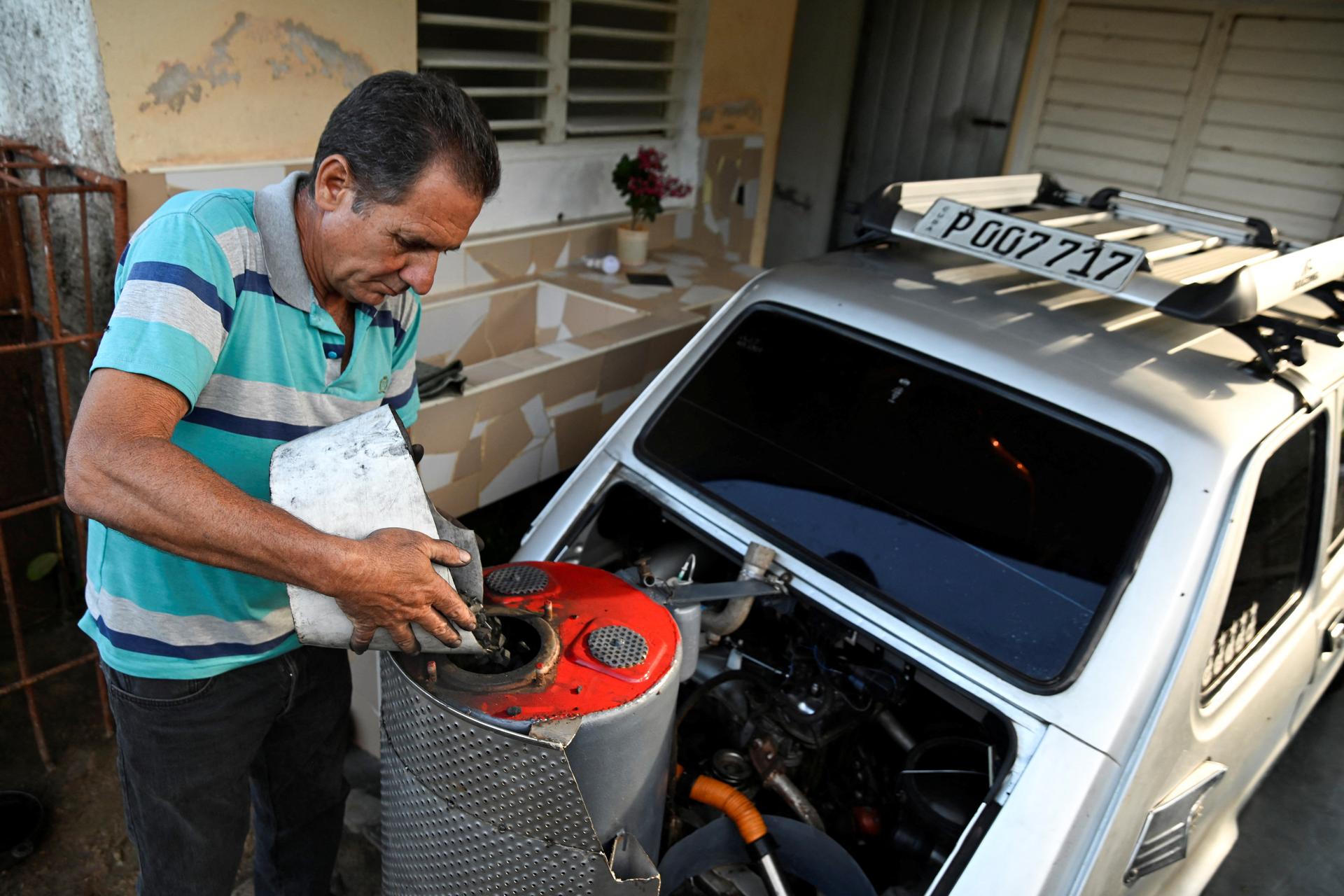
Cuban mechanic Juan Carlos Pino puts charcoal into the fuel tank, to fuel his modified 1980 Polish‑built Fiat Polski car, in Aguacate, Cuba REUTERS/Norlys Perez. |
In keeping with today's top Talking Points on Cuba, our spotlight shines on one resident that may have found a way to outsmart the U.S. oil blockade. Juan Carlos Pino, a Cuban mechanic, modified his 1980 Polish-built Fiat Polski to run on charcoal, a cheaper and more abundant fuel than gasoline since Washington cut off oil shipments to the Caribbean island in January. The charcoal burns inside a converted propane tank that is sealed shut with the lid of a transformer. A filter is made from a stainless-steel milk jug stuffed with old clothes. |
|
|
Sustainable Switch was edited by Alexandra Hudson. |
|
|
| | | | | Sustainable Switch is sent three times a week. Think your friend or colleague should know about us? Forward this newsletter to them. They can also sign up here. Want to stop receiving this email? Unsubscribe here. To manage which newsletters you're signed up for, click here. This email includes limited tracking for Reuters to understand whether you’ve engaged with its contents. For more information on how we process your personal information and your rights, please see our Privacy Statement. Terms & Conditions | | | | | © 2026 Thomson Reuters. All rights reserved.
3 Times Square, New York, NY 10036 | | | |
|
|
|






0 comentários:
Postar um comentário