When war breaks out, The Independent calls on its most authoritative voices. In the early hours of Saturday morning, as the United States and Israel launched coordinated attacks on key facilities across Iran, Oxford historian Peter Frankopan described it as the most consequential moment since 9/11.
Not since the fall of the Berlin Wall or the collapse of the Twin Towers has the world shifted so dramatically, he wrote: "What we have seen this weekend is something that has ramifications and implications that make this the most important two days in a quarter of a century."
After nearly 40 years of authoritarian rule, the assassination of Iran's supreme leader, Ayatollah Ali Khamenei – the theocratic tyrant responsible for the deaths of millions of his own people, the institutional oppression and degradation of Iranian women, and the sponsoring of terrorism across the free world – sparked scenes of jubilation far beyond Tehran.
But foreign policy expert Dr Burcu Ozcelik cautioned that while Trump's actions have put the Islamic Republic in mortal peril, leadership decapitation would not automatically translate into regime collapse: "Khamenei's death will almost certainly be folded into a martyrdom narrative that is central to the Islamic Republic's claim to 'resistance' against the West," she wrote.
Speaking of tyrants, Warren Getler, a Washington DC journalist and former senior editor at Foreign Affairs, concluded that Donald Trump's justification for the strikes has been neither consistent nor always truthful – and that he appears to be a man without a plan for Iran. "The weeks ahead will provide some clarity. What Trump and his administration must do is define an exit strategy. What does success look like? Will the president, as seems to be the case, turn to the Kurds of Syria and Iraq for an on-the-ground liberation force inside Iran?"
And what of the human cost? Tehran's reactionary drone attacks on neighbouring states lit up the Middle East and wiped the sunny smiles from the faces of British expats who had made Dubai their home. "The go-getting young professionals and non-doms who headed to the Gulf have found themselves swapping tax shelters for bomb shelters," wrote Chris Blackhurst.
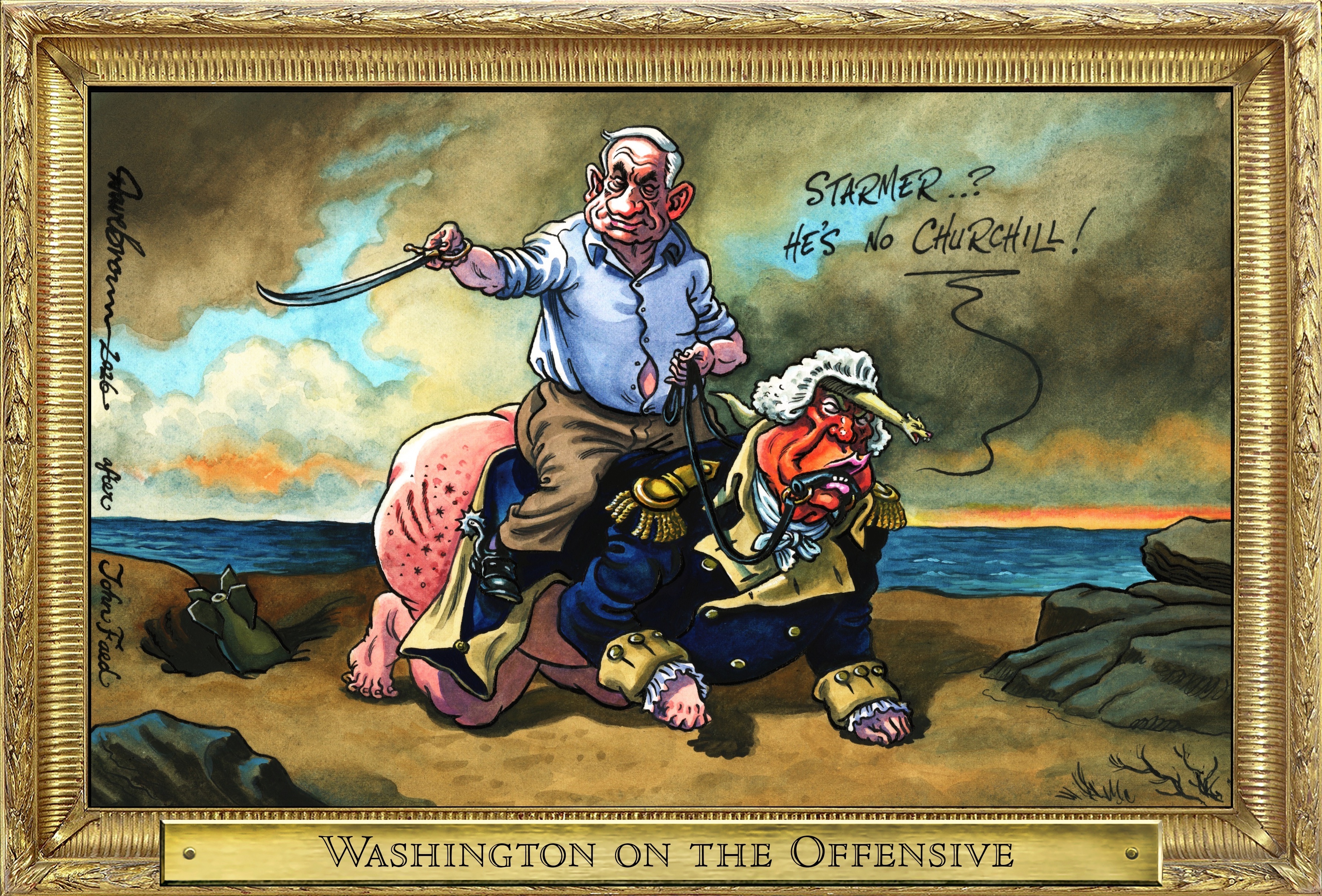
Former Conservative foreign office minister Baroness Warsi was visiting family in Doha when war broke out. As she hunkered down, telling her grandchildren that the "thud and boom of missiles being intercepted overhead" was just "bad weather", she was cheered by Prime Minister Keir Starmer holding firm in the face of belligerents calling for his support in their military adventures: "Yet those MPs, including my colleagues on the Conservative benches, who seem gung-ho about committing us to yet another illegal war, one with no clear strategic objective or endgame, would be well advised to re-learn the meaning of national interest."
As events spiralled, Sean O'Grady argued that Trump's Operation Epic Fury may soon be remembered instead as an epic failure: "With America's unwise excursion into Iran now threatening to engulf the wider Middle East, nothing can spare the president from the worst decision he has ever made."
This is a mere taster of the encyclopaedic coverage of the war brought to you this week by The Independent. For more up-to-the-minute comment and analysis – and much more besides – it is worth bookmarking the Voices homepage.
Until next week.















0 comentários:
Postar um comentário