Hello! The past few newsletters have focused on the Iran war and its effects on global energy markets, specifically in Europe and Asia. Today, we look at how the conflict has hit Africa, where various countries face fuel shortages triggered by the disruption to oil and liquefied natural gas shipments through the Strait of Hormuz, a key route for about one-fifth of global energy supplies. Before we do, here are some top social, governance and tech-related stories on my radar: |
|
|
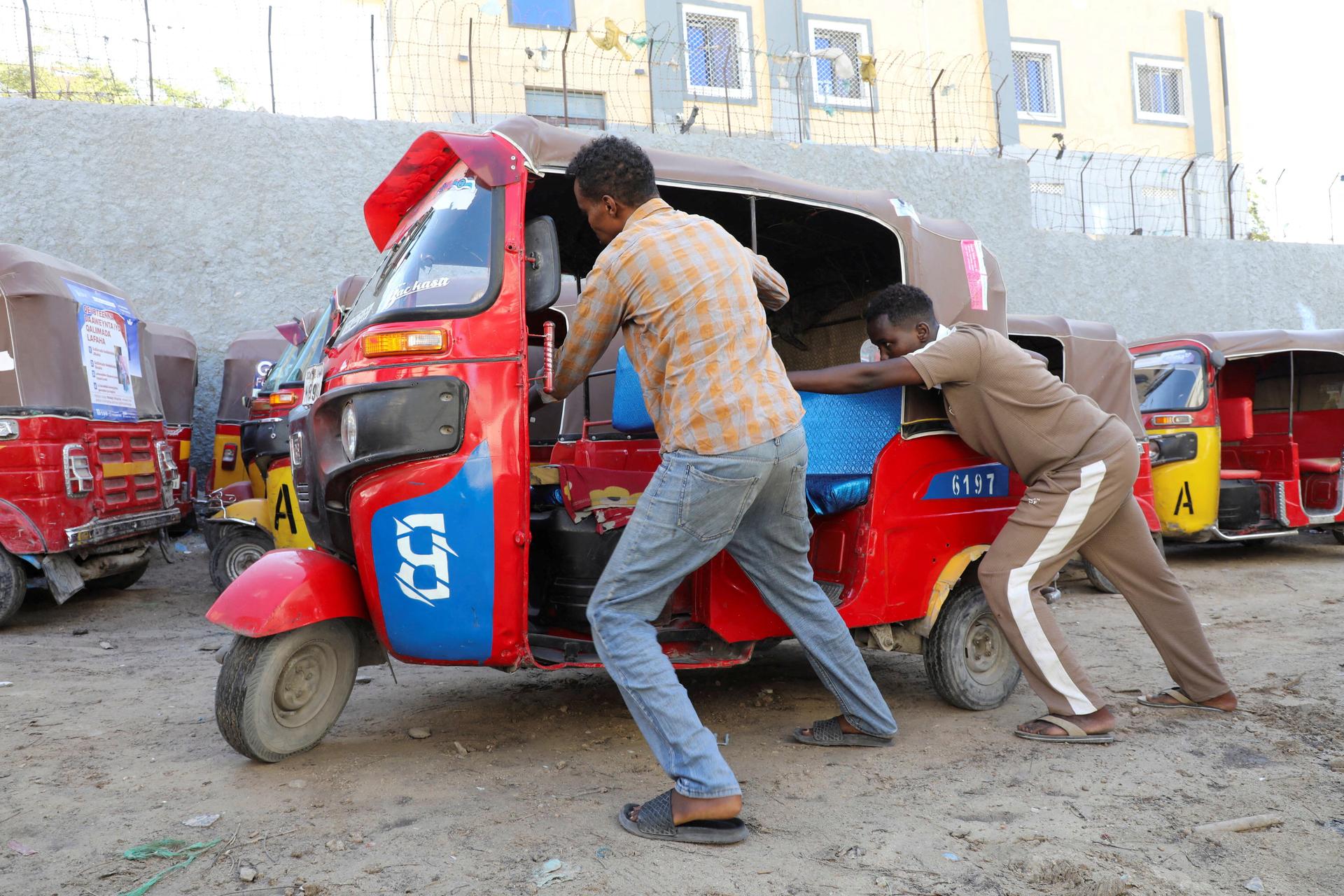
Operators of tuk tuk taxis push one to a parking yard following high fuel prices, amid the U.S.-Israeli conflict with Iran, in Mogadishu, Somalia. REUTERS/Feisal Omar |
Energy rationing and abandoned tuk-tuks |
We'll travel today from East to West Africa, wrapping up with how energy market disruption is affecting South Africa and a few more stories on how the conflict is still affecting countries in Asia. Let's start with Mauritius, where the country's energy minister announced energy-saving measures. Mauritius, which relies on imported fossil fuels, has seen its heavy fuel oil supply run low after a shipment expected on March 21 failed to arrive, leaving just 15-20 days of stock, Energy Minister Patrick Assirvaden said on Monday. In Kenya, Energy Minister Opiyo Wandayi said on Wednesday the country had sufficient stock and urged consumers not to panic buy or hoard. The announcement came after independent fuel retailers warned that about 20% of outlets were short on supplies after the government kept pump prices steady despite surging global costs. Uganda is also facing dwindling fuel stocks. Energy Minister Ruth Nankabirwa said in a video on X that it has diesel and petrol stocks sufficient for 21 and 26 days, respectively, and plans to explore alternative supply channels. Meanwhile, South Sudan's capital, Juba, faces electricity rationing, while drivers of tuk‑tuk taxis in Somalia's capital are abandoning their livelihoods as fuel prices surge as passengers have dropped away due to rising fares. |
|
| In West Africa, Nigeria's Aliko Dangote, Africa's richest man, warned after meeting President Bola Tinubu that prolonged disruption could force work-from-home measures similar to during the COVID pandemic. In South Africa, a spike in purchases ahead of an expected steep April fuel-price increase, rather than supply constraints, is causing isolated diesel stock-outs at filling stations and among farmers, Fuels Industry Association head Avhapfani Tshifularo said. There's also another unforeseen consequence for South Africa. Ship-refuelling companies along Africa's coast are seeing a surge in business as more vessels divert around the Cape of Good Hope. Click here for the full story. Beyond Africa, Asia has still been reeling from the impact of the conflict. Click here for a story on how it has impacted Asia's supply chains for goods from beer to cosmetics. |
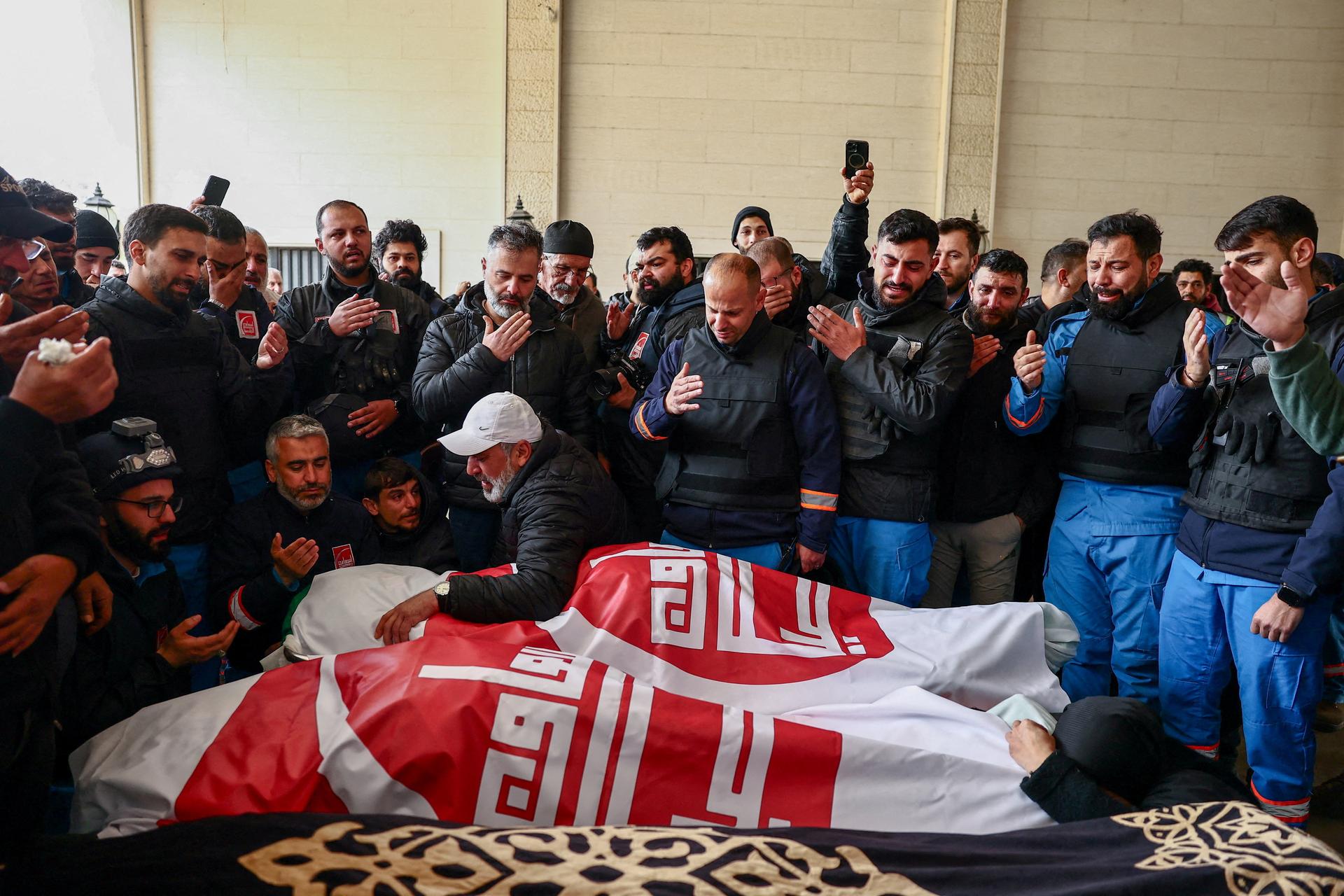
People mourn over the bodies of two paramedics killed by an Israeli strike, amid escalating hostilities between Israel and Hezbollah in Nabatieh, Lebanon. REUTERS/Yara Nardi |
- Lebanon paramedics: Lebanon's health ministry says at least 42 paramedics have been killed by Israeli strikes since March 2. "A paramedic who doesn't even have a knife, going to save someone else - they strike him and kill him. This has happened in more than one strike, more than one place," said Hassan Jaber, Ali's father and a local official. Click here for a story on how rescuers are dealing with grieving their co-workers.
- Cuba aid: This week, Cuba received a shipment of humanitarian aid from the Nuestra America Convoy, an international effort organized by global activists, seeking to circumvent U.S. sanctions that severely restrict shipments of fuel and other goods to the island. The convoy delivered 14 metric tons of food, medicine, solar panels and bicycles to Cuban authorities.
- Cuban doctor program: Sticking with Cuba, click here for a story on how Mexico will continue using the Cuba medical mission program after a handful of nearby nations pulled out of such arrangements due to pressure from the United States. The program is one of the largest single sources of foreign income for the Cuban government.
- Rural U.S. healthcare: In keeping with the topic of health, click here to check out this graphics-led explainer on why hospitals in rural areas in the U.S. are closing. Nearly 90% of the land in the U.S. is rural and about one in five people, or some 60 million, live throughout it according to the U.S. Census. Why does it matter? Well, data also shows that rural residents are older, have worse health outcomes and less health care access and fewer doctors than their urban counterparts.
- LaGuardia plane crash: The National Transportation Safety Board has begun an investigation into the causes of a collision between an Air Canada Express plane and a fire truck at LaGuardia Airport in New York that killed two pilots and left 39 of the 76 passengers and crew hospitalized. Click here for a legal explainer looking at the potential liability of federal and local authorities to the pilots' families, passengers and surviving crew.
|
|
|
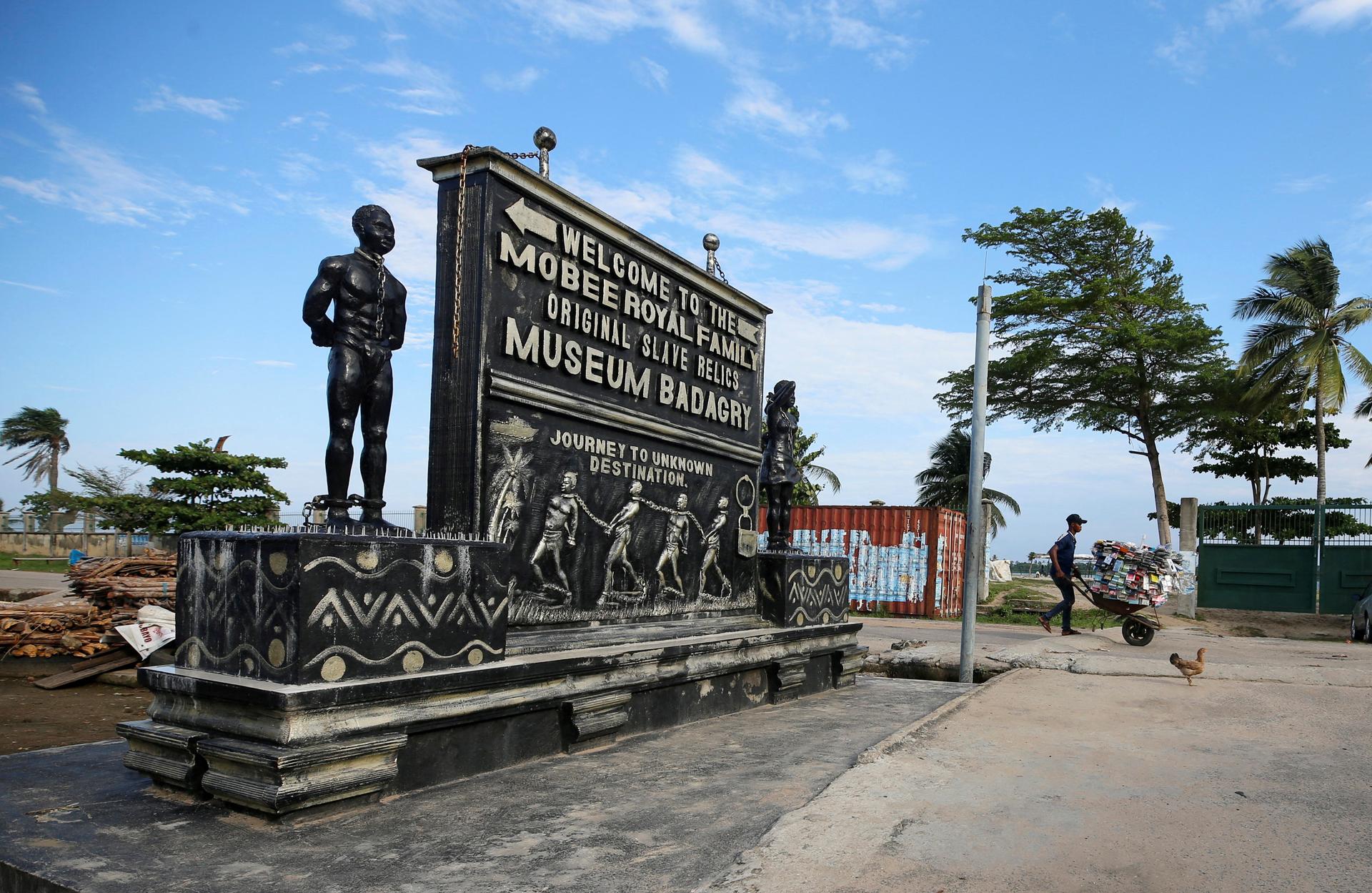
A bas-relief of shackled enslaved people embedded on a plaque advertising the Mobee Royal Family Original Slave Relics Museum in Badagry, Nigeria. REUTERS/Afolabi Sotund |
Social justice and cultural preservation take today's spotlight as Ghanaian President John Dramani Mahama urged the U.S. administration to stop what he described as normalizing the erasure of Black history, warning such policies could have ripple effects elsewhere. Mahama is in New York as he proposed a resolution at the U.N. General Assembly - which was adopted - to recognize transatlantic slavery as the "gravest crime in the history of humankind" and called for reparations. For context, when President Donald Trump returned to power, he targeted U.S. cultural and historical institutions - from museums to monuments to national parks - to remove what he calls "anti-American" ideology. |
|
|
Sustainable Switch was edited by Alexander Smith |
|
|
| | | | | Sustainable Switch is sent three times a week. Think your friend or colleague should know about us? Forward this newsletter to them. They can also sign up here. Want to stop receiving this email? Unsubscribe here. To manage which newsletters you're signed up for, click here. This email includes limited tracking for Reuters to understand whether you’ve engaged with its contents. For more information on how we process your personal information and your rights, please see our Privacy Statement. Terms & Conditions | | | | | © 2026 Thomson Reuters. All rights reserved.
3 Times Square, New York, NY 10036 | | | |
|
|
|






0 comentários:
Postar um comentário