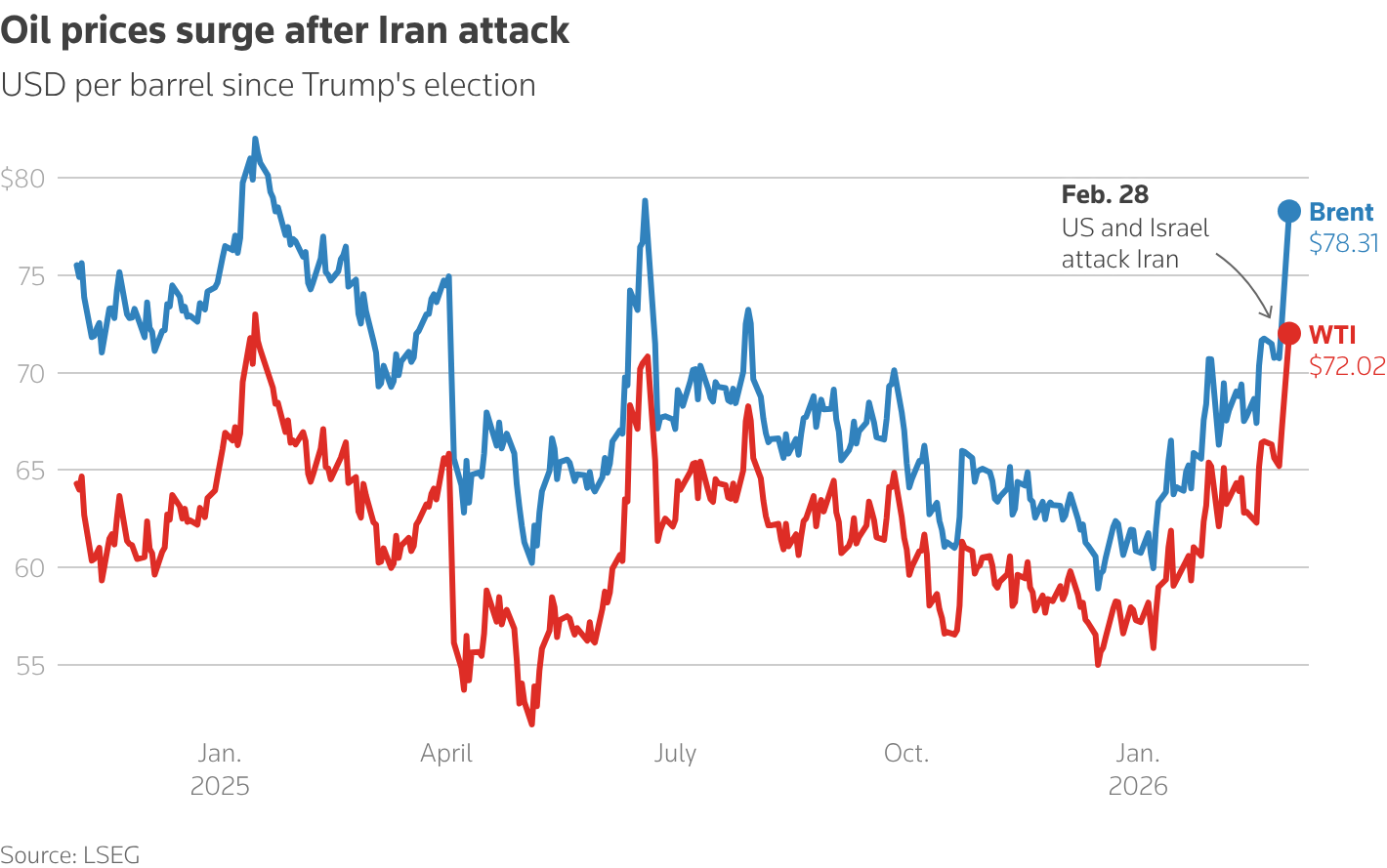
Global Brent crude prices initially topped $80 per barrel this morning to hit their highest level since January 2025, but have since fallen back to about $79 - still well shy of the $100 levels now by many in the oil market as a possible destination if the conflict lasts several weeks.
U.S. President Trump has indicated the campaign could last four weeks - potentially long enough to ensure that the effective closure of the Strait of Hormuz waterway causes significant stress to world supplies.
A modest OPEC+ output boost in April will likely do little to ease supply issues, not least because producers in the region will struggle to export while navigation in the Gulf is disrupted.
Significantly for inflation watchers and interest rate markets, crude prices are now significantly positive year-on-year for the first time in more than a year.
On top of another on Friday, the prospect of creeping energy prices further clouds the Federal Reserve's horizon, with markets no longer fully pricing in another rate cut until September.
Meantime, the picture for U.S. Treasuries is extremely complicated.
They had rallied significantly late last week on a mix of rumbling credit concerns, AI-related stock market hits and a safety bid on the risk of an Iran conflict. But the inflation risks associated with the crude spike have seen 2-year yields bounce back from three-year lows - reversing all of Friday's drop.
The dollar is a big winner, as energy price concerns and worries about a wider regional conflict jolt the currencies of big energy importers Japan, China and Europe.
Stocks have fallen further, but not excessively - with U.S index futures, as well as Asia and Europe's benchmarks, all down between 1% and 2%.






0 comentários:
Postar um comentário