A look at the day ahead in European and global markets |
|
|
By Wayne Cole, Chief Correspondent, Treasury |
|
|
So, now we have a Middle East war, an Iran with long-range ballistic missiles, and a clock ticking down to a scary deadline - how very reality TV. No doubt some news channel will soon have a red timer ominously counting the seconds in the corner of their screen. Late Saturday, President Trump took to social media to announce Iran had 48 hours to open the Strait of Hormuz, or the U.S. would "obliterate" Iran's power plants. Trump set a Monday deadline of around 7:45 p.m. EDT (2345 GMT), thus ruining Tuesday morning for Asia. |
|
|
Trump threatens to hit Iran power plants |
Streaks of light illuminate the sky during an interception attempt amid the U.S.-Israeli conflict with Iran, as seen from Tel Aviv, Israel, March 23, 2026. REUTERS/Amir Cohen |
Apparently, the first target would be the largest, which happens to be a nuclear plant. That would usually be prohibited under international law and potentially a major environmental disaster. Iran responded by threatening to close the Strait of Hormuz "completely" and to target energy and water infrastructure in neighbouring countries. Strikes on desalination plants would be particularly devastating. Brent swung higher, then lower and is now up 0.5% in very choppy trade. That could be because the U.S. has allowed the sale of more Iranian and Russian oil already on tankers, meeting immediate demand. However, the growing risk of longer-term shortages has lifted oil futures down the curve. September Brent, for instance, is up $1 at $92.90 suggesting high prices are here to stay. The story is similar for LNG, where reports suggest that there are seven tankers at sea with cargoes, but once those are delivered there will be no new supply from Qatar. |
Graphics are produced by Reuters |
|
|
Fuel shortages stoke inflation fears |
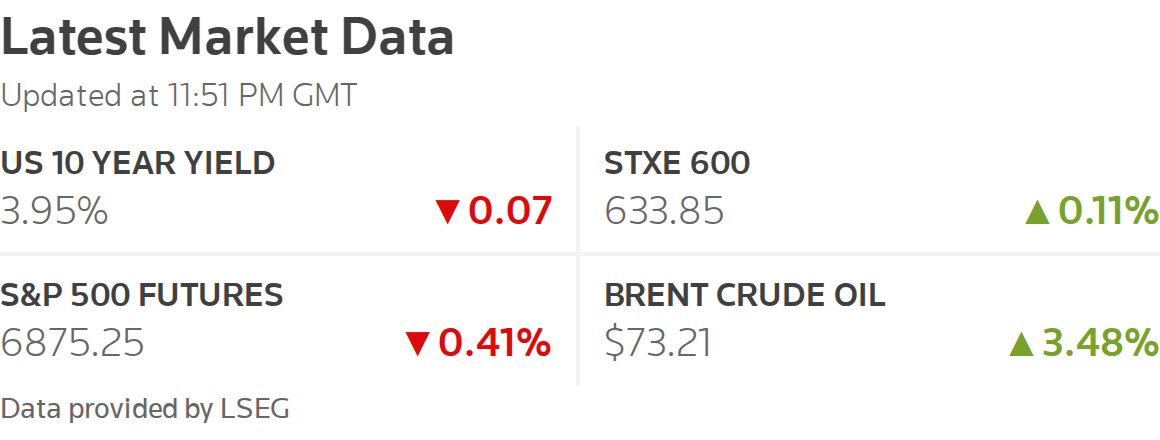
There are already global shortages of jet fuel, bunker fuel for ships and fertiliser, promising to make travelling, shopping and eating all more expensive. International Energy Agency boss Fatih Birol is in Australia right now, warning the crisis is "very severe" and worse than the two oil shocks of the 1970s put together. The inflationary pulse is hammering bonds, with 10-year Treasury yields touching eight-month highs of 4.4150%, in turn adding to borrowing costs for developed nations already struggling with budget deficits and debt. Higher yields are also stretching equity valuations, while rising petrol and diesel prices will act as a brake on consumer demand and corporate profits. Investors have also aggressively repriced for central bank tightening, drastically so in some cases. A Fed rate cut is gone for this year, while the ECB is seen hiking 75 basis points and the BoE 85 basis points. This has not gone down well in equity land, where the Nikkei has shed more than 3% and South Korea almost 6%. European stock futures are off 1.1% to 1.3%, with S&P 500 futures down 0.4% or so. |
|
|
Key developments that could influence markets on Tuesday: |
- Appearances by ECB board member Piero Cipollone, ECB chief economist Philip Lane
- EU March consumer confidence
- US January construction spending
|
|
|
Opinions expressed are those of the author. They do not reflect the views of Reuters News, which, under the Trust Principles, is committed to integrity, independence, and freedom from bias. |
|
|
| | | | | Morning Bid is sent every weekday morning. Think your friend or colleague should know about us? Forward this newsletter to them. They can also sign up here. Want to stop receiving this email? Unsubscribe here. To manage which newsletters you're signed up for, click here. This email includes limited tracking for Reuters to understand whether you’ve engaged with its contents. For more information on how we process your personal information and your rights, please see our Privacy Statement. Terms & Conditions | | | | | © 2026 Thomson Reuters. All rights reserved.
3 Times Square, New York, NY 10036 | | | |
|
|
|








0 comentários:
Postar um comentário