A newsletter by Reuters and Westlaw |
|
|
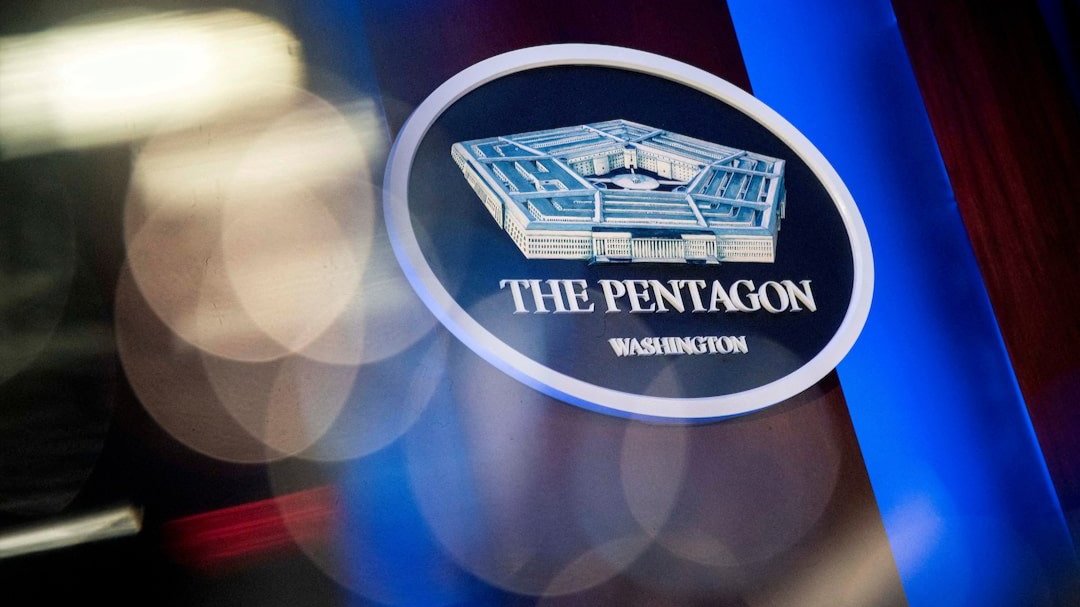
The Pentagon logo is seen behind the podium in the briefing room at the Pentagon in Arlington, Virginia, U.S., January 8, 2020. REUTERS/Al Drago/File Photo |
|
|
- SCOTUS: The U.S. Supreme Court will hear two oral arguments today. The first will deal with the question of whether a crime's "contemplated effects" can expand venue beyond where the offense was committed. In the second, the justices will weigh the ability of federal courts to confirm arbitration awards. The court will also issue orders in pending appeals.
- Immigration: The 9th Circuit will hear the government's appeal of a lower court order that granted nationwide class relief to immigrant detainees challenging their no-bond detention. Read that order here.
- Maduro: Ousted Venezuelan President Nicolás Maduro faces a deadline today to file an explanation as to why he proposes a prohibition on his sharing of government evidence with unapprehended co-defendants, including his son, in his U.S. drug trafficking case.
- Criminal: A California medical technology company ExThera Medical Corp is slated to appear before U.S. District Judge Leo Sorokin in Boston for its initial appearance in court after entering into a deferred prosecution agreement to resolve criminal charges that it concealed reports of complications and deaths involving cancer patients who traveled to Antigua to be treated with its blood filtration device.
|
Court calendars are subject to last-minute docket changes. |
|
|
- Prominent U.S. law firms urged a federal appeals court in Washington to uphold rulings that blocked President Trump's executive orders last year punishing them over their past legal work, diversity policies and political ties. Read more about the filings here
- A federal court has barred law firm Beasley Allen from representing plaintiffs in a consolidated group of over 67,000 lawsuits alleging that Johnson & Johnson's talc-based baby powder causes ovarian cancer, ruling that the firm improperly coordinated with a former J&J attorney on a proposal to settle the litigation. Read more here.
- The U.S. federal judiciary has withdrawn a measure that would have boosted disclosure of who finances friend-of-the-court briefs filed by advocacy groups to influence litigation months before it potentially would have gone into effect. Read more here.
|
|
|
That's by how much U.S. District Judge Yvonne Gonzalez Rogers in Oakland cut a class action lawyers' fee request in a Google privacy settlement. The judge awarded $21.8 million rather than the $128 million the lawyers had sought after ruling that the attorneys achieved only limited success. Read more here. |
|
|
"Like Captain Renault in Casablanca, the NCAA feigns surprise at conduct it has long known about and tacitly accepted."
|
—DraftKings in its filing, asserting that the NCAA cannot prohibit it from using "March Madness," "Final Four" and related terms, arguing these phrases have become ingrained in the cultural lexicon. U.S. District Judge Tanya Pratt sided with DraftKings, rejecting the NCAA's claim that using these marks during the NCAA basketball tournament would cause irreparable harm by falsely associating the organization with gambling. Read Pratt's order. |
|
|
- Contract: A divided 2nd Circuit struck down a $16.1 billion judgment against Argentina for seizing control of state-owned oil company YPF in 2012, a victory for Argentine President Javier Milei as he tries to stabilize the country's long-strained economy. Read the decision.
- Labor: U.S. District Judge Melissa DuBose in Providence, Rhode Island, threatened to hold the VA in contempt of court for terminating a union contract covering 320,000 of the agency's employees shortly after she had ordered that it be reinstated.
- Whistleblower: Eli Lilly asked the U.S. Supreme Court to overturn a part of a Civil War-era law after failing to defeat a $183.7 million judgment won by a whistleblowing lawyer and pharmacist who accused the drugmaker of defrauding Medicaid.
- IP: A U.S. Patent Office tribunal has ruled against Nobel Prize-winning scientists Jennifer Doudna and Emmanuelle Charpentier for a second time in their dispute with the Broad Institute, a joint venture of Harvard University and MIT, over patent rights to foundational CRISPR gene-editing technology. Read the ruling.
- Product liability: U.S. District Judge Andrea Wood in Chicago said Colgate-Palmolive must face two lawsuits claiming its packaging for mouth rinse misleads parents into believing children under 6 can use the products safely. Read the order.
|
|
|
Confidential witnesses are near-ubiquitous in securities fraud cases, relied on by plaintiffs' lawyers to bolster allegations of intentional wrongdoing by company leaders. But what happens when a witness recants? That question landed before a federal judge in Manhattan after a key confidential witness disavowed many statements attributed to him in a class action complaint targeting European semiconductor giant STMicroelectronics. Jenna Greene has more in On the Case. |
|
|
Mouledoux, Bland Legrand & Brackett's Alan Brackett and Lejla Alibasic examine emerging legislative efforts to compensate for workplace trauma. Read today's Attorney Analysis. |
Additional writing by Shruthi Krishnamurthy. |
|
|
| | | | | The Daily Docket is sent 5 days a week. Think your friend or colleague should know about us? Forward this newsletter to them. They can also sign up here. Want to stop receiving this email? Unsubscribe here. To manage which newsletters you're signed up for, click here. This email includes limited tracking for Reuters to understand whether you’ve engaged with its contents. For more information on how we process your personal information and your rights, please see our Privacy Statement. Terms & Conditions | | | | | © 2026 Thomson Reuters. All rights reserved.
3 Times Square, New York, NY 10036 | | | |
|
|
|






0 comentários:
Postar um comentário