Stop being hoodwinked by the fitness industry – do this instead |
|
|
Hello! Hope you had a fun weekend. Now, let's get to it. Fear is a powerful motivator. Unfortunately, some fitness folks have cottoned on and now use it to drive people to their website, social media pages, or services. "STOP doing this if you want a flat tummy." "Eating this ONE FOOD is giving you cellulite." Sound familiar? This week's newsletter headline is a tongue-in-cheek nod to this approach. On this topic, a Well Enough reader recently told me it was hard to find helpful health information amid a quagmire of conflicting advice online. This reminded me of a handy tip for spotting misinformation, shared with me by Everything Fat Loss author Ben Carpenter: "The biggest red flag for me is one person making it sound like the thing they are telling you is revolutionary. But in health and fitness, the things that we know work aren't revolutionary." In this week's newsletter, I'll try to highlight the non-revolutionary acts that genuinely benefit your health, including: |
A couple of years ago I happened upon two 1950s exercise booklets produced by the Royal Canadian Air Force – the female-focused XBX plan and male-oriented 5BX plan. I flicked through, expecting to find a series of antiquated exercises and messages. But though the booklet isn't an easy read, filled with charts and figures, the rationale behind most of the advice remains watertight – and, dare I say it, better than many modern equivalents. "Live to be fit and be fit to live," the XBX plan states. It encourages daily movement through 12-minute bodyweight workouts, prescribes progressive exercises that start gently then gradually ramp up in line with your improving fitness levels, and it works your body through all three planes of motion to maintain mobility. There's very little not to like. This also happens to be the workout Helen Mirren has used "off and on my whole life" because "it just very gently gets you fit". As strength coach Paddy James once told me, "success leaves clues," and Mirren's 60-year career would send Scooby-Doo into overdrive. I also spoke to experienced sports physiotherapist Alex Morrell this week about all things back pain. His advice (the full interview will be available via this link next week) didn't involve miracle cures or transformative products – just strengthening the surrounding muscles, improving a few lifestyle factors and de-stressing through breathwork: 10 breaths through the nose; five seconds in, five seconds out. "People overlook the importance of nutrition, hydration, sleep and other lifestyle factors that you take for granted, but they underpin everything," Morrell tells me. "If you think about an athlete, coaches will try to optimise everything they do for better performance and recovery. Getting out of pain is a process of improving performance." If you can improve your sleep, diet and stress levels, even incrementally, Morrell says you will create a greater buffer against injury by building a more resilient body – inside and out. And finally this week, I dived into the topic of supplements: another area where people are often promised something just shy of a Dorian Gray portrait in their attic. Speaking to experts, the overriding message was that there isn't one universal vitamin, mineral or pill that will transform anyone's health for the better, as much as certain social media videos try to persuade you otherwise. There are some that are more widely applicable than others, such as omega-3 if you don't eat much oily fish, vitamin B12 for vegans and vitamin D for Brits – for weather-based reasons, I'm sure you can guess. But the supplements that actually benefit you will depend on your individual circumstances. For example, what you eat, your lifestyle and your ability to absorb certain nutrients. They should also be a last resort of sorts. Vassiliki Sinopoulou, a clinical dietitian and lecturer at the University of Lancashire, suggests looking at ways to improve your sleep patterns, manage your diet and stay calm before spending heavily on supplements – there's a theme here. Amie Leckie, a nutritional therapist with Heart Research UK, also prescribes a "food first approach" to hitting your daily nutritional quotas. If you are suffering symptoms of nutrient deficiency such as fatigue, she recommends a visit to the GP and a blood test for further insights. "Supplement companies are there to make money, so they're going to tell you their supplement is the best, but Mother Nature knows best," Leckie concludes. "I'm not anti-supplement – I use them daily. But what I use is based on tests and specific needs I know I have." To wrap up my ramblings: if something sounds too good to be true or is clearly designed to scare you, I would strongly recommend questioning it. For long-term results, try to make small, sustainable and positive changes to your consistent behaviours. And hey, if you have a spare 12 minutes, why not try training like Helen Mirren? Hope this was helpful! Harry |
| |
Your expensive muesli may be just as bad as sugary cereal |
|
|
I don't like the idea that there are good or bad foods. Rather, different foods serve different purposes, depending on their nutritional values. Nutrient-dense foods that nourish the body are to be eaten regularly, while calorically rich sweet treats should be consumed in moderation – we eat birthday cake occasionally to celebrate, not as a staple breakfast, for example. But some foods in the latter camp are masquerading as the former through tunnel-visioned health claims – a phenomenon known as "health haloing". Muesli is among the latest foods to have its healthy credentials called into question, our food and drink editor Hannah Twiggs writes. A Which? survey found that some brands deliver a decent breakfast, while others fall short, containing high amounts of sugar and saturated fat per serving. |
|
|
I tried Harry Styles' workout – I'm not surprised by his impressive marathon time |
Harry Styles hit the headlines this week after featuring on the front cover of Runner's World. This follows a couple of impressive marathon performances in his two-year break from music, including a sub-three-hour run in Berlin last year. This didn't come as a shock to me. I previously chatted to his former trainer, Thibo David, about Styles' exercise routine, then decided to take it for a spin myself – and it was no joke. From a rapid mile time to some gruelling HIIT circuits, this is how I got on. |
|
|
"Shrink it and pink it" has long been a prevalent marketing approach in the fitness industry and beyond. Brands take a popular product, reduce the size, pop it in pink packaging and aim to sell it to a female audience – often jacking up the price too. Creatine is the latest culprit. This supplement, linked to improved performance in the gym and better cognitive function, is available fairly inexpensively. But since its brain benefits hit the mainstream, packets have become more stylised and prices have climbed. In this piece, Jessica Furseth lays bare the fallacies of the creatine pink tax. |
|
|
| Step one: Go for a walk in the park or around your neighbourhood. Step two: Every time you pass a bench, perform a hard set of incline press-ups (hands on the bench, feet on the ground). It's been a busy week for me. On Monday, I found myself with 30 minutes to walk the dog and squeeze a workout in, so I decided to combine the two. I went for a brisk walk in my local park, and at every bench I stopped to do a hard set of incline press-ups. By the time I got home, I had racked up 3,000-plus steps, raised my heart rate and accrued plenty of press-up reps for a decent muscle-building stimulus – all without having to sacrifice either my walk or my workout. This workout is malleable: it doesn't have to be press-ups you do, and you don't have to do them at every park bench. Just pick an accessible exercise that targets something you want to work on, choose something you are likely to pass semi-regularly on your walk (eg a lamppost), then crack on. |
| |
|
|
Building strength sans-gym |
|
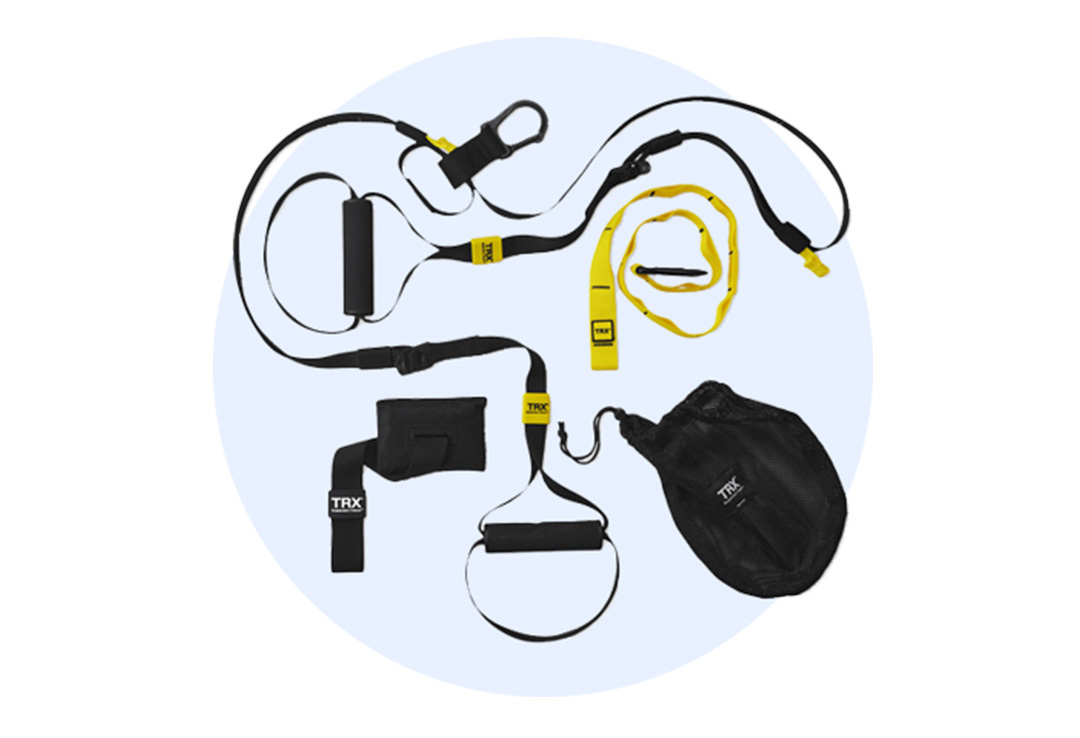
| The idea of going to the gym is both boring and intimidating to many. This is why I like to encourage people to introduce a little bit of adventure into their exercise routine. The TRX suspension trainer is brilliant for this (here's what happened when I swapped the gym for the TRX for a week). The original TRX was crafted from a jujitsu belt and parachute webbing by Navy SEAL Randy Hetrick as a way to stay fit while out on deployment. You can hang it from a tree, loop it over a football goal in the park or even jam it in a doorframe, and you have everything you need for a comprehensive full-body workout. The hanging straps and handles allow you to perform everything from press-ups to inverted rows to hamstring curls. This has led to some of my more picturesque workouts: overlooking Italian mountains, Cornish moorland and Californian beaches. Swapping between resistance training exercises and sand sprints also made for more fun, fitness-boosting sessions. Buying one grants you a year of access to the app if you are in need of workout inspiration, and there are classes on there to suit a range of fitness levels. You can also pick up cheaper alternatives, such as this one on Amazon, although I can personally vouch for the original as it's something I've tried, tested and trusted for several years now. |
|
|
| Today's exercise is simple – the plank. It might be seen as a tad old-fashioned in some circles, but I remain a big proponent. A favourite of Anne Hathaway's trainer Monique Eastwood, the plank strengthens your mid-body muscles, which are responsible for holding you upright and transferring power between your upper and lower body – abilities you'll want to maintain for life. Start in a forearm plank position: face down with your weight spread between your forearms and your toes. Your elbows should be under your shoulders, forearms extended forwards, eyes down, and your body should form a straight line from the back of your neck to your heels. Don't let your hips sag towards the floor. To avoid this, without moving your arms, think about pulling your elbows towards your feet. If this feels too difficult, lower your knees to the ground. If it feels easy, maintain a plank position while pointing at the ceiling with alternating hands, keeping your arms straight. Do this at least 10 times on each side. |
| |
|
| When humans face a goal that seems unassailable, many tend to dismiss it as a lost cause. For many people, eating your "five-a-day" of fruit and vegetables has this effect. That's why I prefer to break it down a bit. At every meal, I try to have two different portions. This provides a lower point of entry to healthy eating, and I find it pretty easy to do. For example, if I'm eating porridge, I might throw some berries or a banana in the mix; if I'm having pasta, I might add some frozen peas or sweetcorn to the pasta water. According to fat loss expert Ben Carpenter, this can lead to something called the "displacement effect" – appetite is finite, and the more nutritious food you eat, the less room there is for less nutritious items you may have been overeating previously. You're unlikely to gorge on fruit and veg either. As another coach once pointed out to me: "How often have you heard someone say, 'Oi, little Timmy, calm down on those apples, will you?'." |
| |
|
| People love having a purpose. That's where the classic "10,000 steps a day" prescription sometimes misses the mark – what are we walking for? I've used Google to overcome this. I'll search online for something that looks interesting in my area, then I'll walk there – chatting to people who live locally and collecting recommendations also works. This has led to umpteen fun conversations, myriad interesting discoveries and a fair few occasions where I've wound up a little bit lost too. But whatever the outcome, I inevitably return home having spent far more time on my feet than if I'd just set out for a directionless walk. Of course, I need to stress the importance of doing this safely – stick to safe areas during daylight hours. Bringing company along can also help on this front, while upping the enjoyment factor too. |
| |
|
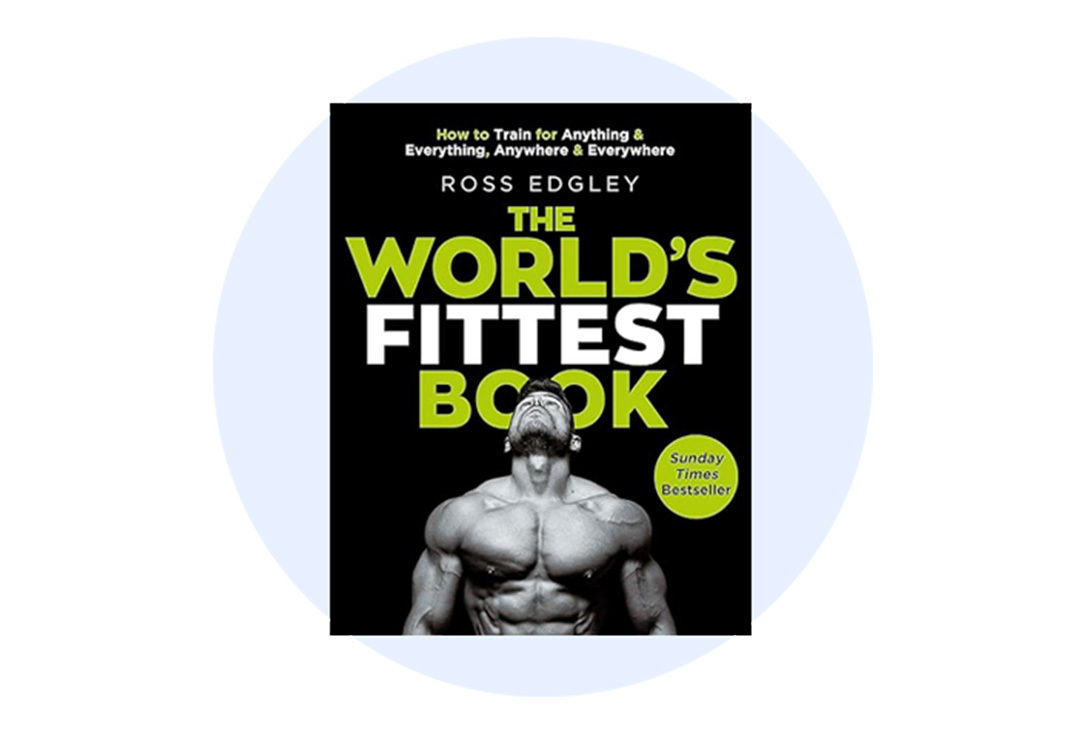
The World's Fittest Book by Ross Edgley |
Don't be put off by the brawny front cover – this is a brilliant fitness book for everyone. Ross Edgley travels the world with a pen, an ample supply of protein and an irrepressible smile, tackling bonkers adventures and using the subsequent stories to demonstrate the fundamental principles of sports science. The result is a string of entertaining tales: completing a triathlon with a 45kg tree strapped to his back; accidentally getting trollied on a potent brew provided by Ecuadorean mountain cowboys known as Chagra; climbing a rope until he could no longer fold toilet paper and needed assistance from a kindly stranger in a neighbouring Portaloo. But within these stories, Edgley also teaches you how to build a fit and functional body from the ground up, sharing golden nuggets of fitness wisdom that will serve you well for a lifetime. |
|
|
GP, TV doctor and endometriosis advocate Dr Raj Arora |
Endometriosis affects 1 in 10 women - yet it still takes an average of eight years to be diagnosed. In this episode of the Well Enough podcast, Emilie sits down with GP, TV doctor and endometriosis advocate Dr Raj Arora to explore the early warning signs of endometriosis, why painful and heavy periods should never be normalised, and how cultural stigma can delay women from seeking help.
The episode is available to listen to here, with the full video online here.
|
|
|
These were the most popular stories in last week's newsletter: |
|
|
Join the conversation and follow me |
|
|
Please do not reply directly to this email You are currently registered to receive the Well Enough newsletter from The Independent. To unsubscribe from the Well Enough newsletter from The Independent, or to manage your email preferences please click here. This e-mail was sent by Independent Digital News and Media Ltd, 14-18 Finsbury Square, London EC2A 1AH. Registered in England and Wales with company number 07320345
Read our privacy policy and cookie policy
|
|
|
|





0 comentários:
Postar um comentário