The medical marvel you already own – and how to get the most out of it |
|
|
Hello! Hope you had a lovely weekend? To start this week's newsletter, a question: "Would you buy something that promised to supercharge your fitness levels and preserve your health for decades to come?" A follow-up question: "What if I told you it's already in your possession?" That thing is muscle – the medical marvel you don't have to pay for. It holds us upright and helps us move. It powers every breath and regulates blood sugar levels to protect against chronic disease. It even secretes anti-inflammatory myokines to make your body a more enjoyable place to live. All it needs is a little TLC every now and then, and it will work like a Trojan to keep you in tip-top shape. This week's newsletter is all about giving your muscles that care – and the articles below will show you how: |
This week I spoke to Dr Michael LaMonte at the University of Buffalo, who recently led research into the link between muscular strength and mortality in more than 5,000 women aged 63 to 99 – a novelty in a field dominated by studies of younger, trained men. The results, in layman's terms: strong muscles equal a longer (and healthier) life. This relationship compounds as you grow older too. "When women go through menopause and lose their body's own secretion of oestrogen, the loss of skeletal muscle mass increases rapidly," says Dr LaMonte. "We typically see a change in their body composition, where they start losing muscle and holding fat in the belly area particularly. That's not healthy." Both men and women also tend to become less active as they grow older, which can contribute to sarcopenia – the age-related loss of strength and muscle. "And when we can no longer get out of our chair and move around, we are in trouble," Dr LaMonte says. You don't need to look or train like a bodybuilder to prevent this. But if you challenge the muscles across your body a couple of times a week, you can preserve – and even build – them. If you're looking for an easy place to start, our recent features have you covered: from the science-backed exercise method that helps counter the effects of ageing, to eight smart rules for strength training in midlife, and an expert-approved, four-move weekly workout designed to boost full-body strength, stabilise blood sugar and support bone density. The other thing Dr LaMonte highlighted was the intelligence of muscle. This tissue – and strength training in general – is often unfairly saddled with a meathead reputation: stupid, simple, brutish. I think that puts many people off. But you only have to look at the athletic scholars of ancient Greece, or the exercise habits of other great thinkers through history, to see the symbiosis between mind and muscle. Muscle is in constant conversation with other systems in the body, helping them run smoothly. It influences the heart, brain and other organs, lifting our mood and secreting signalling proteins called myokines with each contraction to combat inflammation. Healthy muscle does a lot of heavy lifting when it comes to creating a happy mind and body. Journalist and fervent surfer Bonnie Tsui, author of the best-selling book Why We Swim, is another person to recognise this: "Skeletal muscle is an endocrine tissue, responsible for making and releasing hormones which control the actions of other cells or organs in the body," she told me – further evidence that muscle is smart, and incredibly chatty too. Which is why it frustrates me when people try to hoodwink it. We're fixated on "hacks" and trends to improve our health, when muscle has reliably responded to the same stimulus for years: semi-regular strength training sessions that challenge the body without exceeding our capabilities. Finding that sweet spot, just outside our comfort zone, is where muscular development lies. The latest trend I've seen involves doing 50 jumps every morning, with viral videos promising endless benefits: "It wakes up your cardiovascular system… It improves lymphatic flow, which helps clear your body of waste… It elevates body temperature, which primes your metabolism…" Yet when I put this to Jack McNamara, a senior lecturer at the University of East London's School of Health, Sport and Bioscience, he told me the perks were "probably modest, but not zero". Anything that encourages people to move more is likely to be positive, and if this trend acts as a gateway to further exercise, it could be a force for good. But I worry that when it fails to deliver the riches promised, people will feel demoralised – and the effect will backfire. A common thread among these fitness crazes is that they package a single exercise as a magic pill, then inflate the benefits for a snappy social media hook. In reality, the benefits aren't exclusive to one movement – they're the result of regular, consistent activity. That's where the real magic lies. Hope this helps! Harry | |
|
Stop the damage of sitting all day |
|
| Sitting down is not inherently dangerous – quite the opposite, in fact. But staying in one position for hours at a time, as many of us do in front of our laptops or televisions, can lead to muscle tightness and dysfunction. Why? Because the body adapts to improve at the things we repeatedly ask it to do. If we sit for long periods with our hip flexors shortened and our shoulders rounded forwards, the body responds by tightening those muscles to make that position more efficient. In this piece, human movement specialist Ash Grossmann explains how to counteract the effects, and shares three simple dynamic stretches to help keep your body feeling limber. |
|
|
Food can improve your mood |
Fermentation might sound fancy, but it's something humans have been doing for centuries, says scientist and gut health specialist Tim Spector. He even recommends trying it at home as a cost-effective way to improve your diet – and, by extension, your health. It also doubles as a simple preservation method and waste-reduction tool: salt plus cabbage equals sauerkraut for months to come. In this feature, food and drink editor Hannah Twiggs explores Spector's advice on using food to support both mental and physical health. |
|
|
How the vagus nerve really affects your health |
Have you heard of the vagus nerve? If not, you have now. It's the latest scientific term to enter everyday conversation – much like the gut microbiome – and, as a result, it's surrounded by "murky claims… made by unverified 'experts' flogging unproven devices," writes my colleague Helen Coffey. To help cut through the myths, she has spoken to a range of experts and taken a deep dive into the topic to uncover how the vagus nerve genuinely affects your health. |
|
|
You need balance to descend a ladder |
|
|
| "There's greater value in teaching a man to fish than just giving him a fish," an old saying goes. Here, I'm going to give you a workout format you can use over and over again – limitless fishing trips, if you will: Perform 10‑9‑8‑7‑6‑5‑4‑3‑2‑1 repetitions of Exercise A and Exercise B Step one: Pick two exercises with different focuses. For example, you could choose an upper- and lower-body exercise (squats and press-ups), a pushing and pulling exercise (overhead dumbbell presses and bent-over dumbbell rows), or a strength and high-intensity exercise (hip thrusts and rope skipping – in which case you might multiply the reps of the latter by five each round). Step two: Perform 10 repetitions of each exercise in turn, resting only as needed. Step three: Perform nine repetitions of each, then eight, seven, and so on, all the way down to zero. This is sometimes called a ladder format. Step four: Move smoothly throughout, keeping rest times minimal while maintaining good technique. This workout tricks your muscles into being challenged enough to strengthen. Psychologically, each round feels easier as the reps decrease, encouraging you to keep going and push harder than if you just did three sets of 12 with a minute's rest between each. By keeping rest times low, you also raise your heart rate, offering potential cardio benefits. And by pairing contrasting exercises, one set of muscles or energy system works while the other rests, creating a highly time-efficient session. |
| | |
|
Building a stronger body sans-gym as a beginner |
| |
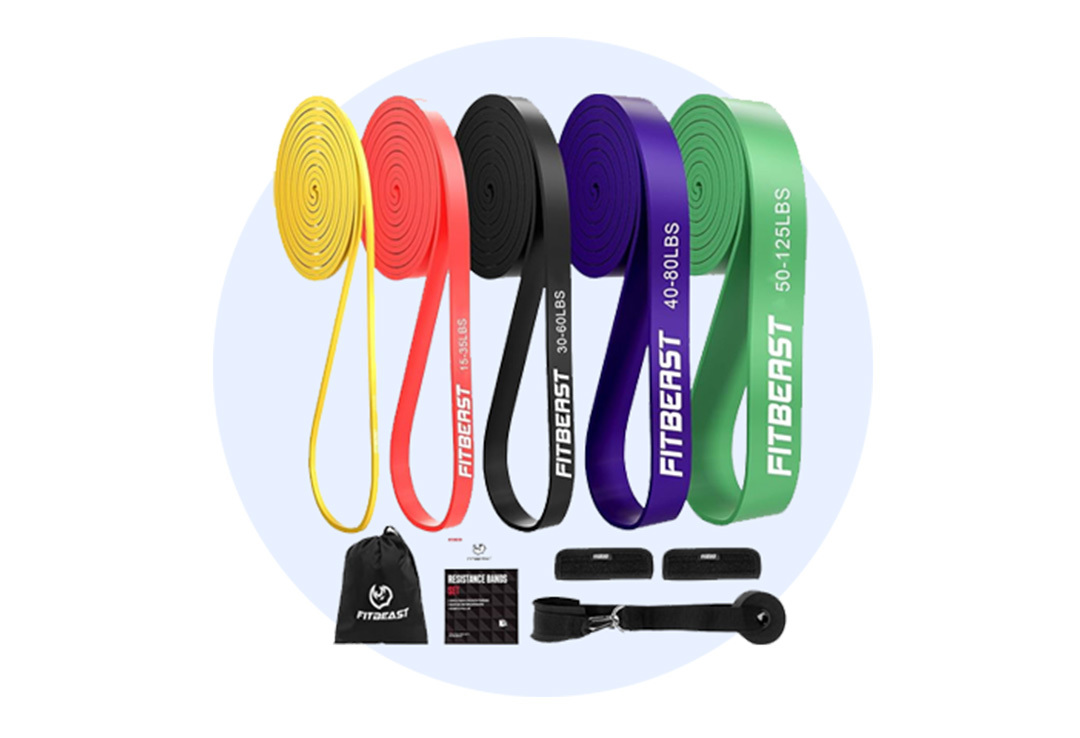
"When you're a novice, you can go into the gym and do a pushing exercise and a pulling exercise for your upper body, something like a squat for the front of your legs, something like a deadlift for the back of your legs, and then you can walk away after four exercises having trained every single muscle in your body," experienced strength and conditioning coach Danny Matranga previously told me. By and large, you can enjoy this effect at home too – there are great bodyweight options for most of these exercises such as press-ups, squats and hip thrusts. Pulling exercises are the odd one out, unless you have a pull-up bar handy. Resistance bands remedy this, allowing you to wrap them around your feet or a tree and row them towards your torso to strengthen muscles across your back. Experienced exercisers might want to consider training options that allow you to handle more load, such as gymnastic rings or a TRX suspension trainer. But resistance bands (like this £20 quid Fitbeast resistance band set I've used for years) are brilliant for beginners in particular. |
|
|
| Modern life isn't exactly designed to keep us moving. Most jobs involve sitting still, many forms of entertainment encourage long periods on the sofa, and travelling by car, train or plane often means more sitting (unless, of course, you take the commuter train from Bristol to London, as I've found). But, as we've discussed, regular movement is what the human body is built for – it's how we thrive. An unusual but effective way to add more movement to your day comes from sedentary behaviour specialist Dr Daniel Bailey of Brunel University: reorganise your workspace. "Changing your setup so not everything is at hand can help," he explains. "If you need a pen, to print something or put something in the bin, having those things located away from your desk might encourage you to move more often. And rather than sending a colleague an email, go and talk to them at their desk." |
| |
|
| Your Well Enough homework this week? Go nuts – especially if you fancy a snack. It might not sound like the usual advice from a health and fitness newsletter, but hear me out. "On average we get 25% of our energy from snacks, so opting for healthy snacks like nuts can be a simple way to improve our health," Professor Sarah Berry, chief scientist at ZOE and associate professor at King's College London, told me this week. "My research shows that approximately 30 per cent of the calories in almonds are not absorbed due to the unique structure of almond cells. Additionally, many studies show that nuts increase feelings of fullness, and that nut eaters tend to have a healthier body weight than non-eaters." Professor Berry avoids snacks after 9pm, as her team's research found this was linked to poorer blood glucose and lipid control compared with daytime snacking. Instead, she recommends a handful or two (30–60g) of almonds as an afternoon snack for most people. |
| |
|
| Most of my week has been spent talking, writing and moving – a week well spent in my book. One person I spoke to was Alex Morrell, a highly qualified sports therapist. Our conversation focused on lower back pain, a common problem, and he shared a surprising tip for reducing it: breathing through your nose. "If you think about the volume of space in your nose versus your mouth, it's significantly larger in your mouth," he explains. "Typically you bring in more air when stressed. When you're shocked, you gasp." Breathing through the nose has the opposite effect, helping us shift from the sympathetic nervous system (fight or flight) to the parasympathetic nervous system (rest and digest). This can aid recovery and make painful areas less sensitive, Morrell suggests. "For all of my clients, I get them to put five stickers in common places – like their phone, kettle and bathroom mirror," he adds. "Every time you see one, ask yourself if you're breathing through your mouth or nose, then take 10 intentional breaths: inhale for five seconds, exhale for five seconds." |
| |
|
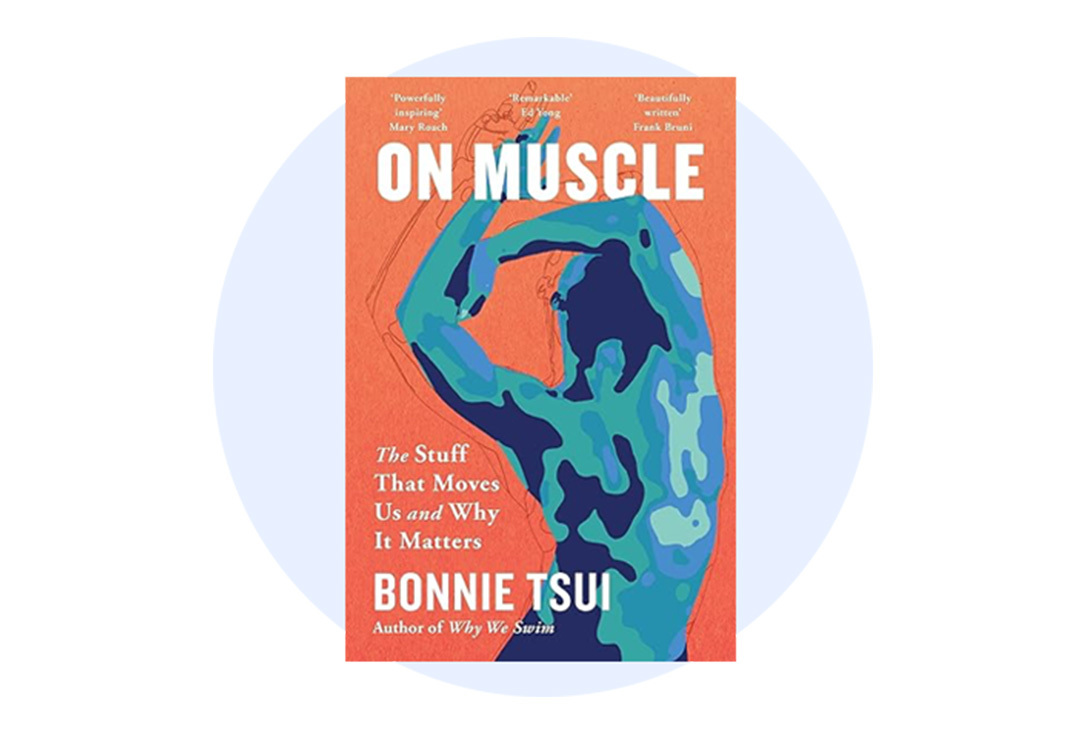
It's hard not to get excited about exercise when speaking to Bonnie Tsui – her enthusiasm for movement is infectious. Her latest book, On Muscle, explores "the stuff that moves us and why it matters." Unsurprisingly, it goes far deeper than how much weight you can lift – much to my delight. "There's a whole section of the book on jumping," Tsui told me during our interview last year. "There's something pleasurable about it, and to seek out pleasure in movement is not a bad thing." To illustrate, she points to the work of photographer Philippe Halsman, whose book Jump features A-list subjects leaping skywards on command. "In a jump, the subject, in a sudden burst of energy, overcomes gravity," Halsman writes. "He cannot simultaneously control his expressions, his facial and limb muscles. The mask falls. The real self becomes visible. One has only to snap it with the camera." "Movement being fun is a beautiful driving force in the book," Tsui adds. "Hidden in the play and enjoyment is all of that good stuff: better physical health, cognitive health, cardiovascular health. Muscle allows us to move, and movement is joyful." |
|
|
ZOE co-founder Professor Tim Spector |
Gut health has gone from a niche interest to a hot topic in recent years, thanks in no small part to scientist and ZOE co-founder Professor Tim Spector. On this week's episode of the Well Enough podcast, host Emilie Lavinia speaks to him about all things fermentation, how modern life is harming our good bacteria, and his number-one diet tip for better health.
The episode is available to listen to here, with the full video online here.
|
|
|
These were the most popular stories in last week's newsletter: |
|
|
Join the conversation and follow me |
|
| Please do not reply directly to this email You are currently registered to receive the Well Enough newsletter from The Independent. To unsubscribe from the Well Enough newsletter from The Independent, or to manage your email preferences please click here. This e-mail was sent by Independent Digital News and Media Ltd, 14-18 Finsbury Square, London EC2A 1AH. Registered in England and Wales with company number 07320345
Read our privacy policy and cookie policy
|
|
|
|




0 comentários:
Postar um comentário