The secret to the perfect workout |
|
|
Hello! Would you like to know the secret to the perfect workout? If so, I have good news and bad news. The bad news is that I don't believe it exists. Perfection is subjective and depends on your individual needs, and when you're contending with life's many curveballs, it simply isn't achievable. The good news is that this doesn't matter – and understanding that is going to massively help your future fitness efforts. Why? Because on the exercise front, doing something is invariably better than doing nothing, and racking up consistent yet imperfect workouts will likely have a greater long-term impact on your health than occasional hour-long bonanzas. That is why imperfection – and its many benefits – is the common denominator driving this week's newsletter: |
I recently met sports psychologists Stuart Holliday and Tia Prior, who shared fascinating insights into the mental resilience of Sharon Lokedi – winner of the 2025 Boston Marathon, running it in a staggeringly fast time of 2hr 17min. They told me she doesn't plan for the perfect race, but instead imagines everything that could possibly go wrong and prepares for any eventuality. Come race day, she's ready for the worst – anything better is a bonus. Despite being a generally optimistic chap, this is similar to how I plan my weekly workouts. I start with a baseline of two non-negotiable sessions that I will make time for come hell or high water – these are usually full-body strength training workouts. Beyond this, there are a couple of less important sessions I'd very much like to get done but that can be sacrificed if life gets in the way. Then I also have a few "luxury workouts" – fun things I want to experiment with, which I can drop in if I find myself unexpectedly time-rich that week. This is all underlined by a decent dose of daily movement – dog walks, general exploring and taking the active option (ie stairs rather than elevators) wherever possible. To try this approach, take a look at your calendar and work out the minimum amount of weekly exercise you can commit to, whether that's 20-minute strength session or simply getting out for a short daily walk. This is your baseline. If you have time, try to build on this with a few extra doses of movement throughout the week. If you don't, stick to the baseline. This way, you've still achieved what you set out to do, and you can be safe in the knowledge that it will benefit you in the long run. That leads me to an odd tangent: Harry Styles and Tom Grennan. Both singers take their health and fitness incredibly seriously – you have to if you're going to deliver dynamic live shows in new cities every night. Both also contend with imperfect training conditions on tour, lacking access to gyms, kitchens and fresh home-cooked food. I've spoken to Thibo David, who trained Harry Styles in the years around the start of his Love On Tour shows, and Tom Grennan's trainer Tom Lowe. Lowe sums up their attitude to exercise best: "There's always a way." Styles and his team would do stair sprints in the stadiums where he performed to keep their heart and lungs healthy; Grennan hit resistance band workouts in his hotel room to stay in tip-top shape. These are not perfect workouts by any objective measure, but they are good and they are regular – and that is often enough. This applies to your diet too. A puritanical approach to eating is neither fun nor sustainable in today's food environment. What we can do for better health is aim for generally good eating patterns, prioritising whole foods and enjoying everything in moderation. To help with this, I was given a handy formula for healthier snacking by nutritionist Nicola Ludlam-Raine. "With snacks, always think about including protein and fibre," she says. "That could be apple and cheese, berries and yoghurt, carrots and hummus or nuts and dried fruit." Both elements are filling and nutritious, supporting vital bodily processes such as maintaining gut health and muscle repair. And finally this week, I wrote about doing goblet squats every day for a month. It's a great exercise that reinforces proper squat technique when done properly, and I noticed two clear benefits from doing it daily. Firstly, I became better at squatting – practice makes permanent, after all. And secondly, by repeatedly asking my body to access a proper squat position, my hips, knees and ankles became more mobile. Chalk this one up as another win for consistency. So, as always with this newsletter, it's time to try to take a tangible takeaway from my musings above. If you come away with one message, let it be this: your exercise routine and diet don't have to be perfect. You just have to commit to doing small things that benefit your health on a regular basis – then stick with it. Hope this helps! Harry |
|
| Swap the gym for six-move kettlebell workout |
|
| I'm sharing this piece because I think it is incredibly helpful. It also marries rather nicely with the theme of this newsletter. Certified PT Amanda Capritto lived in a van for a year, travelling around North America. In the van, she stashed a couple of dumbbells, kettlebells and resistance bands, and exclusively used these for 12 months to maintain her strength levels. When she returned to a gym, she was surprised to find she could lift heavier weights than before – all thanks to consistent, progressive strength training sessions using minimal equipment in the great outdoors. Here, she shares an example of one of these sessions, which you can do with just a single kettlebell. |
|
|
Cottage cheese, bacon and the nuance of food |
It's a weird world in which cottage cheese can become one of the trendiest things going. But it's the world we live in. Influencers are seemingly weaving this ingredient into every dish going, all under the pretence of making their meals healthier by bulking them out with added protein. In this piece, our food and drink editor Hannah Twiggs explores whether cottage cheese actually delivers on these nutritional claims. In another piece, she also explores the background of bacon – where it comes from and the health impacts it is likely to have. My favourite thing when reading this feature was Hannah's emphasis on nuance. People are determined to put things into binary camps nowadays – good and bad, healthy and unhealthy, safe and dangerous. The truth usually lies somewhere in between, and she does a great job of explaining the nuance around bacon's volatile reputation. |
|
|
The dark side of 'miracle' weight-loss drugs |
The weight loss drug conversation is a confusing one. The merits are evident – weight loss is not a level playing field, with people dealing with different genetics, environments and traits. Some view weight loss drugs as a way to place people on equal footing. But it is a new concept, and there are widespread reports of people quickly returning to their previous weight when they stop using them. To me, their use also seems to be shifting from health-oriented to aesthetic and cosmetic-focused, and I dislike the idea that money should be a barrier to achieving a body you enjoy living in. This worrying feature looks at the side effects reported by some weight loss drug users in the US – and explains why many are now suing over their impact: "If someone would have told me ... a drug I was taking could make me blind, I would never have taken the first shot." | |
|
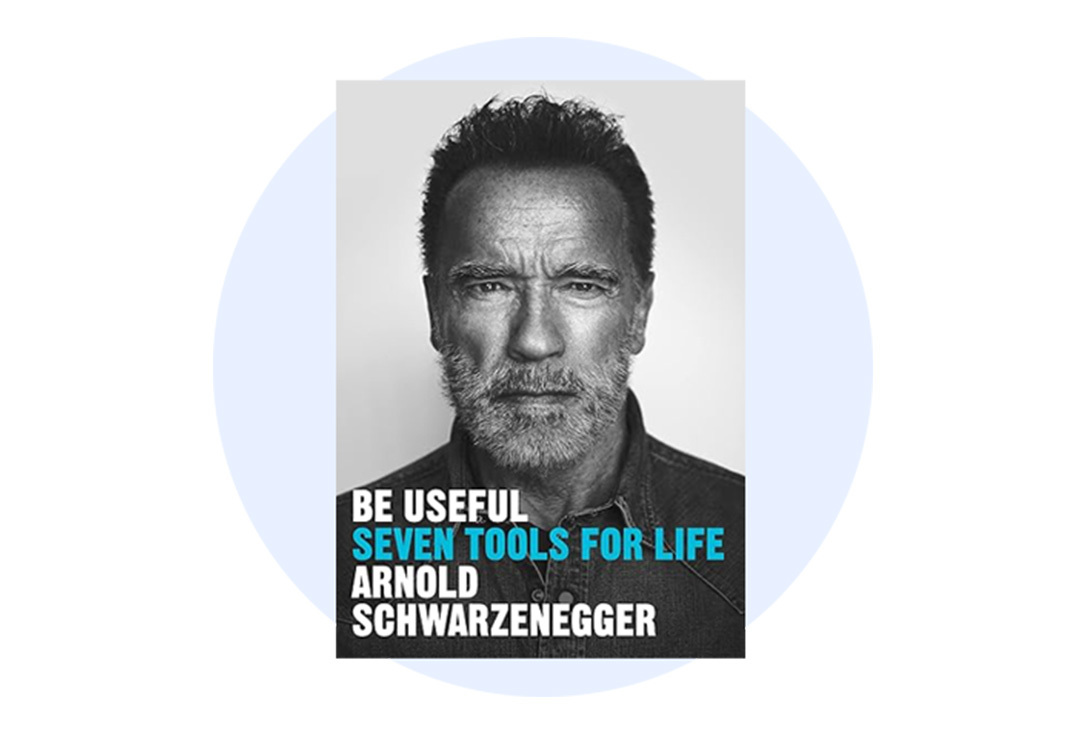
Be Useful by Arnold Schwarzenegger |
Arnold Schwarzenegger might not seem like apt workout motivation for the average exerciser. But in recent years, his approach to exercise has been one of inclusivity and accessibility. Be Useful isn't so much exercise guidance as it is mindset tips, with a generous provision of interesting anecdotes from his colourful life along the way. It's also a fascinating insight into the mind of someone who has succeeded in several contrasting fields throughout his career. The take-home message – and the title – applies to what we talked about above: try to do positive things, do them often, and results will surely follow. |
|
|
| A friend recently told me they spend a large chunk of their time with their young child in various rainy playgrounds. He also said he was struggling to find time to go to the gym, and jokingly asked if there was a "playground workout" parents could use. When I lived miles from any gym in the South West of England, I spent several months exclusively training at a park that had a few pieces of play equipment, including monkey bars. This was one of my go-to workouts, which I shared with him: Step one: Pick two exercises that don't interfere with each other. I like to use either a pushing exercise (press-ups, pike press-ups, incline press-ups, dips) and a pulling exercise (pull-ups, chin-ups, inverted rows), or an upper body exercise (any of those listed previously) and a lower body exercise (squats, lunges, single-leg squats). Step two: Pick a target number of repetitions for each exercise that you can comfortably achieve with roughly a seven out of 10 effort (for me, that might be 15 press-ups and five pull-ups). Step three: Set a 10-minute timer. Step four: Perform the first exercise for your target number of repetitions. Step five: Perform the second exercise for your target number of repetitions. Step six: Repeat steps four and five as many times as you can within 10 minutes, resting only as needed. This is called a density block, and the first few sets should feel fairly easy. A few minutes in, things will likely feel significantly more difficult as your muscles begin to tire, allowing you to generate the challenge and mechanical tension needed to build strength and muscle. If your child wants to play during the workout, go and play – that's part of the workout, and your muscles will likely be glad of the added break during the latter half. You can then call it a day once the 10 minutes are up, or wait a couple of minutes and repeat the workout with two new exercises. |
| |
|
|
| I'm always sceptical of trends. Friction-maxxing is a recent one – the act of choosing less convenient options in daily life. This largely seems to be centred around swerving AI and using your noggin, but I think it can have helpful physical applications too. For example, my partner recently moved our kitchen bin to the other side of the room – away from the counter. As an experiment, because I'm boring like that, I decided to see how much more I moved while cooking a meal by checking my step count. And though this is far from a controlled experiment, I was surprised by just how much further I moved with the bin in its new location. The same applies when you are at your desk. If I know I am going to need something during the day, like my notepad, I might put it out of reach, forcing me to stand up every time I want to use it. So maybe there is something to this friction-maxxing malarkey. Although I'm still not on board with putting "-maxxing" after everything and calling it a trend. |
| |
|
| Recently, I've been asking my interviewees for one simple tip they would recommend – and use themselves – that can have a significant positive impact on your health. Nearly every nutrition expert has advised upping your fibre intake. "I'm a big proponent of fibre," clinical dietitian Vassiliki Sinopoulou tells me. "It acts as a food source for the microbiome in our gut, and it can help you feel fuller for longer." She recommends aiming for roughly 30g of fibre per day, avoiding both falling short and "overdoing it". Sinopoulou also says it is good to introduce a few probiotics into your diet, such as certain yoghurts, kefir, sauerkraut, kimchi, miso, tempeh and kombucha. |
| |
|
| I was looking after my four-year-old nephew last weekend. We went to one playground that was full of benches, and every adult immediately went and took a seat. We went to another that didn't have any benches, but it did have a small outdoor gym set-up. Nearly every adult went and tried a bit of kit or attempted a pull-up. If something is there, people use it. This might sound obvious, but it's a principle you can use to squeeze more movement into your routine. If you work from home, try unrolling a yoga mat next to you or keeping a kettlebell under your desk so you can squeeze in this ten-minute workout. Chances are, even if it is simply out of boredom, you will end up using them. And on the movement front, every little helps. |
| |
|
Working out with minimal equipment |
|
|
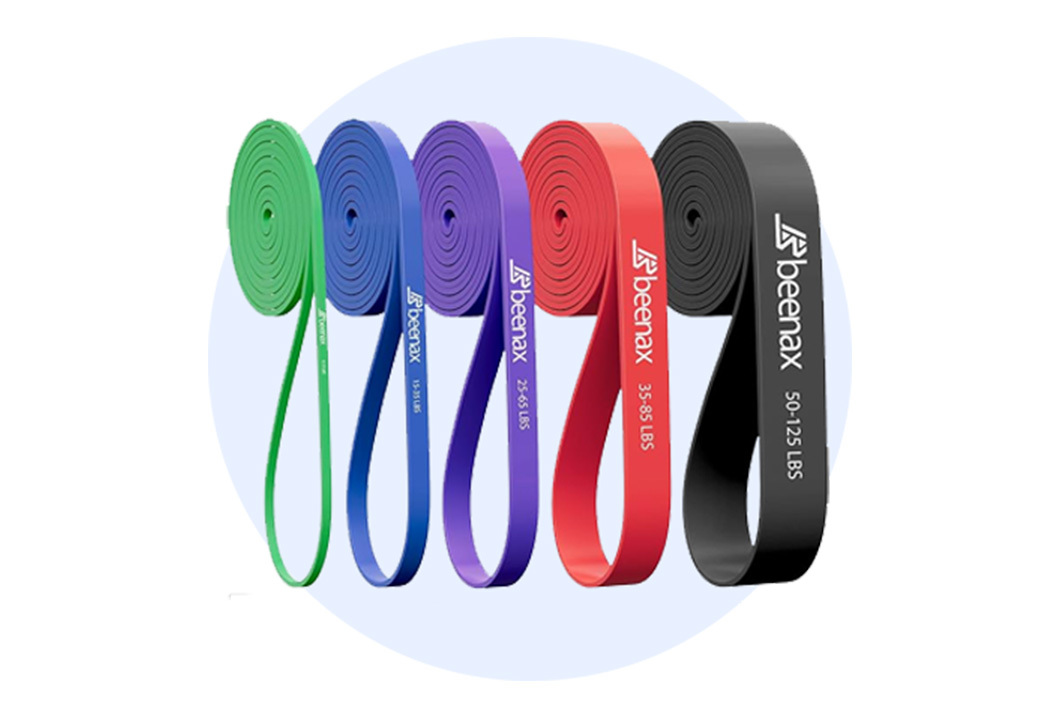
In this week's newsletter, we chatted about Tom Grennan's resistance band workouts, which he uses while on tour to stay in shape. Considering my eardrums are only just recovering from when I saw him at a festival a few years ago (the singing was great and an ideal volume – the problem stemmed from when he took his top off and the group standing next to me screamed like banshees), I would say they worked well. His trainer Tom Lowe says this is the exact set of resistance bands Grennan used. It comes with five resistance options, a door anchor and handles, all for £26.99. Given my MO of making exercise affordable and accessible for as many people as possible, I think this is a decent deal. |
|
|
Award-winning BBC broadcaster, journalist and author Emma Barnett |
On this week's episode of the Well Enough podcast, host Emilie Lavinia speaks to Maternity Service author Emma Barnett about the "toxic positivity of early motherhood." The pair discuss everything from the physical reality of recovering from a C-section to the quiet grief of losing your pre-baby identity. Barnett also opens up about her 21 years without an endometriosis diagnosis, six rounds of IVF, and how she's learned to survive – and thrive – with a chronic pain condition while raising two children and fronting some of the UK's biggest radio programmes. The episode is available to listen to here, with the full video online here. |
|
|
These were the most popular stories in last week's newsletter: |
|
|
Join the conversation and follow me |
|
|
Please do not reply directly to this email You are currently registered to receive the Well Enough newsletter from The Independent. To unsubscribe from the Well Enough newsletter from The Independent, or to manage your email preferences please click here. This e-mail was sent by Independent Digital News and Media Ltd, 14-18 Finsbury Square, London EC2A 1AH. Registered in England and Wales with company number 07320345
Read our privacy policy and cookie policy
| |
|
|



0 comentários:
Postar um comentário