On a cloudy summer's day in 1919, two men packed a lunch of sandwiches, cigarettes, and coffee fortified with whiskey and climbed aboard a plane made of wood and fabric. Less than 16 hours after taking off from Newfoundland, John Alcock and Arthur Brown crash landed in a bog in Ireland, becoming the first people to ever complete a trans-Atlantic flight.
Nearly exactly 50 years after this aeronautical milestone, Nasa would land the first humans on the Moon. It has now been more than 50 years since an astronaut last set foot on the lunar surface, with the astonishing progress of aerospace endeavours stalling in the wake of the Apollo missions. The reason has been largely due to motivation.
When President John F. Kennedy set the ambitious target of putting boots on the Moon before the Soviet Union, he spoke of what drove the quest. "But why, some say, the Moon?" he told an audience at Rice University in Texas in 1962, seven years before the historic Apollo 11 mission. "They may well ask why climb the highest mountain? Why fly the Atlantic?... We choose to go to the Moon in this decade, and do the other things, not because they are easy, but because they are hard."
The Moon was the end goal. It was mostly about achieving something that had never been done before, and in doing so, one-upping the USSR. Now, decades after the Cold War has ended, Nasa is planning to return. But this time it's different.
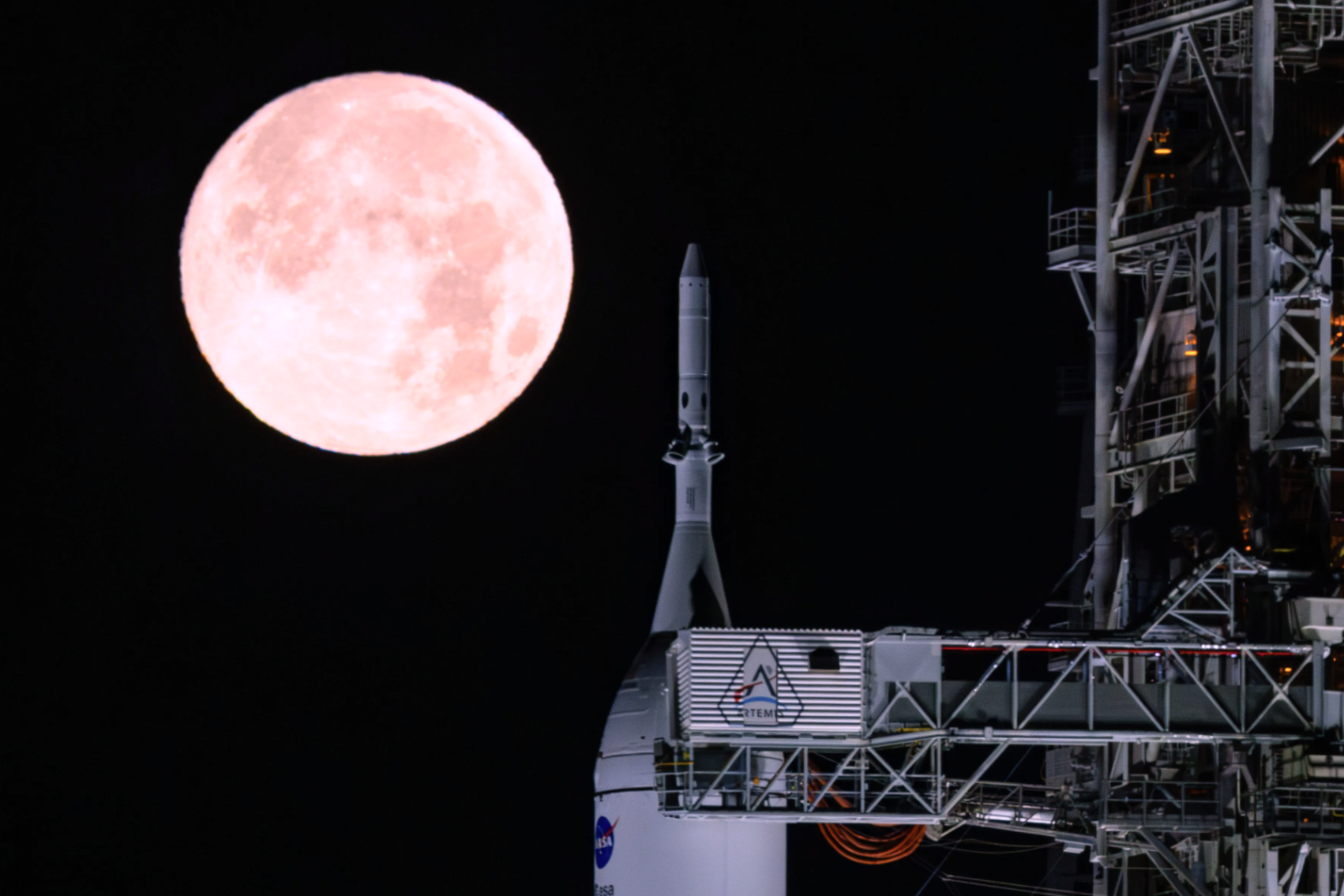
On Wednesday evening, a four-person crew will lift off from the Kennedy Space Center in Florida – just over a mile away from where the last Apollo mission launched – and fly further than any human has ever travelled. Despite the lofty goals, it is only a pathfinder mission. If all goes to plan, another Artemis mission in 2028 will see astronauts land on the Moon before objectives shift towards establishing a permanently crewed lunar base by 2030.
Beyond that is Mars, and the possibility of setting up a human colony on the Red Planet, turning us into a multi-planetary species. There is still the thread of the US seeking superiority in space, particularly against China, but the ambitions go well beyond national rivalries.
"This time, the goal is not flags and footprints," said Nasa administrator Jared Isaacman at an event last week. "This time, the goal is to stay."
Eight years after Alcock and Brown took to the skies in their momentous mission across the Atlantic, the American aviator Charles Lindburgh made the first solo flight from New York to Paris. Although still a pioneer, his flight was to prove that air travel was the future of transportation. It showed that long-distance flight wasn't just a stunt for daredevils, but a viable future for global commercial travel. Just over a decade later, flights were crossing the Atlantic with paying passengers aboard.
Just like Apollo 11 mirrored the daring spirit of Alcock and Brown, Artemis II is mimicking the pragmatism of Lindbergh: it is no longer to prove it is possible, but to demonstrate that it is worthwhile. If Nasa gets this right, then a decade from now, flying to the Moon could be as unremarkable as crossing the Atlantic in a plane.


















0 comentários:
Postar um comentário