


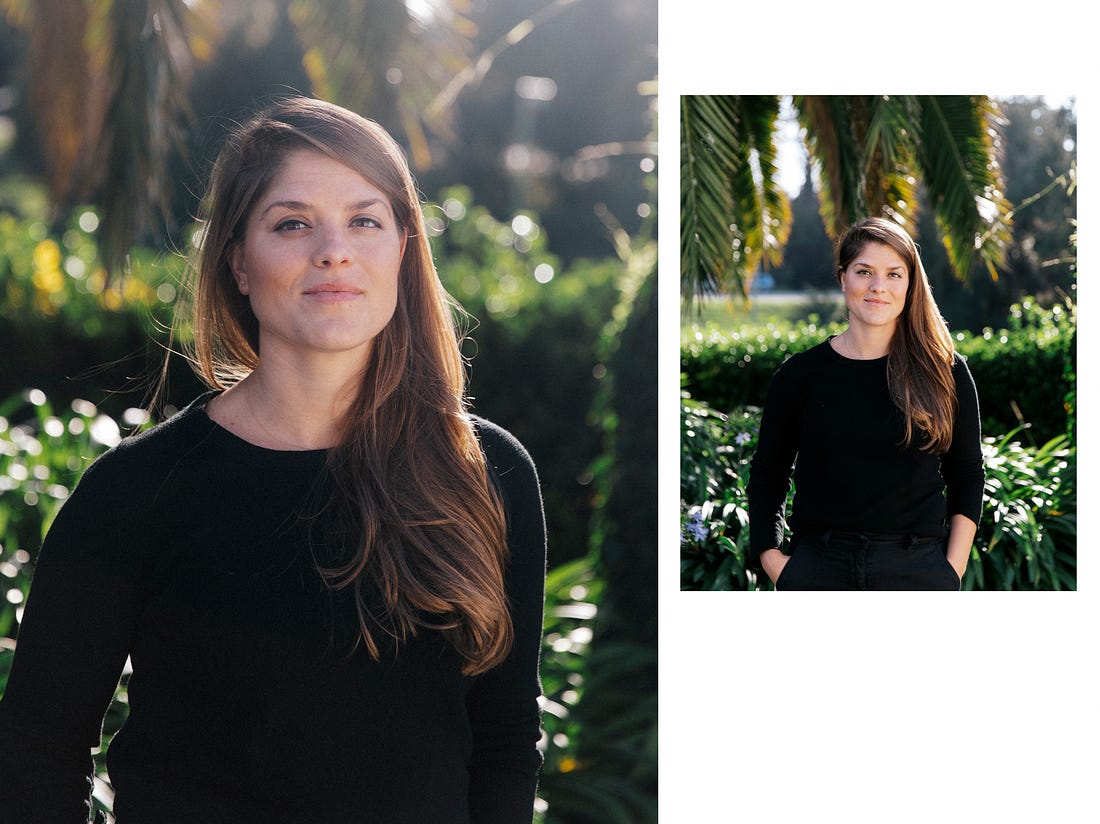
Dear friends, A nice lady walked into the room already apologizing. “I should warn you, I’m really not photogenic. We can try, but I’ve never liked a photo of myself. Ever. So good luck.” She was an executive of a fast-growing financial company and had raised serious money, hired serious people, and was about to do a serious press campaign and her pr team was making her get a new portrait. I get some version of this speech almost every shoot. From CEOs, to engineers, to VP’s of Marketing. The only exception is usually people from the sales department, because they’re used to selling themselves and their employer. The words change a little but the meaning is always the same: please be gentle with me, I am about to be uncomfortable for the next hour.
I’ve come to believe after years of doing this work that most people don’t dislike being photographed. They dislike being photographed badly. They’ve sat through enough stiff, fluorescent-lit, “okay now turn slightly to the left and smile naturally” sessions that the whole experience feels like a dental appointment. They show up braced for impact and anticipating the same feeling of photo day at primary school. The job, before any of the photography happens, is to remove that feeling and create a lighter and more comfortable atmosphere. I shoot tethered¹, which means the images appear on a screen within seconds of me taking them. Within the first four or five frames, I can ask them if they’d like to take a peek and turn the screen around. To show someone what they actually look like. Not the version in their head from their first 2021 corporate ID, but the version that exists right now with someone paying attention to them. I show them what I see. I get to watch their shoulders drop with relief and more often than not it inspires a: “Wait, that’s me?” Yes. That’s you. “That’s not so bad…I like it. Let me move my hair a bit.”
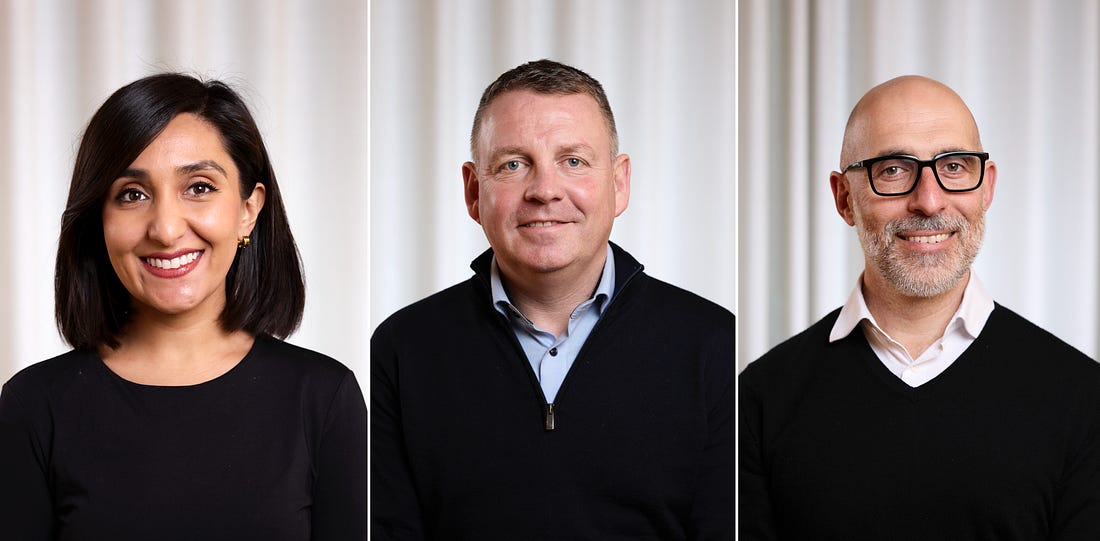
This work means so much to me because I’m not a technical photographer who memorizes light ratios and lens math. I mentioned this in a recent issue and it bears repeating, because it’s the whole game. I'm a storyteller who likes people and happens to use a camera. When I walk into a corporate office or a co-working space or a stuffy boardroom with bad ceiling lights, I’m not thinking about the lighting setup first. Thankfully I am able to bring an assistant who had that skillset. I’m thinking about the person in front of me and what would make them forget, even for thirty seconds, that they’re being photographed. That’s when the good frames happen. A lot of company portraits look the way they look because the photographer is solving a technical problem. Get the face lit. Get the background clean. Get the smile. Move on. The result is functional. It does the job. It will not embarrass anyone. But it also will not do anything for anyone. It won’t make a candidate scrolling your team page pause and think, “oh, these people seem like humans I’d want to work with.” It won’t make a journalist pulling press images think, “this company has taste.” It won’t make the executive themselves want to actually use the photo.
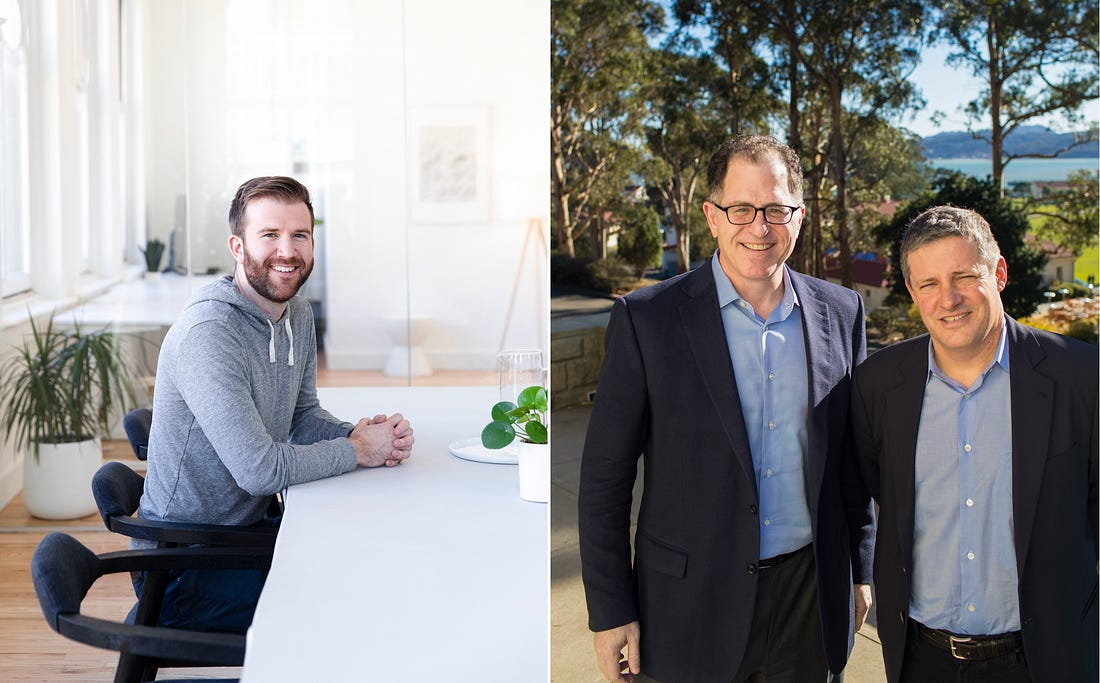
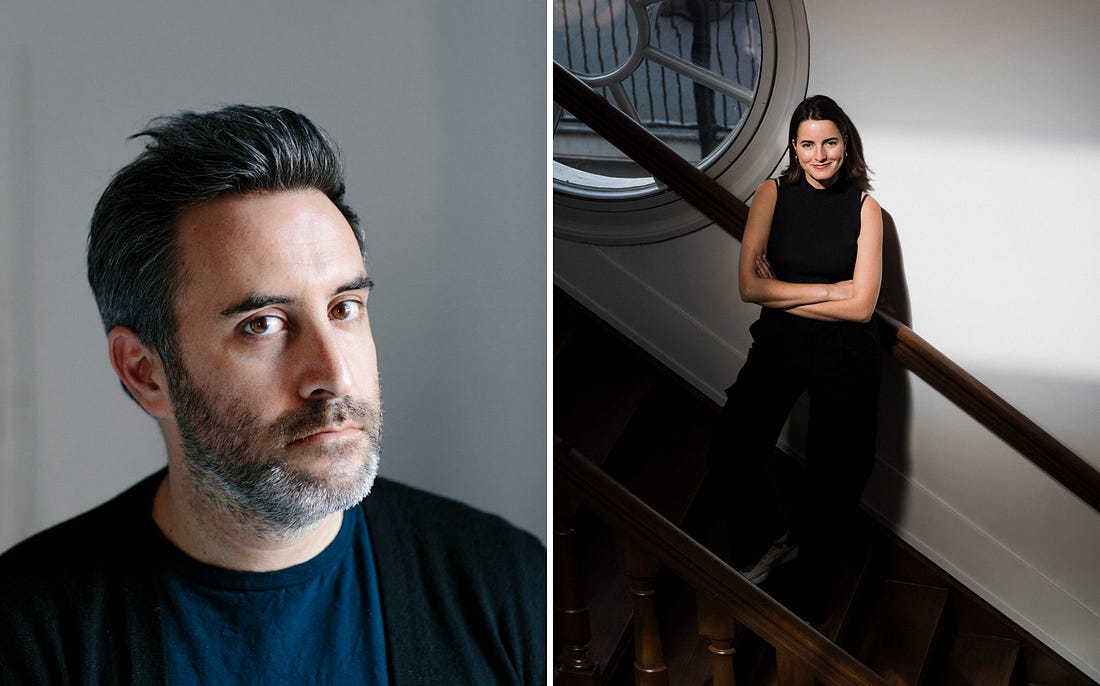
I’ve been lucky to do this work across a wide spectrum. I’ve photographed founders in their living rooms at 7am, before the kids were awake. I’ve photographed executives like Michael Dell at events where I had about 30 seconds to make it look good. I’ve photographed working actors who needed headshots that captured something real, not the glossy LA template. I’ve photographed teams at financial firms where everyone was wearing the same shade of grey, and we still found a way to make it feel like them and not like a stock photo.
The common thread isn’t a lighting style or a location or a pose. It’s the approach. Treat the person like a person. Move quickly so they don’t have time to overthink. Show them the results in real time so they can see for themselves that this is going to be okay. Make a few jokes. Ask about their actual life and their job. Get them to laugh, then take the picture right after the laugh, when their face is still soft. It helps to be genuinely curious. That’s always been my main skill.
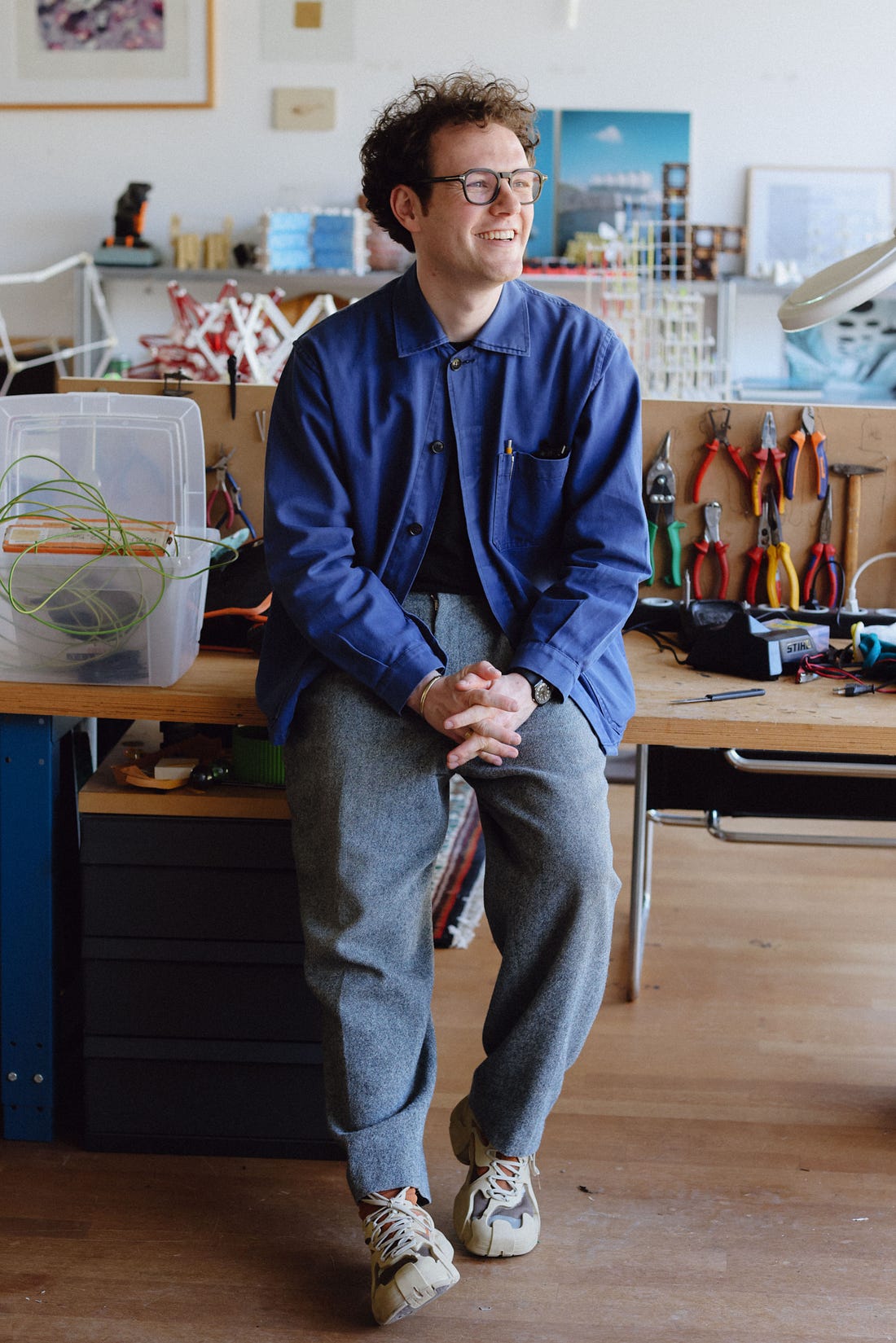
This approach didn’t come out of nowhere. It comes directly from my community documentary work. When I photographed 101 comedians in two days for The Best Medicine², I had about three minutes per person. Three minutes to walk in, settle them down, get something real. When I shot Vliegwiel³, the same constraint: 102 Dutch startup founders, each of them busy, each of them used to being photographed badly, each of them needing to feel like the time was worth it. Because Vliegwiel was an art project, I had the freedom to push it a little further than a normal client shoot. Black and white. A specific mood. A consistency across all 102 portraits that turned them into something bigger than the sum of their parts. That kind of artistic latitude isn’t always available on a corporate job, but the eye I built making it absolutely is. Every founder I photograph for Vliegwiel makes me better at photographing the next executive who walks into a stuffy office and says “I’m not photogenic.” The art practice feeds the client work. The client work funds the art practice. Each one makes the other one better. Back to the founder from the beginning. We shot for about four minutes. She picked her favorite frame within ten seconds of seeing it on the screen. She emailed me a few days later to say it was the first photo of herself she’d been able to use without wincing in years. This is the part of the job I love the most. To provide that moment when a person sees themselves and recognizes what other people have been seeing all along. If your company, or your founder friend, or your team is due for portraits and you’re tired of the functional kind, you know where to find me. I’d love to make something that doesn’t look like everyone else’s. But that’s not really what I want to ask you about this week. What I actually want to know is: what’s the best portrait you’ve ever taken of someone you care about? The one that surprised you but especially also that person. Tell me about the person, the moment, why it worked. I think a lot of us are quietly insecure about our ability to photograph the people in our lives, and I want to hear about the times it worked. Drop it in the comments. I’ll read every one and I will pick one randomly to win a $150 gift card to the Moment store. See you next Sunday, when I will tell you about the next big project I am working on. It’s about an amazing artist village. Warmly, Wesley Thank you, as always, for reading. If this issue moved you, the best thing you can do is share it with one friend you think would appreciate it. Giveaway — Your TurnHere’s my question for this week’s giveaway: What’s the best portrait you’ve ever taken of someone you care about. The one that surprised you because it captured something special fueled by your curiousity and care for this person. I think a lot of us are quietly insecure about our ability to make portraits of the people in our lives, and I want to hear about the times it worked. Leave your answer in the comments and inspire others with your curiosity. I’ll pick one commenter at random to receive a goodie bag including some rare film, some zines and prints, and a few other surprises. NEW WORKSHOP ON SALE NOWMay 23, London — Shane Taylor (Framelines) and I are co-hosting a day-long workshop in London for photographers who care about their work and could use help with the questions:
Morning sessions, communal lunch, afternoon street shooting. Info and tickets at developworkshops.com. This Week’s Camera + ToolsCamera: Canon EOS R5 and the Canon RF 24-70 mm f/2.8 L IS USM. Lab: All my film is developed with love by Carmencita Film Lab. Use code “PROCESS“ for a free upgrade. A Few Ways To Support This WorkIf Process adds something to your week, here's how to help keep it going: grab a copy of my photo book NOTICE Journal Volume One or the Process Workbook series. Every physical order includes a limited edition Creatives In/AMS preview zine, a surprise, and stickers. Process Photo Club members get 40% off NOTICE and 100% off all four Workbooks. Not a member yet? Join here. 🗃️ Browse the Process Archive.
1
For my thoughts on the benefits of shooting tethered, check out Process 167.
2
The Best Medicine: For more about this project, check out Process 193.
3
Vliegwiel: For more about this project, check out Process 238. You're currently a free subscriber to Process ☼ On Photography, by Wesley Verhoeve. For the full experience, upgrade your subscription.
|




0 comentários:
Postar um comentário